1. Basic Information
- Word: 畜牧
- Pinyin: xù mù
- Literal Meaning: to raise and herd livestock
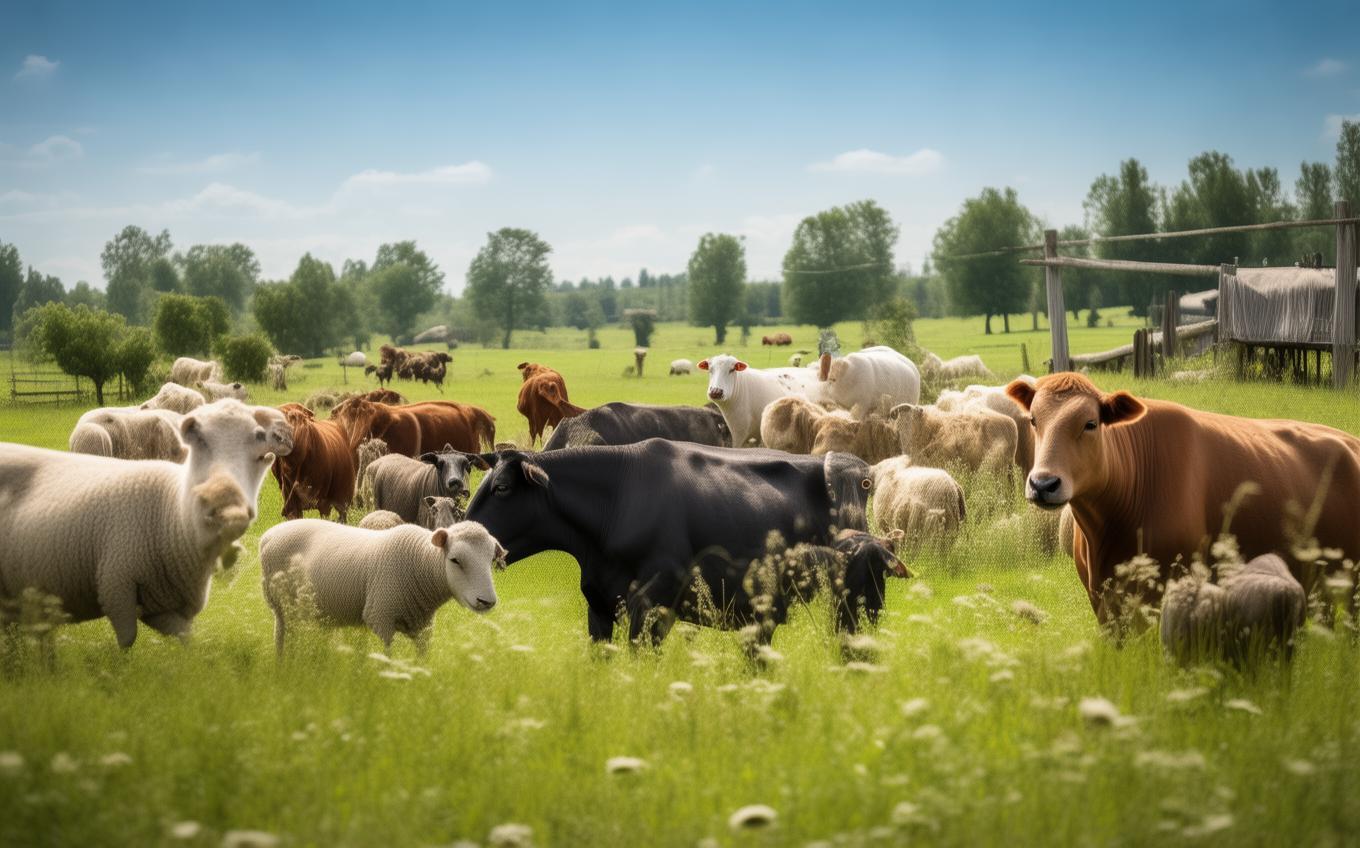
- Primary Meaning: animal husbandry; livestock farming; the raising of animals such as cattle, sheep, horses, pigs, and other domesticated animals
2. In-depth Explanation
- Context and Usage:
畜牧 is a formal or semi-formal Chinese word used to describe the activity or industry of raising animals, especially livestock. It is commonly seen in contexts related to agriculture, rural economy, farming, environmental studies, and government policy.
In English, 畜牧 is usually translated as animal husbandry or livestock farming. It refers not just to keeping animals, but to the organized practice of breeding, feeding, managing, and using livestock for products such as meat, milk, wool, leather, and labor.
This word is often used in compounds such as:
- 畜牧业 — animal husbandry industry; livestock industry
- 畜牧场 — livestock farm; ranch
- 畜牧经济 — livestock economy
- 畜牧生产 — livestock production
A useful point for learners: the character 畜 has two common pronunciations. When it means “livestock” as a noun, it is often pronounced chù, as in 牲畜. But in 畜牧, it is pronounced xù, because it carries the meaning of “to raise animals.”
-
Character Breakdown:
-
畜: In this word, 畜 means “to raise” or “to keep” domesticated animals. It is related to the idea of raising livestock for human use.
- 牧: This character means “to herd,” “to graze,” or “to tend animals.” It is often associated with shepherding or managing animals in open fields or pastures.
Together, 畜牧 literally suggests “raising and herding animals,” which gives us the meaning animal husbandry or livestock farming.
3. Example Sentences
- Chinese: 这个地区的畜牧业非常发达。
- Pinyin: Zhège dìqū de xùmùyè fēicháng fādá.
-
English: The livestock industry in this region is very developed.
-
Chinese: 许多农民靠畜牧为生。
- Pinyin: Xǔduō nóngmín kào xùmù wéi shēng.
-
English: Many farmers make a living through animal husbandry.
-
Chinese: 草原地区适合发展畜牧。
- Pinyin: Cǎoyuán dìqū shìhé fāzhǎn xùmù.
- English: Grassland areas are suitable for developing livestock farming.
Cultural Notes (if applicable)
In China, 畜牧 has long been an important part of life, especially in northern and western regions where large grasslands are found. Areas such as Inner Mongolia, Xinjiang, Qinghai, and Tibet are strongly associated with herding animals like sheep, cattle, horses, and yaks.
In traditional Chinese society, agriculture was not limited to growing crops. Raising animals was also essential for food, transportation, clothing materials, and farming labor. Today, 畜牧业 remains an important part of China’s agricultural economy.
The word 畜牧 often appears in official or academic contexts, such as discussions about rural development, food supply, environmental protection, and modern farming technology.
Conclusion
畜牧 means animal husbandry or livestock farming. Remember that 畜 in this word is pronounced xù, meaning “to raise animals,” and 牧 means “to herd” or “to tend animals.” Together, they describe the organized raising and management of livestock.
Sources and Further Reading
Dictionary links are provided for independent reference. Example sentences and learning notes on this page are educational explanations rather than dictionary quotations.



Comments (0)
No comments yet. Be the first to comment!