Introduction
“凤归云” (Fèng Guī Yún) is not the title of a single universally fixed poem in the way that famous Tang poems such as 《静夜思》 or 《春望》 are. Rather, it is a cípái (词牌), a tune pattern used in cí poetry. In the Song dynasty, poets would write new lyrics to established musical patterns, and “凤归云” was one such pattern. Among the poets associated with this tune, Li Qingzhao (李清照) is an especially compelling choice for English-speaking readers, because she is one of the most celebrated female poets in Chinese literary history and a master of emotional subtlety.
Li Qingzhao lived during the Song dynasty, a period when cí poetry flourished as a refined literary art. Her works are admired for their delicacy, musicality, and deep emotional resonance. A poem written to the tune “凤归云” belongs to this lyrical tradition, where mood, atmosphere, and personal feeling are often more important than narrative plot.
This poem is significant because it shows core qualities of Song lyric poetry: intimate emotion, refined imagery, and the transformation of private feeling into enduring art.
The Poem: Full Text and Translation
Below is a well-known “凤归云” lyric attributed to the Song lyric tradition and associated with the emotional world characteristic of Li Qingzhao-style cí poetry.
恋恋青衫,犹染旧时香泽。
Liànliàn qīngshān, yóu rǎn jiù shí xiāngzé.
The blue robe still seems lovingly to retain the fragrance of earlier days.
金尊莫诉,一片伤心谁识。
Jīnzūn mò sù, yí piàn shāngxīn shuí shí.
Let not the golden wine cup try to speak—who truly understands this whole piece of sorrow?
晚来风急,正吹动、满庭秋色。
Wǎn lái fēng jí, zhèng chuīdòng, mǎn tíng qiūsè.
By evening the wind grows sharp, stirring the entire courtyard with autumnal hues.
便无言倚遍阑干,只是愁极。
Biàn wú yán yǐ biàn lángān, zhǐ shì chóu jí.
So I lean silently along every railing, overcome by grief.
云鬟半亸,谁念我、如今憔悴。
Yúnhuán bàn duǒ, shuí niàn wǒ, rújīn qiáocuì.
My cloudlike hair is half-fallen loose; who thinks of me now, worn and faded?
凤箫声断,梦回时、月明人寂。
Fèngxiāo shēng duàn, mèng huí shí, yuè míng rén jì.
The music of the phoenix flute has ceased; when I wake from dreams, the moon is bright and all is still.
最难禁、滴滴檐前,点点离滴。
Zuì nán jīn, dīdī yán qián, diǎndiǎn lí dī.
Hardest of all to endure are the drop by drop sounds before the eaves—each one like a tear of separation.
Line-by-Line Analysis
The poem opens with “恋恋青衫,犹染旧时香泽”, an image of clothing still carrying an old fragrance. In Chinese poetry, scent often functions as a powerful trigger of memory. The robe is not just an object; it becomes a vessel of the past. “旧时” (“former times”) suggests a lost period of intimacy, youth, or happiness. The line immediately establishes nostalgia and emotional attachment.
The second line, “金尊莫诉,一片伤心谁识”, deepens the emotional register. The “golden wine cup” is a conventional literary object associated with drinking, elegance, and the attempt to ease sorrow. Yet the poet says it should not “speak” or “tell” the pain, because no one truly understands it anyway. This expresses a classic theme in Chinese lyric poetry: the loneliness of inner feeling. Sorrow here is not loud or dramatic; it is refined, hidden, and isolating.
Next comes “晚来风急,正吹动、满庭秋色”. The shift outward to landscape is typical of classical Chinese poetry. Emotion is rarely stated directly for long; instead, it becomes fused with the natural world. The evening wind and the full courtyard of autumn scenery create a mood of decline and chill. In Chinese literature, autumn is one of the strongest seasonal symbols of sadness, aging, distance, and separation.
The line “便无言倚遍阑干,只是愁极” presents a familiar image in Song cí: the solitary figure leaning on railings. To “lean on the railing” is almost a visual shorthand for longing and helpless waiting. The phrase “无言” (“without words”) is important. This sorrow exceeds speech. The gesture replaces explanation.
In “云鬟半亸,谁念我、如今憔悴”, the poet turns to self-portraiture. “Cloudlike hair” is a conventional description of a woman’s beautiful coiffure, but here it is “half drooping,” suggesting disorder, fatigue, and emotional neglect. The speaker’s appearance reflects her inner state. The question “who thinks of me now?” is poignant because it reveals both abandonment and self-awareness. The poem’s sadness is not only about missing another person; it is also about becoming diminished in solitude.
The next line, “凤箫声断,梦回时、月明人寂”, is especially beautiful. The “phoenix flute” invokes music, elegance, and perhaps a vanished festive or romantic world. Its sound has ceased. Then the speaker wakes from a dream into bright moonlight and human stillness. The moon in Chinese poetry often illuminates separation: it is beautiful, distant, and shared by those who are apart. The contrast between dream and waking life intensifies the loneliness.
Finally, “最难禁、滴滴檐前,点点离滴” ends the poem with sound. Drops falling from the eaves are a famous acoustic image in Chinese poetry, especially in scenes of night, rain, sleeplessness, and longing. The repeated “滴滴” and “点点” mimic the sound itself. This is not merely description; it is auditory emotion. Each drop becomes a “tear of separation.” The ending is restrained yet devastating.
Themes and Symbolism
One of the poem’s main themes is longing for the past. The lingering fragrance on the robe symbolizes memory that cannot be erased. Physical objects preserve emotion even when human relationships have changed or vanished.
A second major theme is solitude. The poem repeatedly emphasizes that sorrow is difficult to communicate: no one understands, the speaker is silent, and she wakes alone in moonlight. This inwardness is one reason Song cí poetry feels so psychologically modern.
The poem also explores the relationship between outer scene and inner feeling. Autumn wind, moonlight, and dripping eaves are not background decoration. They are extensions of the speaker’s emotional life. In classical Chinese poetics, nature often serves as the most truthful language of the heart.
Several symbols are especially important:
- Autumn (秋): sadness, decline, distance, and emotional chill
- Moon (月): beauty, separation, memory, and shared longing across distance
- Fragrance (香): intimacy, the persistence of memory, traces of the absent beloved
- Railing (阑干): waiting, helplessness, reflective solitude
- Dripping water (滴滴): tears, passing time, and the persistence of grief
Cultural Context
To understand this poem, it helps to know the literary culture of the Song dynasty. Unlike some earlier forms of poetry that often stressed public themes or grand landscapes, cí poetry was especially suited to private emotion, refined settings, and musical delicacy. It was originally linked to song performance, which helps explain its fluid, lyrical quality.
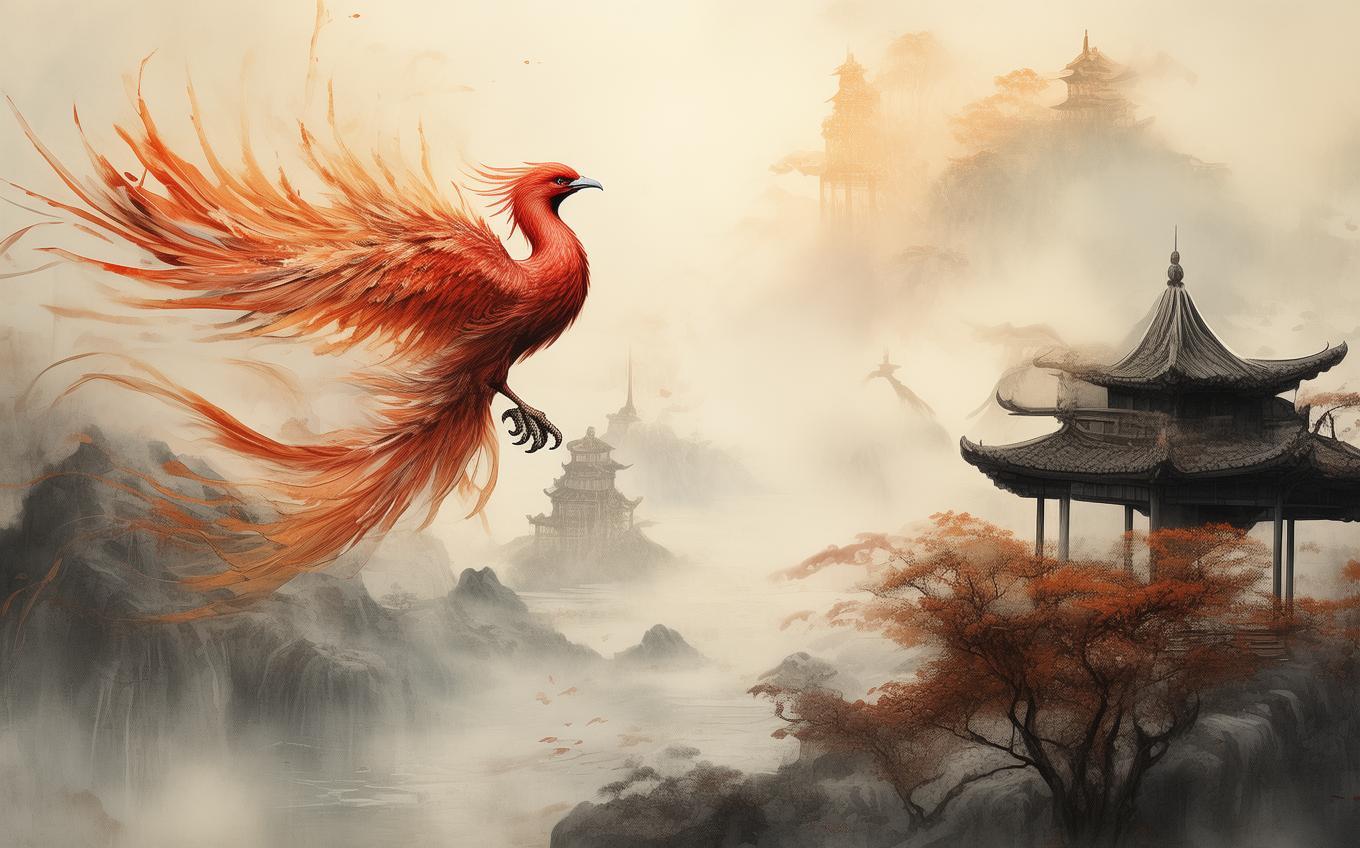
The tune title “凤归云” literally suggests something like “The Phoenix Returns to the Clouds.” In Chinese symbolism, the phoenix (凤) often carries associations of beauty, nobility, femininity, and auspicious elegance. Even when the title does not directly determine the content, it contributes to the lyric atmosphere and tonal expectations.
This poem also reflects broader Chinese aesthetic values:
- Emotional restraint: grief is conveyed through images rather than overt declaration
- Fusion of feeling and scenery: inner emotion and outer world mirror one another
- Elegance in sorrow: sadness is refined into beauty rather than raw confession
- Attention to transience: fragrance fades, music stops, seasons change, and time passes
There is also a philosophical dimension. Chinese literary tradition, influenced by Confucian, Daoist, and Buddhist sensibilities, often recognizes impermanence without trying to conquer it. This poem does not resolve sorrow; it dwells within it, shaping it into art. That acceptance of fleeting beauty is central to the classical Chinese worldview.
Conclusion
This “凤归云” lyric reveals the delicate power of Song dynasty poetry: a few images—a scented robe, autumn wind, moonlight, dripping eaves—create an entire emotional world. Its beauty lies in suggestion rather than explanation, in the way grief is made visible through objects, weather, and sound.
For modern readers, the poem remains moving because its emotions are timeless. Anyone who has been haunted by memory, awakened into loneliness, or found that small sensory details carry enormous emotional weight can recognize themselves here.
In the end, the message of the poem is quiet but profound: what passes away does not disappear completely. It lingers in fragrance, moonlight, and the faint sound of water in the night.

Comments (0)
No comments yet. Be the first to comment!