1. Basic Information
- Word: 打牌
- Pinyin: dǎ pái
- Literal Meaning: "to play cards"
- 打 = to hit, to play, to do
- 牌 = card, tile, game piece
- Primary Meaning: to play card games
2. In-depth Explanation
- Context and Usage:
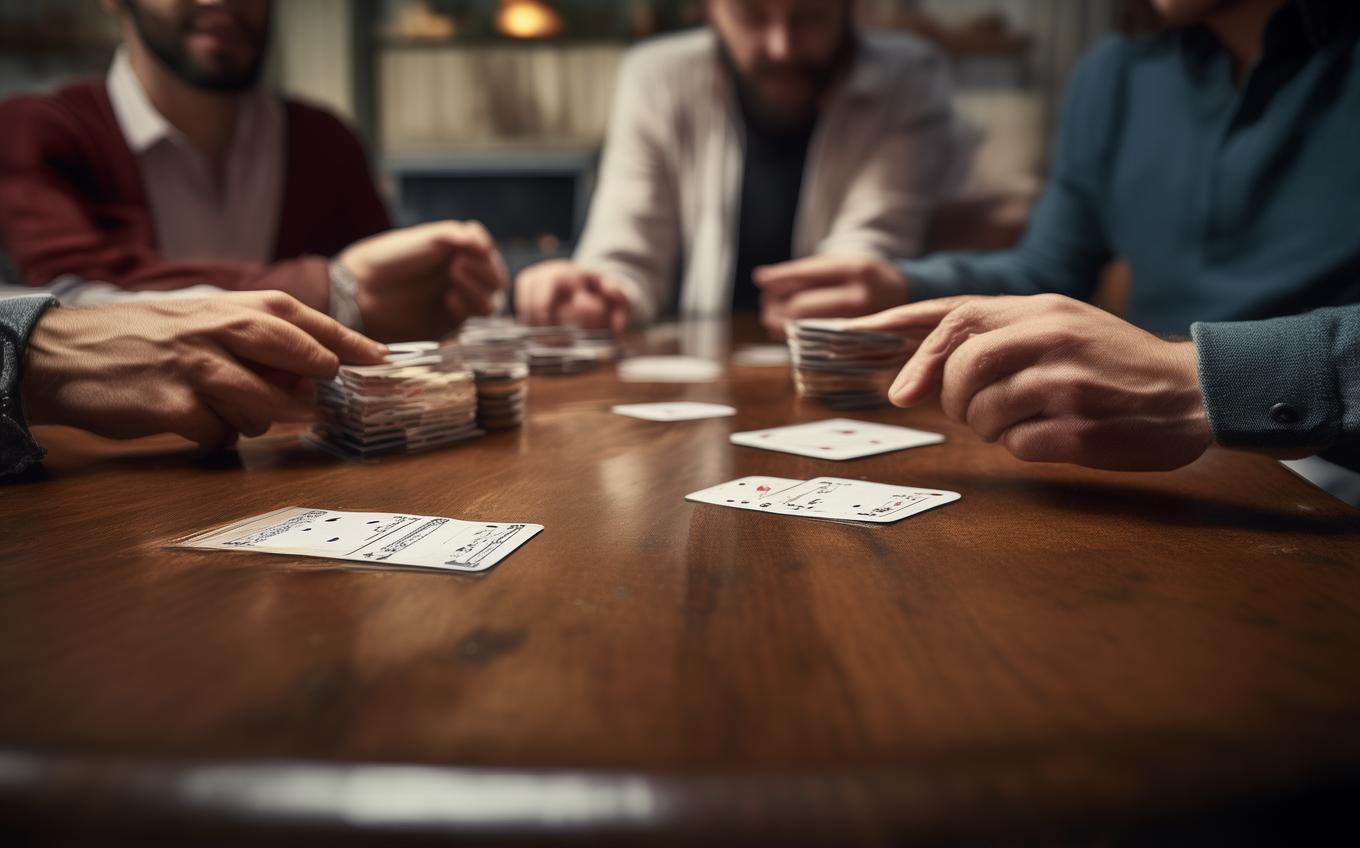
打牌 is a common everyday Chinese verb phrase meaning "to play cards." It usually refers to playing card games for fun, socially, or sometimes for money. In Chinese, 打 is often used with activities and games, not only with its basic meaning "to hit." So in this word, 打 means something closer to "play" or "engage in."
People use 打牌 when talking about:
- playing poker or other card games with friends or family
- spending free time socially
- casual entertainment, especially during holidays or gatherings
It can sometimes also be used more broadly in conversation to include traditional Chinese game pieces in certain contexts, but its most direct meaning is specifically "playing cards." If someone is playing mahjong, people more often say 打麻将 rather than just 打牌, although in casual speech some people may loosely group such table games together.
A small nuance is that 打牌 often gives a relaxed, social feeling. For example, during Chinese New Year, relatives may gather to chat, eat, and 打牌. However, if money is involved, the tone can change depending on context: it may still be harmless entertainment, or it may imply gambling.
- Character Breakdown:
- 打: This character originally means "to hit" or "to strike," but in many common Chinese expressions it also means "to play," "to do," or "to carry out." Examples include 打球 ("play ball") and 打电话 ("make a phone call").
- 牌: This means "card," "sign," "label," or "tile/piece" depending on context. In 打牌, it refers to playing cards.
Together, 打牌 literally means "play cards."
3. Example Sentences
- Chinese: 周末我们常常一起打牌。
- Pinyin: Zhōumò wǒmen chángcháng yìqǐ dǎ pái.
-
English: We often play cards together on weekends.
-
Chinese: 他昨天晚上跟朋友打牌打到很晚。
- Pinyin: Tā zuótiān wǎnshang gēn péngyou dǎ pái dǎ dào hěn wǎn.
-
English: He played cards with friends until very late last night.
-
Chinese: 过年的时候,很多人喜欢在家里打牌。
- Pinyin: Guònián de shíhou, hěn duō rén xǐhuan zài jiālǐ dǎ pái.
- English: During the New Year holiday, many people like to play cards at home.
Cultural Notes (if applicable)
In Chinese-speaking communities, 打牌 is a very familiar social activity. It is especially common during family gatherings, festivals, and holidays. During 春节 (Chinese New Year), for example, many families stay up late talking, eating snacks, and 打牌 together.
Card-playing can be purely for fun, but sometimes people play for small amounts of money. In that case, whether it is seen as harmless amusement or gambling depends on the situation, amount of money, and local attitudes.
Also, learners should notice that Chinese often uses 打 with recreational activities. This is different from English, where "play" is used much more broadly. So 打牌 is a good example of how Chinese verb choices must be learned as fixed combinations.
Conclusion
打牌 means "to play cards" and is a very common everyday expression in Chinese. Remember that 打 here does not mean "hit" literally, but functions as "play" in this phrase. It is often used for social, relaxed card-playing situations, especially with friends and family.
Sources and Further Reading
Dictionary links are provided for independent reference. Example sentences and learning notes on this page are educational explanations rather than dictionary quotations.



Comments (0)
No comments yet. Be the first to comment!