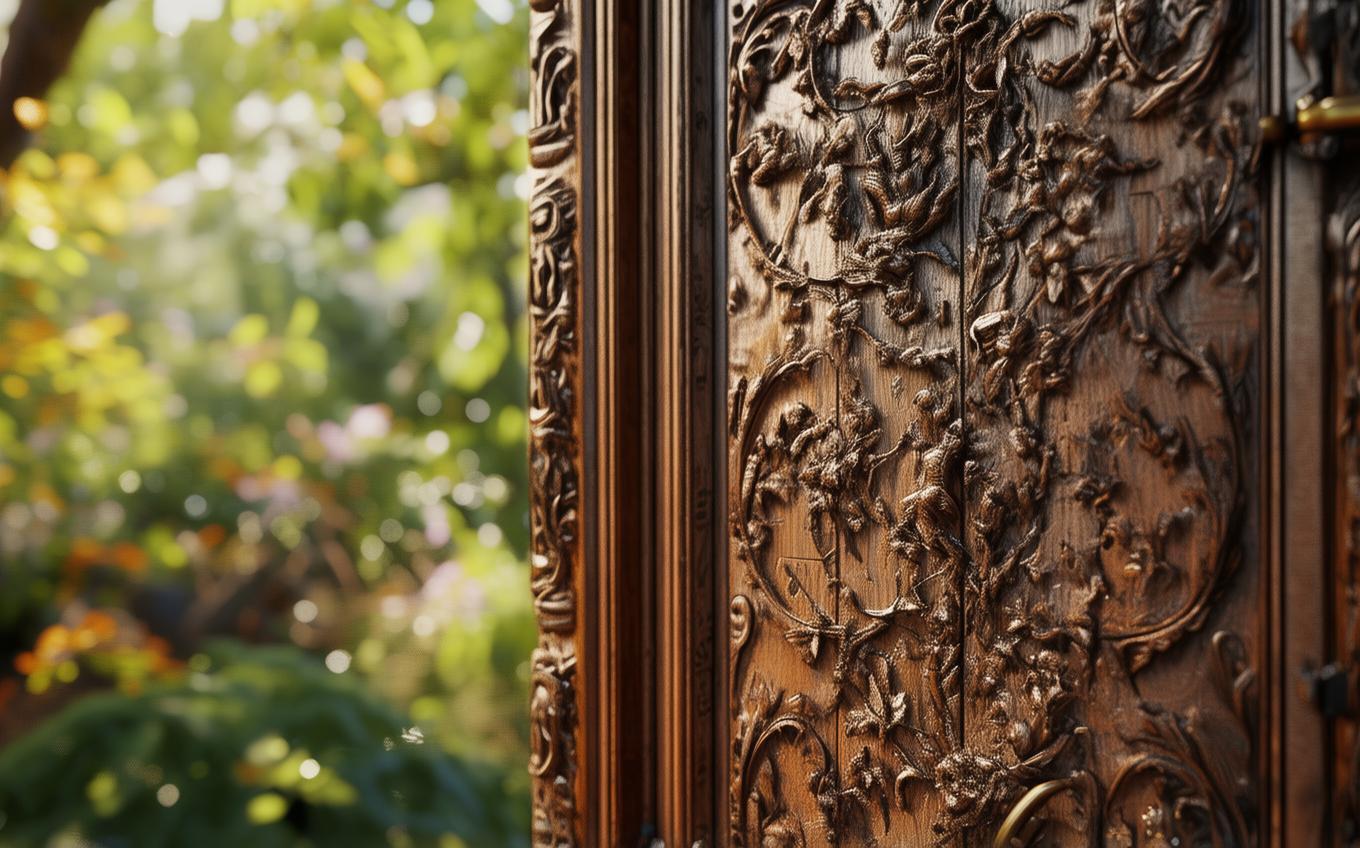
1. Basic Information
- Word: 大门
- Pinyin: dà mén
- Literal Meaning: “big door” or “large gate”
- Primary Meaning: main entrance, front gate, or large doorway to a building, courtyard, school, company, or residential area
2. In-depth Explanation
- Context and Usage:
大门 is commonly used to refer to the main gate or main entrance of a place. It is usually larger or more important than an ordinary door. In English, depending on the situation, 大门 can be translated as “main gate,” “front gate,” “main entrance,” or sometimes simply “gate.”
You can use 大门 when talking about the entrance to a school, company, park, house, apartment complex, courtyard, or public building. It often suggests the primary place where people enter and exit.
For example, a school may have several small entrances, but the main one is called 学校的大门, meaning “the school’s main gate.” A traditional Chinese house or courtyard may also have a 大门 facing the street.
大门 is different from 门, which simply means “door” or “gate.” 门 can refer to any door, such as a bedroom door or bathroom door. 大门 usually refers to a more important or larger entrance.
- Character Breakdown:
大 means “big,” “large,” or “great.”
门 means “door,” “gate,” or “entrance.”
Together, 大门 literally means “big door,” but in natural English it usually means “main gate” or “main entrance.”
3. Example Sentences
- Chinese: 学校的大门每天早上七点打开。
- Pinyin: Xuéxiào de dà mén měi tiān zǎoshang qī diǎn dǎkāi.
-
English: The school’s main gate opens at seven every morning.
-
Chinese: 请在公司大门口等我。
- Pinyin: Qǐng zài gōngsī dà mén kǒu děng wǒ.
-
English: Please wait for me at the entrance of the company.
-
Chinese: 他站在大门前,看着远处的街道。
- Pinyin: Tā zhàn zài dà mén qián, kànzhe yuǎnchù de jiēdào.
- English: He stood in front of the main gate, looking at the street in the distance.
Cultural Notes (if applicable)
In Chinese culture, the main gate of a home, courtyard, school, temple, or public building can carry symbolic importance. In traditional architecture, especially in older houses and courtyards, the 大门 was not just a practical entrance but also a sign of the family’s status and the boundary between the private home and the outside world.
You may also hear the phrase 大门口, which means “at the main entrance” or “at the gate.” The character 口 means “mouth” or “opening,” so 大门口 refers to the area right at or near the main gate.
Conclusion
大门 means “main gate” or “main entrance.” Although it literally means “big door,” learners should remember that it usually refers to the primary entrance of a place, not just any large door. Compare it with 门, which is the general word for “door” or “gate.”
Sources and Further Reading
Dictionary links are provided for independent reference. Example sentences and learning notes on this page are educational explanations rather than dictionary quotations.


Comments (0)
No comments yet. Be the first to comment!