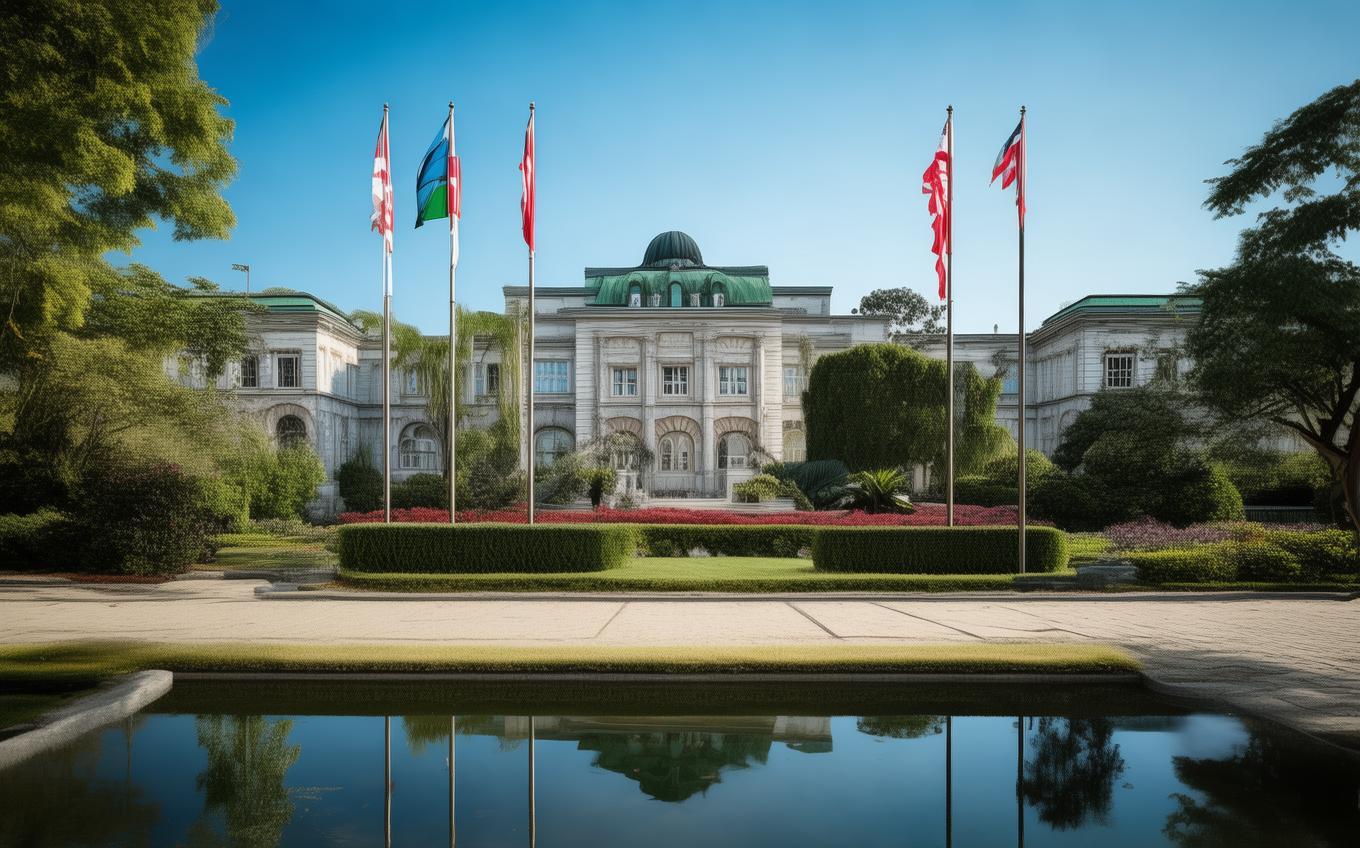
1. Basic Information
- Word: 大使馆
- Pinyin: dà shǐ guǎn
- Literal Meaning: Big / Ambassador / Building or Establishment
- Primary Meaning: Embassy (the official diplomatic mission of one country in another)
2. In-depth Explanation
-
Context and Usage: The word "大使馆" refers specifically to an embassy, which is the highest-level diplomatic representation of one sovereign state in the capital city of another. It is a formal and official term. You use it when talking about the physical building, the institution, or the staff as a collective entity. For example, you might say, "I need to go to the Chinese Embassy to apply for a visa." It is distinct from a "领事馆" (lǐng shì guǎn, consulate), which is a secondary diplomatic office usually located in major cities outside the capital and handles services for citizens and visa processing.
-
Character Breakdown: This is a three-character compound word. Understanding each part helps with memorization:
- 大 (dà): Means "big" or "great." In this context, it signifies the highest rank. An ambassador is the highest-ranking diplomat.
- 使 (shǐ): Means "to send" or "envoy." It refers to a person sent on a diplomatic mission. Together, "大使" (dà shǐ) literally means "great envoy," which is the Chinese word for "ambassador."
- 馆 (guǎn): Means "building," "hall," or "establishment." It's a common suffix for public buildings, like a library (图书馆, tú shū guǎn) or a restaurant (餐馆, cān guǎn). So, "大使馆" is literally "the ambassador's building" or "the establishment of the great envoy."
3. Example Sentences
- Chinese: 美国大使馆在北京。
- Pinyin: Měiguó dà shǐ guǎn zài Běijīng.
-
English: The U.S. Embassy is in Beijing.
-
Chinese: 我需要去中国大使馆申请签证。
- Pinyin: Wǒ xūyào qù Zhōngguó dà shǐ guǎn shēnqǐng qiānzhèng.
-
English: I need to go to the Chinese Embassy to apply for a visa.
-
Chinese: 大使馆的工作人员非常友好。
- Pinyin: Dà shǐ guǎn de gōngzuò rényuán fēicháng yǒuhǎo.
- English: The staff at the embassy are very friendly.
Cultural Notes
In international relations, an embassy is considered the sovereign territory of the sending state, even though it is physically located in the host country. This principle is respected globally. In Chinese, the term "大使馆" carries this same weight of sovereignty and formality. When Chinese people refer to their own country's missions abroad, they use the full name, like "中华人民共和国驻美利坚合众国大使馆" (Embassy of the People's Republic of China in the United States of America), which is often shortened in daily conversation to "中国驻美国大使馆" or simply "中国大使馆". The head of the embassy is the "大使" (dà shǐ, ambassador).
Conclusion
To remember "大使馆" (dà shǐ guǎn), think of it as the "Great Envoy's Building." The character 大 (dà) indicates the high rank, 使 (shǐ) signifies the diplomatic envoy, and 馆 (guǎn) tells you it's a physical place or institution. Use this word whenever you are referring to a country's primary diplomatic office in a foreign capital.
Sources and Further Reading
Dictionary links are provided for independent reference. Example sentences and learning notes on this page are educational explanations rather than dictionary quotations.



Comments (0)
No comments yet. Be the first to comment!