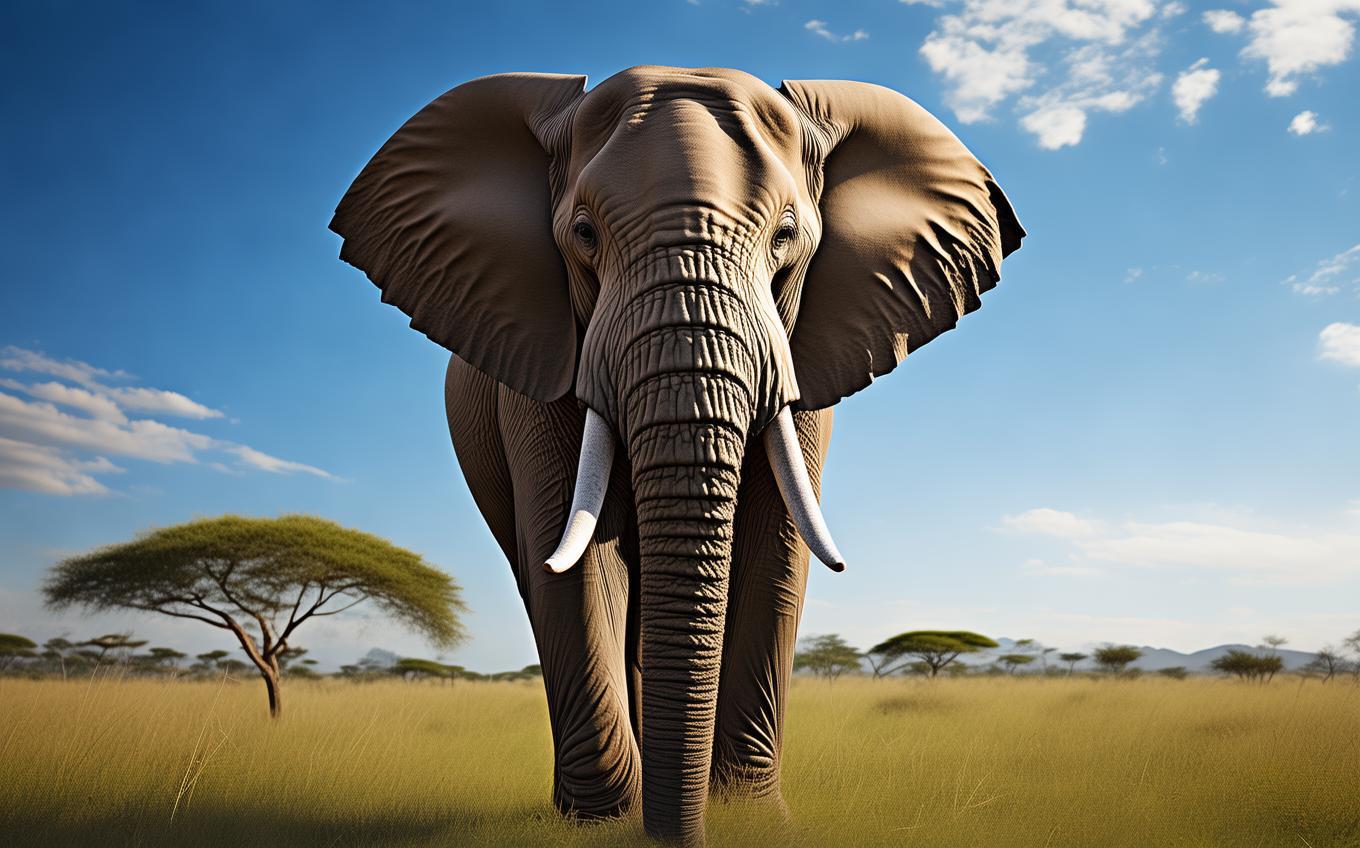
Understanding "大象" - Chinese Word Explanation
1. Basic Information
- Word: 大象
- Pinyin: dà xiàng
- Literal Meaning: Big elephant / Large elephant
- Primary Meaning: Elephant (the animal)
2. In-depth Explanation
-
Context and Usage: "大象" is the standard, everyday word for "elephant" in Mandarin Chinese. It is used in all contexts—formal, informal, scientific, and conversational. There is no separate, more formal term for the animal in common use. You can use it when talking about animals at the zoo, in documentaries, or when describing someone or something as being as large as an elephant. It is a noun and can be combined with measure words like "一头大象" (yī tóu dà xiàng - one elephant) or "一只大象" (yī zhī dà xiàng - one elephant).
-
Character Breakdown:
- 大 (dà): This character means "big" or "large." It is one of the first characters learners usually study because of its simplicity and frequency. Pictographically, it represents a person standing with arms outstretched, indicating great size.
- 象 (xiàng): This character means "elephant" on its own. Historically, it is a pictograph of an elephant, with the trunk, head, and body visible in ancient forms. Interestingly, "象" can also mean "shape," "image," or "phenomenon" in other compound words (like 现象 xiànxiàng - phenomenon), but when paired with "大," it specifically and unambiguously refers to the animal. Together, "大象" literally describes the animal as a "large elephant," though it simply functions as the word for the species.
3. Example Sentences
- Chinese: 我在动物园看到了一头大象。
- Pinyin: Wǒ zài dòngwùyuán kàn dào le yī tóu dà xiàng.
-
English: I saw an elephant at the zoo.
-
Chinese: 大象的鼻子很长。
- Pinyin: Dà xiàng de bízi hěn cháng.
-
English: An elephant's trunk is very long.
-
Chinese: 非洲大象比亚洲大象大一些。
- Pinyin: Fēizhōu dà xiàng bǐ Yàzhōu dà xiàng dà yīxiē.
- English: African elephants are somewhat larger than Asian elephants.
Cultural Notes
In Chinese culture, the elephant (大象) is a symbol of strength, wisdom, and good fortune. The word "象" sounds similar to "祥" (xiáng), which means "auspicious" or "lucky." Because of this homophonic connection, elephant statues and images are often placed in homes or businesses to attract prosperity and peace. Additionally, in the ancient Chinese board game of chess (象棋 xiàngqí), the "elephant" is a defensive piece, reflecting the animal's perceived protective and steady nature. The idiom "盲人摸象" (máng rén mō xiàng - blind men touching an elephant) comes from a Buddhist parable and is used to describe someone who draws a conclusion from a limited perspective, unable to see the whole picture.
Conclusion
To remember "大象" (dà xiàng), think of a "big" (大) "elephant" (象). The name itself paints a picture of the animal's most obvious characteristic—its massive size. Use this word whenever you want to talk about elephants in Chinese, and remember its cultural ties to luck and wisdom.
Sources and Further Reading
Dictionary links are provided for independent reference. Example sentences and learning notes on this page are educational explanations rather than dictionary quotations.



Comments (0)
No comments yet. Be the first to comment!