1. Basic Information
- Word: 点燃
- Pinyin: diǎn rán
- Literal Meaning: “to touch/ignite + to burn”
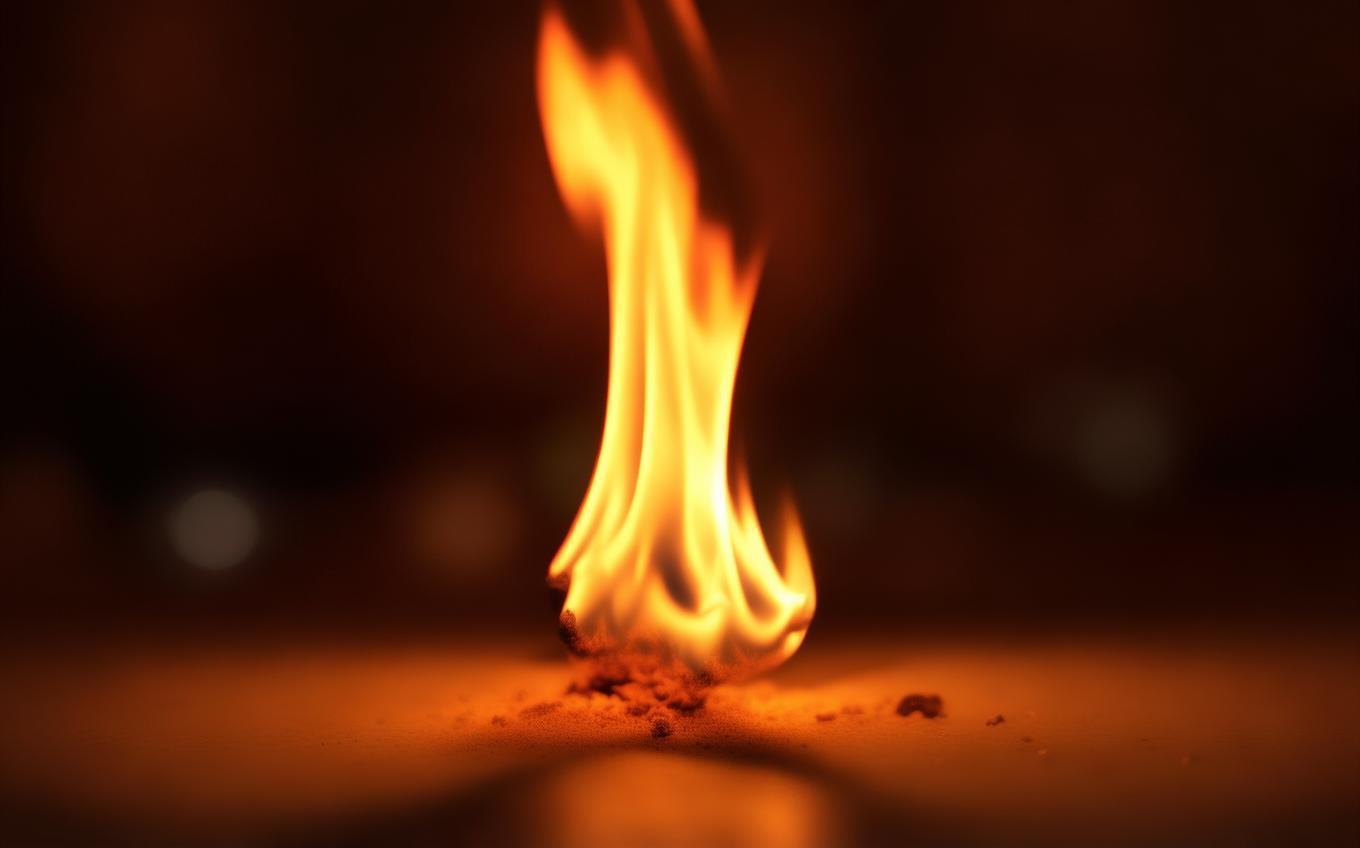
- Primary Meaning: to ignite, to light, to set on fire
2. In-depth Explanation
Context and Usage
点燃 is a fairly common verb in Chinese. It is used when something starts burning because someone lights it, or when something begins to catch fire.
It can be used in two main ways:
-
Literal meaning:
To light something physically, such as a candle, a fire, fireworks, or a stove.
- Example idea: lighting a candle = 点燃蜡烛 -
Figurative meaning:
To “ignite” emotions, enthusiasm, hope, anger, or passion. In this sense, it is often used in news, writing, speeches, and literature.
- Example idea: “This speech ignited everyone’s passion.”
Nuances
- 点燃 is a little more formal and vivid than simply saying “to light” in English.
- It often suggests the beginning of a stronger reaction, such as fire spreading or emotions becoming intense.
- In metaphorical use, it can mean something has started a movement, feeling, or excitement.
Character Breakdown
-
点
Basic meaning: point, dot, to tap, to light
In this word, it has the sense of “to ignite” or “to light up.” -
燃
Basic meaning: to burn
This character clearly relates to fire and burning.
So 点燃 literally gives the idea of “starting the burning process.”
3. Example Sentences
- Chinese: 他点燃了蜡烛。
- Pinyin: Tā diǎn rán le là zhú.
-
English: He lit the candle.
-
Chinese: 孩子们在院子里点燃了烟花。
- Pinyin: Hái zi men zài yuàn zi lǐ diǎn rán le yān huā.
-
English: The children lit fireworks in the yard.
-
Chinese: 这部电影点燃了我的梦想。
- Pinyin: Zhè bù diàn yǐng diǎn rán le wǒ de mèng xiǎng.
- English: This movie ignited my dreams.
Cultural Notes
In Chinese, 点燃 is often used in poetic or powerful language to create a strong image. It appears frequently in:
- speeches
- news headlines
- songs
- inspirational writing
For example, people may say 点燃希望 (“ignite hope”) or 点燃激情 (“spark passion”). These expressions sound energetic and emotionally strong.
Fire also has an important symbolic role in Chinese culture. It can represent warmth, energy, transformation, and celebration. At the same time, it can also suggest danger or destruction, so context matters.
Conclusion
点燃 (diǎn rán) means to ignite, to light, or to set on fire. It is used both literally for physical fire and figuratively for emotions, hope, and enthusiasm. If you remember 点 as “to light” and 燃 as “to burn,” the meaning becomes easy to understand.
Sources and Further Reading
Dictionary links are provided for independent reference. Example sentences and learning notes on this page are educational explanations rather than dictionary quotations.



Comments (0)
No comments yet. Be the first to comment!