1. Basic Information
- Word: 堵车
- Pinyin: dǔ chē
- Literal Meaning: "Blocked cars" or "clogged vehicles" (堵 = to block/clog; 车 = car/vehicle)
- Primary Meaning: Traffic jam; traffic congestion
2. In-depth Explanation
- Context and Usage:
"堵车" is a verb-object phrase (离合词) used to describe the situation when vehicles are stuck in heavy traffic and cannot move smoothly. In English, it can be translated as "traffic jam" (noun) or "to be stuck in traffic" (verb phrase).
The word is extremely common in everyday Chinese conversation, especially in urban settings. It can be used:
- To describe current traffic conditions (e.g., "路上堵车" = "The road is congested")
- To explain lateness (e.g., "我堵车了" = "I was stuck in traffic")
- To ask about traffic conditions (e.g., "堵车吗?" = "Is there traffic?")
A useful nuance: since "堵车" functions as a verb-object structure, you can insert other words between the two characters in certain contexts, such as "堵了车" (was stuck in traffic) or "堵了很久的车" (was stuck in traffic for a long time). However, for beginners, using it as a fixed expression is perfectly fine.
- Character Breakdown:
- 堵 (dǔ): This character means "to block," "to stop up," or "to clog." It is composed of the radical 土 (earth/soil) on the left, suggesting something physical blocking a passage. Think of it as an obstruction that prevents smooth flow.
- 车 (chē): This character means "vehicle," "car," or "cart." It is a pictographic character that originally resembled a cart with wheels seen from above. It refers broadly to any wheeled vehicle, including cars, buses, and trucks.
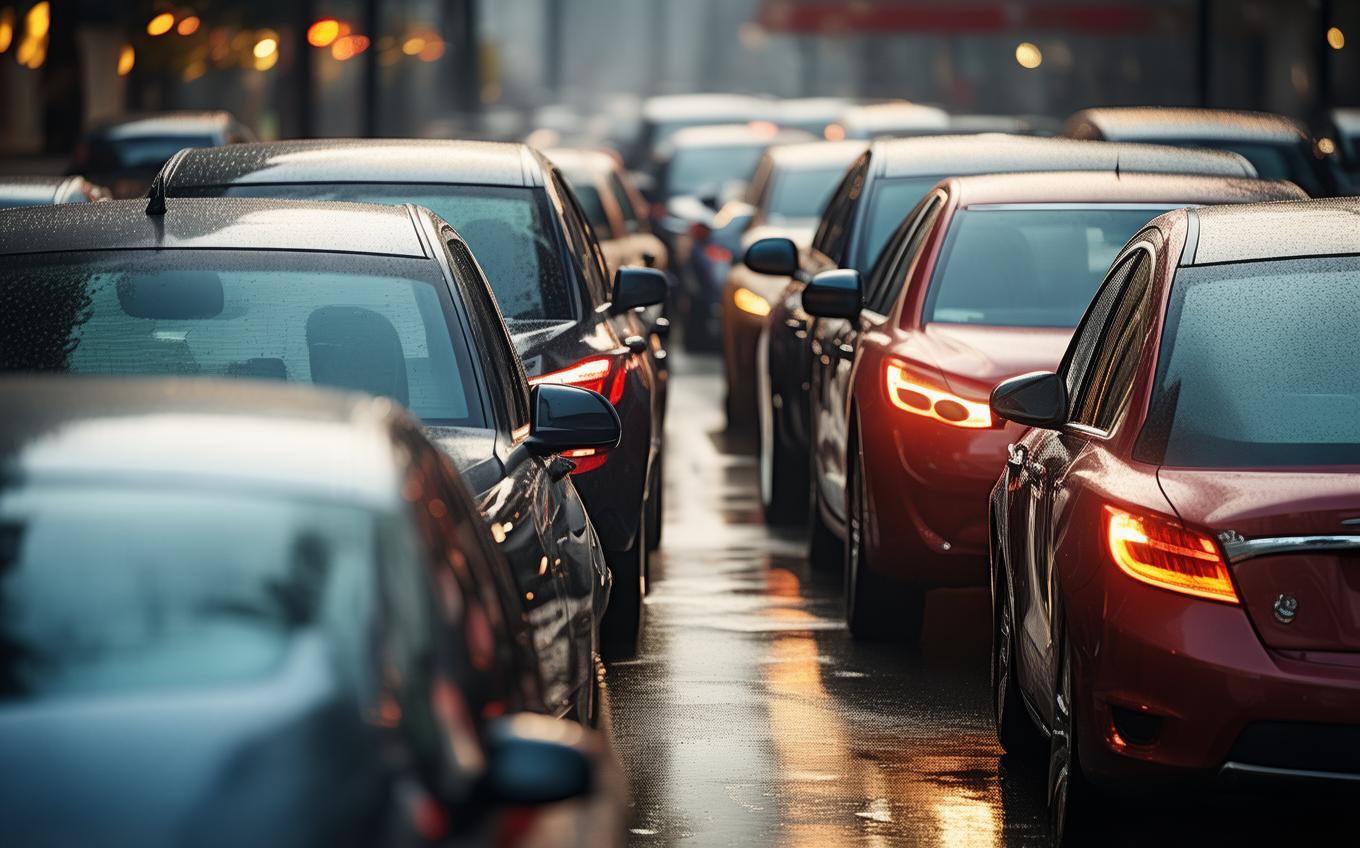
Together, "堵车" literally paints the picture of "vehicles being blocked" — a vivid image of cars clogged on a road, unable to move.
3. Example Sentences
- Chinese: 今天早上路上堵车堵得很厉害,我迟到了半个小时。
- Pinyin: Jīntiān zǎoshang lùshang dǔ chē dǔ de hěn lìhài, wǒ chídào le bàn gè xiǎoshí.
- English: This morning the road was terribly congested, and I was half an hour late.
- Chinese: 这个时间段是高峰期,肯定会堵车。
- Pinyin: Zhège shíjiānduàn shì gāofēngqī, kěndìng huì dǔ chē.
- English: This time period is rush hour, so there will definitely be traffic.
- Chinese: 如果你不想堵车,最好坐地铁去。
- Pinyin: Rúguǒ nǐ bù xiǎng dǔ chē, zuìhǎo zuò dìtiě qù.
- English: If you don't want to get stuck in traffic, you'd better take the subway.
Cultural Notes
Traffic congestion is a significant part of daily life in many major Chinese cities, such as Beijing, Shanghai, and Guangzhou. As a result, "堵车" is one of the most frequently used words in urban Chinese conversation. It is also one of the most common (and socially acceptable) excuses for being late in Chinese culture — saying "堵车了" (I was stuck in traffic) is widely understood and generally accepted, even if sometimes used loosely.
Interestingly, with the rapid growth of car ownership in China since the 2000s, traffic jams have become a major topic of public discussion. Major cities have implemented various measures to combat 堵车, including license plate lotteries (摇号), driving restrictions based on license plate numbers (限行), and massive investments in public transportation. You'll often hear people complain about "堵车" as part of daily small talk, similar to how English speakers might discuss the weather — it's a universal, relatable topic.
The word is also commonly used in its abbreviated form: "堵" alone can be used colloquially, as in "路上很堵" (The road is very congested).
Conclusion
"堵车" (dǔ chē) is an essential word for anyone living in or visiting Chinese-speaking urban areas. Remember it as a vivid two-character phrase: "堵" (block) + "车" (cars) = "blocked cars" = traffic jam. When you're running late in China, just say "堵车了" — everyone will understand!
Sources and Further Reading
Dictionary links are provided for independent reference. Example sentences and learning notes on this page are educational explanations rather than dictionary quotations.

Comments (0)
No comments yet. Be the first to comment!