Title: Understanding "粉碎" - Chinese Word Explanation
1. Basic Information
- Word: 粉碎
- Pinyin: fěn suì
- Literal Meaning: "powder + broken to pieces" — to break something into powder or tiny fragments
- Primary Meaning: to smash, shatter, crush, or pulverize; figuratively, to completely destroy, demolish, or foil something such as a plot, rumor, or hope
2. In-depth Explanation
- Context and Usage:
粉碎 is a strong, forceful word. It implies that something is broken so completely that it becomes powder or very small pieces. It can be used in two main ways:
-
Literal / physical: describing the crushing, grinding, or shattering of solid objects.
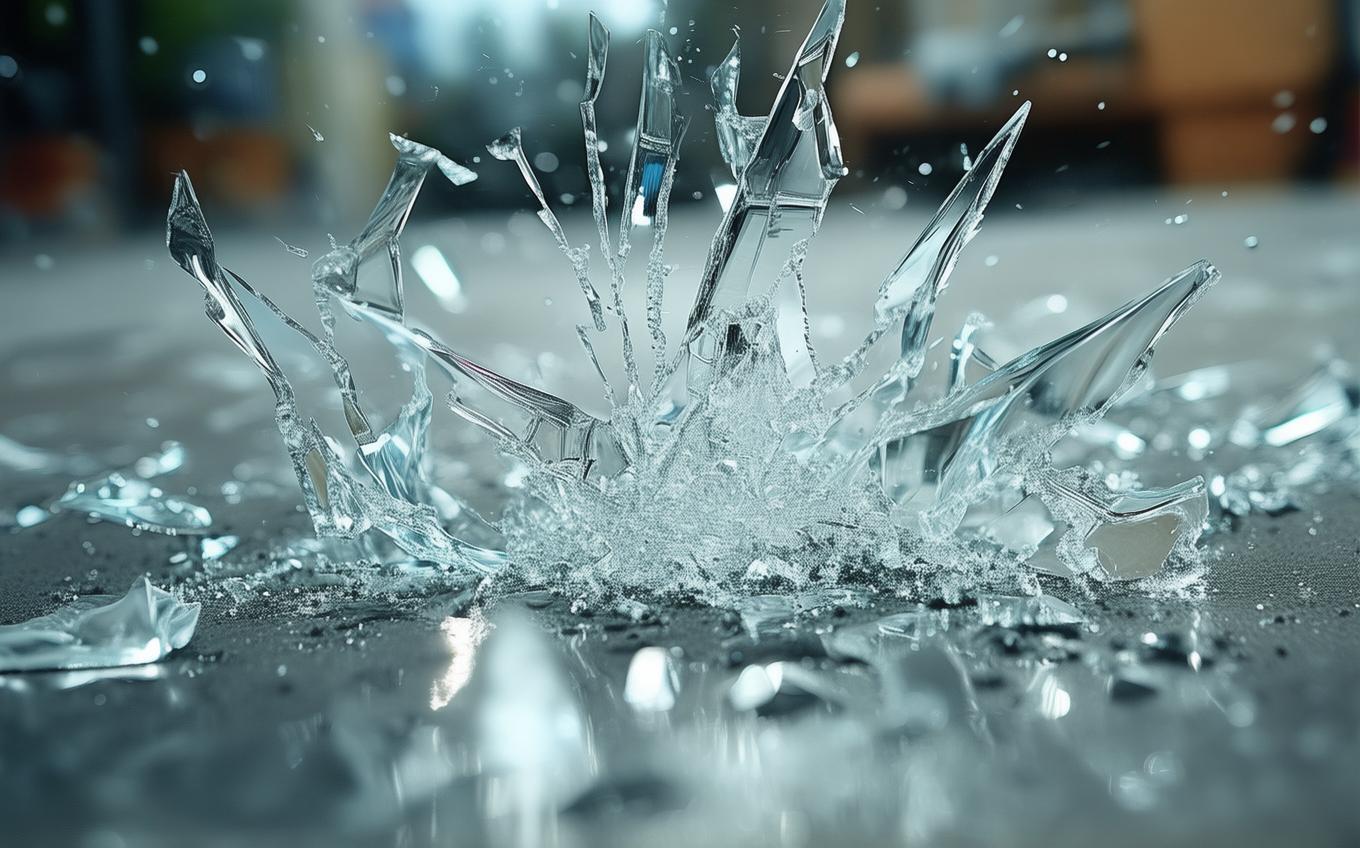
- Example idea: crushing stones into sand, glass shattering into pieces.
-
Figurative / abstract: describing the complete destruction of non-physical things, such as:
- 粉碎谣言 (fěn suì yáo yán) — to smash a rumor
- 粉碎阴谋 (fěn suì yīn móu) — to foil or crush a plot
- 粉碎梦想 (fěn suì mèng xiǎng) — to shatter someone’s dreams
This word often appears in news, political language, and formal speech because it conveys a decisive, thorough, and powerful sense of destruction. It is stronger than words like 破坏 (pò huài, “to damage or destroy”) because 粉碎 emphasizes complete breaking into tiny pieces, leaving nothing intact.
粉碎 can function as:
- A verb: 粉碎 + object
Example: 粉碎阴谋 — to crush a plot
- A resultative complement / predicate: verb + 得 + 粉碎
Example: 摔得粉碎 — to fall and shatter into pieces
- Character Breakdown:
- 粉 (fěn): powder, dust; also can mean “to grind into powder.” It gives the image of something reduced to fine particles.
- 碎 (suì): broken into small pieces, shattered, fragmented. It gives the image of something broken apart.
Together, 粉碎 literally means “to break something into powder-like pieces.” This visual image helps explain why the word also means “to completely destroy” in a figurative sense.
3. Example Sentences
- Chinese: 机器把石头粉碎成沙子。
- Pinyin: Jī qì bǎ shí tou fěn suì chéng shā zi.
-
English: The machine crushed the stones into sand.
-
Chinese: 杯子掉在地上摔得粉碎。
- Pinyin: Bēi zi diào zài dì shàng shuāi de fěn suì.
-
English: The cup fell on the floor and shattered into pieces.
-
Chinese: 警方迅速粉碎了恐怖分子的阴谋。
- Pinyin: Jǐng fāng xùn sù fěn suì le kǒng bù fèn zǐ de yīn móu.
- English: The police quickly crushed the terrorists’ plot.
Cultural Notes
In Chinese official media and formal speech, 粉碎 is frequently used to describe the complete defeat of conspiracies, rumors, enemy plans, or counter-revolutionary activities. It has a strong, decisive tone and is often used in political or patriotic contexts.
A related idiom is 粉身碎骨 (fěn shēn suì gǔ), which literally means “body powdered and bones crushed.” It is used to express complete sacrifice or devotion, often translated as “to sacrifice oneself completely” or “to die a thousand deaths.” This idiom shows how the characters 粉 and 碎 carry very strong imagery of total destruction.
Conclusion
Remember 粉碎 as “to smash into powder.” Use it when you want to describe something being completely destroyed, either physically, like crushing stone or shattering glass, or figuratively, like crushing a rumor, plot, or hope. The image of powder (粉) and broken pieces (碎) will help you remember its powerful meaning.



Comments (0)
No comments yet. Be the first to comment!