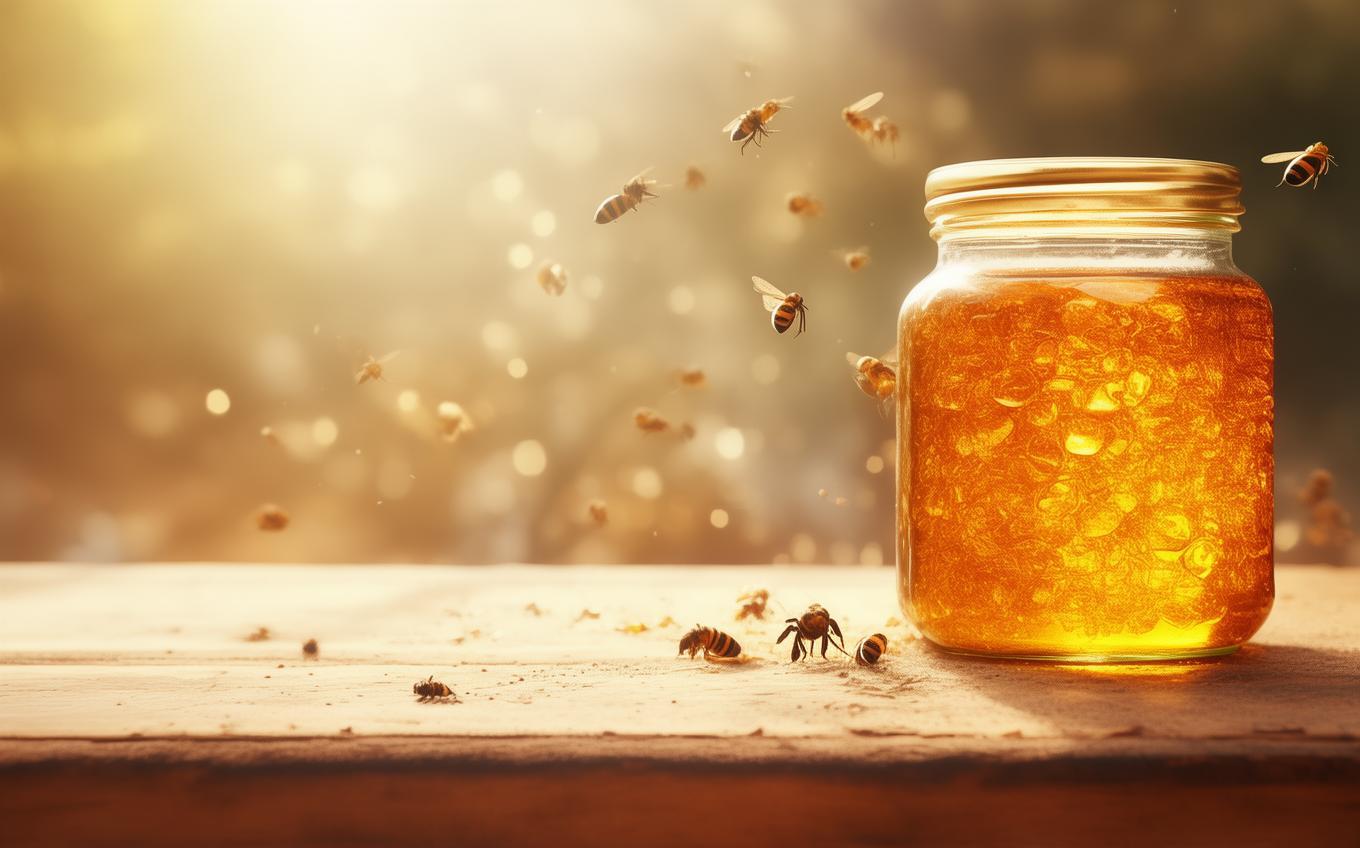
1. Basic Information
- Word: 蜂蜜
- Pinyin: fēng mì
- Literal Meaning: "bee honey" (蜂 = bee, 蜜 = honey/nectar)
- Primary Meaning: Honey (the sweet, viscous food substance produced by bees)
2. In-depth Explanation
Context and Usage
蜂蜜 is the standard, everyday word for "honey" in Chinese. It is used in all contexts — from grocery shopping and cooking to traditional medicine and casual conversation. There is no significant difference in formality; it is equally appropriate in spoken and written Chinese.
The word is almost always used as a noun. You can use it to refer to honey as a food, an ingredient, or a health product. Unlike in English, where "honey" can also be a term of endearment (e.g., "Honey, I'm home"), 蜂蜜 is not used this way in Chinese. Chinese speakers use entirely different words for affectionate address, such as 亲爱的 (qīn ài de, "darling") or 宝贝 (bǎo bèi, "baby/treasure").
Character Breakdown
蜂 (fēng) — This character means "bee" or "wasp." It contains the insect radical 虫 (chóng), which appears in many characters related to insects and small creatures. The right side of the character provides a phonetic hint to its pronunciation.
蜜 (mì) — This character means "honey" or "nectar," and by extension, anything sweet and thick. It contains the insect radical 虫 at the bottom as well, reinforcing the connection to bees. The top part of the character relates to a roof or covering, evoking the idea of honey stored inside a hive.
Together, 蜂蜜 literally means "bee honey," which is a logical and descriptive compound word.
3. Example Sentences
- Chinese: 我每天早上喝一杯蜂蜜水。
- Pinyin: Wǒ měi tiān zǎo shang hē yì bēi fēng mì shuǐ.
- English: I drink a cup of honey water every morning.
- Chinese: 这种蜂蜜是从山里的蜂场采来的。
- Pinyin: Zhè zhǒng fēng mì shì cóng shān lǐ de fēng chǎng cǎi lái de.
- English: This kind of honey is harvested from a bee farm in the mountains.
- Chinese: 蜂蜜可以用来代替糖,更健康一些。
- Pinyin: Fēng mì kě yǐ yòng lái dài tì táng, gèng jiàn kāng yì xiē.
- English: Honey can be used as a substitute for sugar; it is a bit healthier.
Cultural Notes
Honey holds an important place in Chinese culture, particularly in Traditional Chinese Medicine (TCM). It is considered a "neutral" food that nourishes the body, soothes the throat, and aids digestion. Many Chinese people drink warm 蜂蜜水 (fēng mì shuǐ, "honey water") in the morning or before bed as a daily health habit.
In TCM, honey is also used as a natural remedy for coughs and dry throats, often combined with 柠檬 (níng méng, "lemon") or 梨 (lí, "pear").
Additionally, China is one of the world's largest producers and consumers of honey. When buying honey in China, you may encounter terms like 纯蜂蜜 (chún fēng mì, "pure honey") or 土蜂蜜 (tǔ fēng mì, "native/wild honey"), the latter referring to honey from native Chinese bee species, which is often prized for its quality.
Conclusion
蜂蜜 (fēng mì) is a straightforward and highly useful word to learn. Remember it as a compound of two logical parts: 蜂 ("bee") + 蜜 ("honey") = "bee honey." It is used exactly like the English word "honey" in food and health contexts, but be careful not to use it as a term of endearment. If you remember the image of bees (蜂) producing sweet honey (蜜), the word will stick easily.
Sources and Further Reading
Dictionary links are provided for independent reference. Example sentences and learning notes on this page are educational explanations rather than dictionary quotations.



Comments (0)
No comments yet. Be the first to comment!