1. Basic Information
- Word: 孵化
- Pinyin: fū huà
- Literal Meaning: "to hatch/incubate + to transform/change"
- Primary Meaning: to hatch; to incubate; incubation
2. In-depth Explanation
Context and Usage
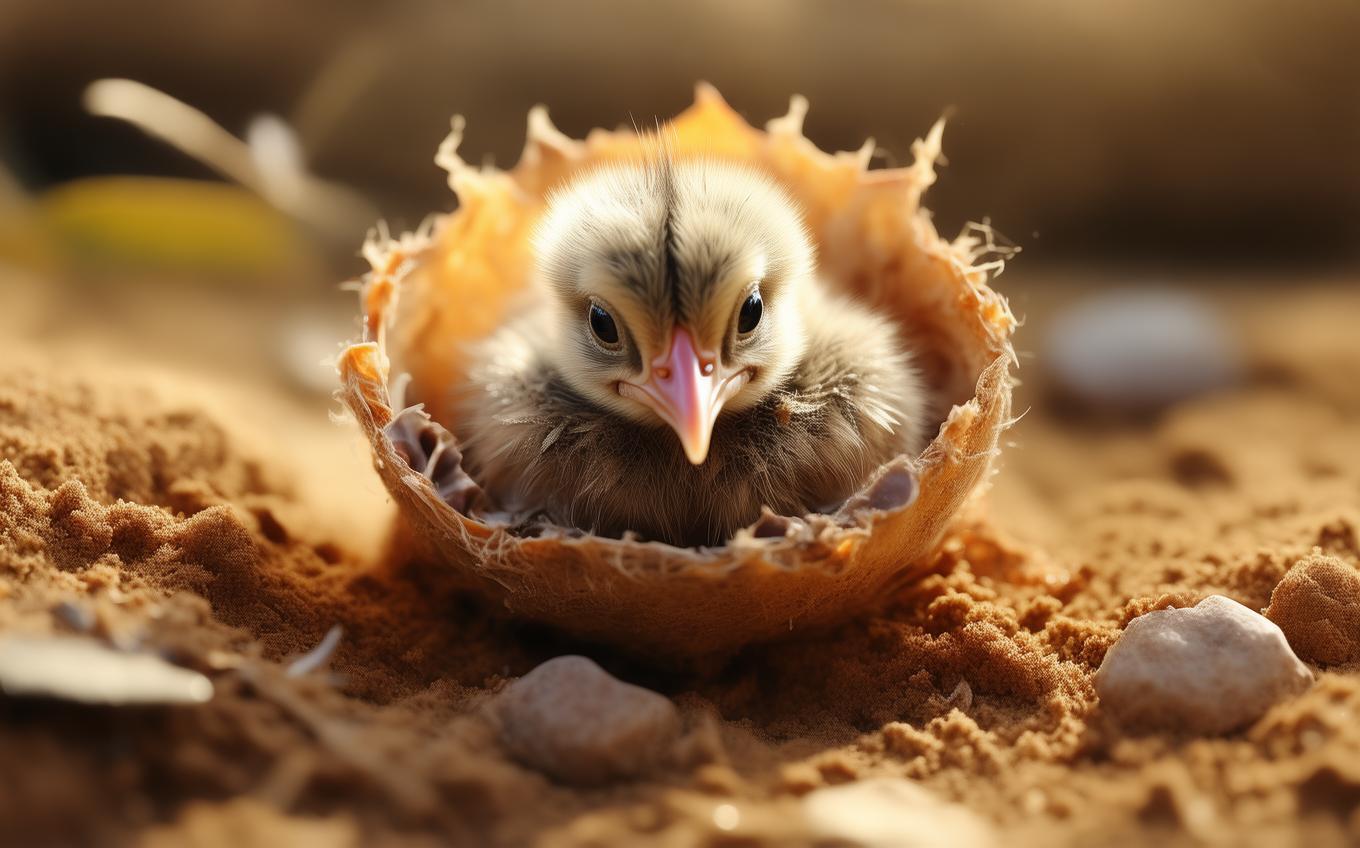
孵化 refers to the process by which an egg develops into a young animal. It is commonly used for birds, reptiles, insects, and fish. The word can be used as both a verb and a noun.
It may be used intransitively:
- 鸡蛋正在孵化。
Jīdàn zhèngzài fūhuà.
The eggs are incubating / hatching.
It may also be used transitively:
- 人工孵化鱼卵
réngōng fūhuà yúluǎn
to artificially incubate fish eggs
In everyday speech, Chinese speakers often use the single character 孵 (fū) when talking about a bird sitting on eggs:
- 母鸡在孵蛋。
Mǔjī zài fū dàn.
The hen is sitting on / incubating the eggs.
孵化 is slightly more formal, technical, or scientific than 孵 alone. It emphasizes the whole developmental process, not only the sitting action.
English distinguishes between “incubate” and “hatch,” but Chinese 孵化 often covers both meanings. Context tells you whether it refers to the entire process or the moment the young animal comes out. To stress emergence, Chinese often uses a result complement such as 出来 (chūlái).
Common collocations:
- 孵化器 (fūhuàqì) — incubator
- 孵化期 (fūhuàqī) — incubation period
- 孵化率 (fūhuàlǜ) — hatching rate
- 创业孵化器 (chuàngyè fūhuàqì) — startup incubator
Character Breakdown
- 孵 (fū): to brood, to sit on eggs, to incubate. This character contains a component related to 卵 (luǎn), meaning “egg,” which reinforces its connection to eggs and hatching.
- 化 (huà): to change, transform, or turn into. It appears in words such as 变化 (biànhuà, “change”) and 文化 (wénhuà, “culture”). In 孵化, it emphasizes the transformation from an embryo into a living young animal.
Together, 孵化 literally suggests “incubation-transformation”: the process of keeping eggs warm so that the embryo develops and eventually emerges.
3. Example Sentences
- Chinese: 鸡蛋正在孵化,小鸡快要出来了。
- Pinyin: Jīdàn zhèngzài fūhuà, xiǎo jī kuài yào chūlái le.
-
English: The eggs are hatching; the chicks are about to come out.
-
Chinese: 我们人工孵化了一批稀有鸟蛋。
- Pinyin: Wǒmen réngōng fūhuà le yī pī xīyǒu niǎo dàn.
-
English: We artificially incubated a batch of rare bird eggs.
-
Chinese: 这个机构帮助孵化科技初创企业。
- Pinyin: Zhège jīgòu bāngzhù fūhuà kējì chūchuàng qǐyè.
- English: This organization helps incubate tech startups.
Cultural Notes
In modern Chinese, 孵化 is used far beyond biology. A 孵化器 (fūhuàqì, “incubator”) often refers to a business incubator or startup accelerator. China has many 创业孵化基地 (chuàngyè fūhuà jīdì, “entrepreneurship incubation bases”) supported by governments, universities, and companies.
The metaphor works because startup incubators, like a hen keeping eggs warm, provide a protected and nourishing environment for something to develop and eventually succeed. This has made 孵化 very common in business, technology, and innovation contexts, even though its original image comes from agriculture and nature.
Conclusion
Remember 孵化 as “to hatch” or “to incubate.” Picture a hen keeping eggs warm (孵) until they change (化) into chicks. Use it for real eggs, and also for the modern metaphor of nurturing startups, projects, or ideas.
Sources and Further Reading
Dictionary links are provided for independent reference. Example sentences and learning notes on this page are educational explanations rather than dictionary quotations.



Comments (0)
No comments yet. Be the first to comment!