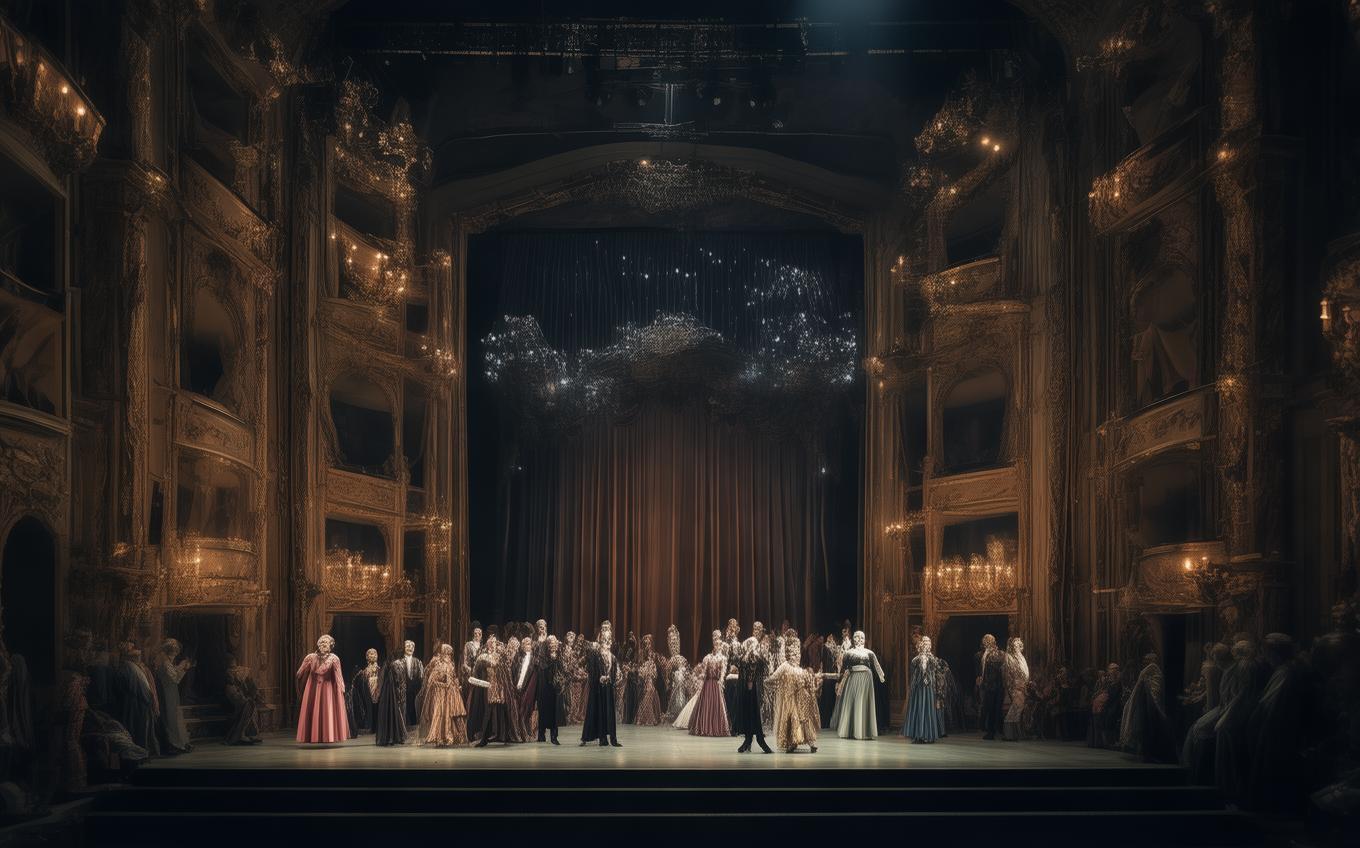
1. Basic Information
- Word: 歌剧
- Pinyin: gē jù
- Literal Meaning: song + drama (a play performed with singing)
- Primary Meaning: opera (a theatrical work in which the story is told mainly through singing, often with orchestral accompaniment)
2. In-depth Explanation
- Context and Usage: 歌剧 is the standard modern Chinese word for “opera.” Use it when talking about Western-style opera (such as works by Verdi or Puccini) and, more broadly, when referring to sung dramatic performances as a genre. It is a neutral, everyday term you will see on theater programs, in news articles, and in conversation about the arts. It is not the usual word for traditional Chinese opera forms: those are more often called 戏曲 (xì qǔ) in general, or named specifically (for example, 京剧 jīng jù for Peking opera). In casual speech, people may say 看歌剧 (kàn gē jù, “watch an opera”) or 听歌剧 (tīng gē jù, “listen to an opera”). The word itself does not imply comedy or tragedy; mood and style come from context or from modifiers such as 喜剧歌剧 or simply from the title of the work.
- Character Breakdown: 歌 (gē) means “song” or “to sing.” 剧 (jù) means “drama,” “play,” or “theatrical performance.” Together they describe a drama carried by song—exactly the idea behind “opera.”
3. Example Sentences
- Chinese: 她很喜欢听意大利歌剧。
- Pinyin: Tā hěn xǐhuan tīng Yìdàlì gējù.
-
English: She really likes listening to Italian opera.
-
Chinese: 我们周末去国家大剧院看了一场歌剧。
- Pinyin: Wǒmen zhōumò qù Guójiā Dàjùyuàn kàn le yì chǎng gējù.
-
English: We went to the National Centre for the Performing Arts this weekend and saw an opera.
-
Chinese: 这部歌剧的音乐非常动人。
- Pinyin: Zhè bù gējù de yīnyuè fēicháng dòngrén.
- English: The music of this opera is very moving.
Cultural Notes (if applicable)
In Chinese, Western opera and traditional Chinese theatrical forms are usually kept distinct in vocabulary. 歌剧 points mainly to the European operatic tradition and to modern works in that style, which became widely known in China in the twentieth century and are now staged in major cities. Traditional forms such as Peking opera are culturally central but are not normally labeled 歌剧; learners who mix the terms may be understood, but using 京剧 or 戏曲 for those traditions sounds more precise. Opera houses, student productions, and classical-music media all use 歌剧 in much the same way English uses “opera.”
Conclusion
歌剧 (gē jù) means “opera”: 歌 is “song,” 剧 is “drama,” and together they name a play told through singing. Remember it for Western-style opera, and use words like 京剧 or 戏曲 when you mean traditional Chinese opera.
Sources and Further Reading
Dictionary links are provided for independent reference. Example sentences and learning notes on this page are educational explanations rather than dictionary quotations.



Comments (0)
No comments yet. Be the first to comment!