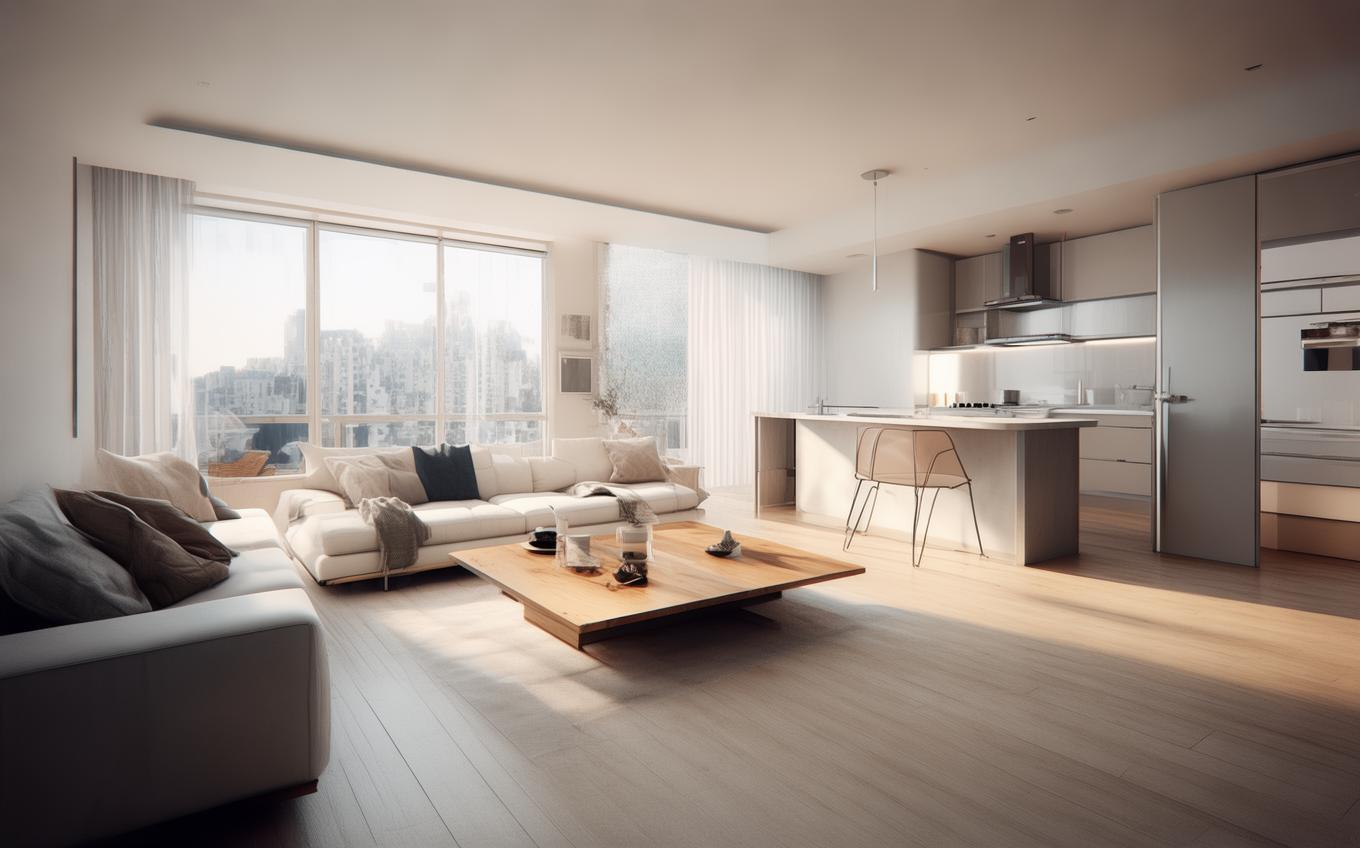
Understanding "公寓" - Chinese Word Explanation
1. Basic Information
- Word: 公寓
- Pinyin: gōngyù
- Literal Meaning: public (or shared) residence
- Primary Meaning: an apartment; a unit in a multi-family residential building, or the apartment building itself
2. In-depth Explanation
- Context and Usage: 公寓 is the standard word for an apartment in modern Mandarin. Use it when you mean a self-contained home inside a larger residential building, rather than a standalone house. It can refer either to one unit (“my apartment”) or to the whole building (“that apartment building”), depending on the measure word and the sentence. Common measure words are 间 (jiān) or 套 (tào) for a single unit, and 栋 (dòng) or 幢 (zhuàng) for the building. You will hear it in housing ads, rental talk, and everyday conversation about where someone lives. It is neutral in tone: not slang, and not limited to luxury housing, though phrases like 服务式公寓 can specifically mean a serviced apartment. Do not use it for a detached house (房子 or 别墅) or for a temporary hotel room (房间 or 客房).
- Character Breakdown: 公 (gōng) means “public,” “common,” or “shared.” 寓 (yù) means “to reside” or “a dwelling.” Together they suggest a residence made up of shared or multiple units—the idea behind an apartment building. 寓 also appears in words such as 寓所 (yùsuǒ, “residence”) and 寓言 (yùyán, “fable,” literally a story with a meaning “lodged” in it).
3. Example Sentences
- Chinese: 我住在一间小公寓里。
- Pinyin: Wǒ zhù zài yì jiān xiǎo gōngyù lǐ.
-
English: I live in a small apartment.
-
Chinese: 这栋公寓靠近地铁站,上班很方便。
- Pinyin: Zhè dòng gōngyù kàojìn dìtiě zhàn, shàngbān hěn fāngbiàn.
-
English: This apartment building is close to the subway station, so commuting is very convenient.
-
Chinese: 他们正在找一套带家具的公寓。
- Pinyin: Tāmen zhèngzài zhǎo yí tào dài jiājù de gōngyù.
- English: They are looking for a furnished apartment.
Cultural Notes (if applicable)
In everyday speech across the Chinese-speaking world, 公寓 simply means “apartment.” Local usage can be more specific. In Taiwan, 公寓 often refers to a lower-rise walk-up (commonly about five stories or fewer, without an elevator), while a taller building with elevators is more often called 大厦 (dàshà). In mainland China, everyday speakers use 公寓 for ordinary apartments, but in real-estate and legal contexts the word can also label commercial or serviced apartments, which may differ from standard 住宅 (zhùzhái, “residential housing”) in property rights, length of land-use term, and utility rates. For learners, the safe default is: 公寓 = apartment. When reading a property listing, check whether the ad is describing ordinary housing or a commercial/serviced apartment.
Conclusion
公寓 (gōngyù) means “apartment,” built from 公 (“public/shared”) and 寓 (“dwelling”). Use 间 or 套 for one unit and 栋 or 幢 for the building, and remember that local real-estate rules can give the word a narrower legal sense even when daily speech stays simple.
Sources and Further Reading
Dictionary links are provided for independent reference. Example sentences and learning notes on this page are educational explanations rather than dictionary quotations.



Comments (0)
No comments yet. Be the first to comment!