Introduction
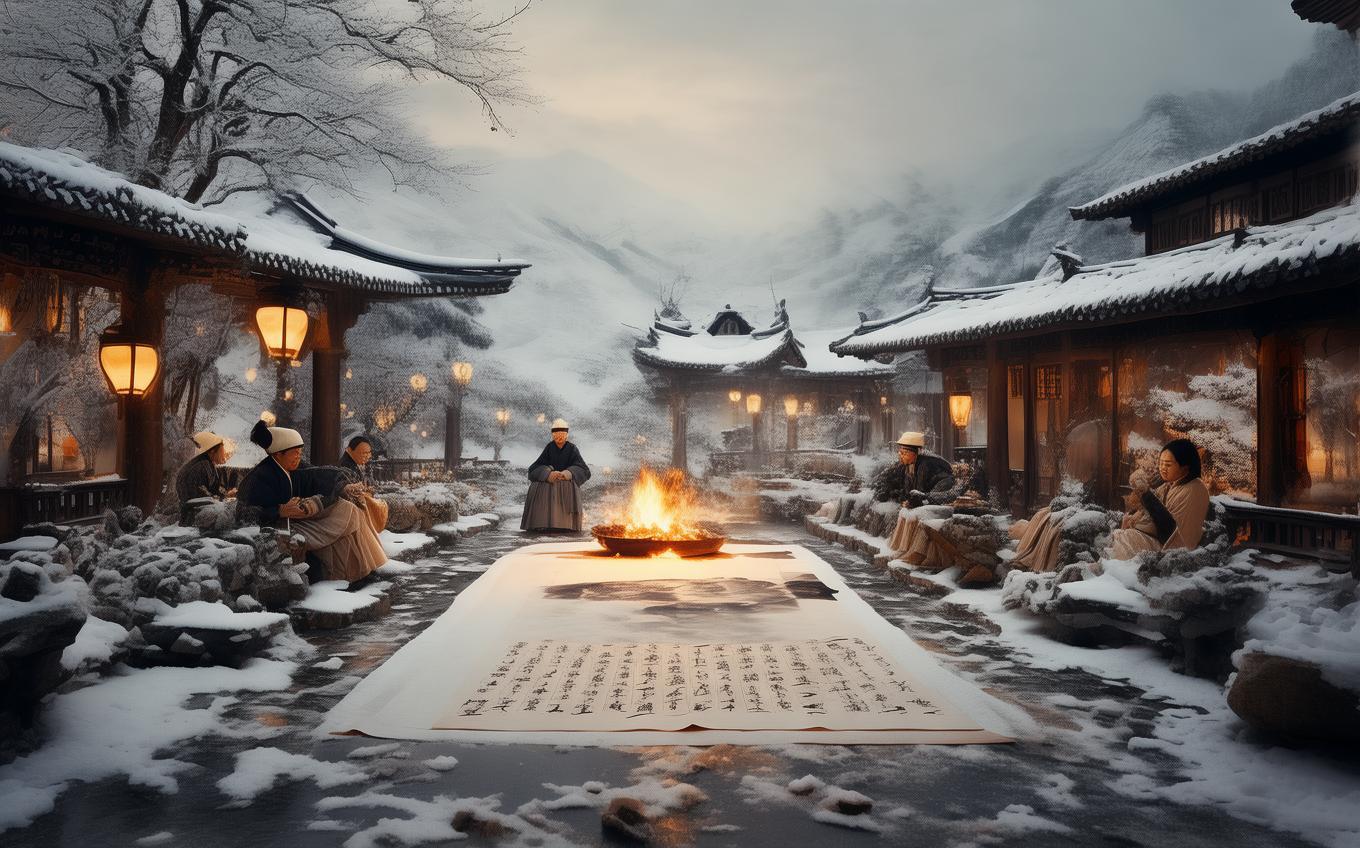
封行高 (Fēng Xínggāo) was a poet of the Tang Dynasty, an era widely regarded as the golden age of Chinese poetry. While not among the most celebrated names like Li Bai or Du Fu, his works offer valuable glimpses into the refined social culture of Tang literati. The poem we examine today, "冬日宴于庶子宅各赋一字得色" (Dōngrì Yàn yú Shùzǐ Zhái Gè Fù Yī Zì Dé Sè), belongs to a distinctive genre of Chinese poetry: the "assigned character" poem. In such gatherings, each guest would be given a single character as their rhyme or thematic focus, and they would compose verses incorporating that character. The title tells us this was a winter banquet at the residence of an official (the "庶子" or Shùzǐ, a court position), where each participant was assigned one character to compose upon—封行高 received the character "色" (sè), meaning "color," "appearance," or "scene."
This poem is significant because it exemplifies the social function of poetry in Tang China—not merely as solitary artistic expression, but as a communal activity that strengthened bonds among officials and scholars. It also demonstrates the gongyan shi (宫廷宴诗, "court banquet poetry") tradition, where elegance, wit, and mastery of form were displayed in convivial settings.
The Poem: Full Text and Translation
夫君敬爱重,欢言情不极。
Fū jūn jìng ài zhòng, huān yán qíng bù jí.
My lord's respect and affection are profound; joyful words cannot exhaust the depth of feeling.
雅引发清音,丽藻穷雕饰。
Yǎ yǐn fā qīng yīn, lì zǎo qióng diāo shì.
Elegant melodies give rise to pure notes; beautiful language exhausts all ornament and refinement.
水结曲池冰,日暖平亭色。
Shuǐ jié qǔ chí bīng, rì nuǎn píng tíng sè.
Water freezes into ice in the winding pond; the warm sun gives color to the level pavilion.
引满既杯倾,终之以弁侧。
Yǐn mǎn jì bēi qīng, zhōng zhī yǐ biàn cè.
Lifting full cups, we drain them dry; ending with caps tilted askew.
Line-by-Line Analysis
Lines 1–2: 夫君敬爱重,欢言情不极。
The poem opens with a direct address to the host, referred to as "夫君" (fū jūn)—a respectful term meaning "my lord" or "my esteemed host." The poet immediately establishes the warmth of the occasion: the host's "敬爱" (jìng ài), meaning "respect and affection," is described as "重" (zhòng), heavy or profound. This is not mere flattery; it reflects the Confucian value of lǐ (礼, propriety) combined with genuine human warmth.
The second line, "欢言情不极" (joyful words, feelings without limit), captures the essence of the gathering. The phrase "情不极" suggests that emotions overflow beyond what words can contain—a sentiment deeply rooted in Chinese literary tradition where the inadequacy of language to express profound feeling is a recurring theme. The banquet is not simply about food and drink; it is about emotional connection and mutual appreciation among scholars.
Lines 3–4: 雅引发清音,丽藻穷雕饰。
These lines shift from the emotional to the artistic. "雅引" (yǎ yǐn) refers to elegant musical pieces or poetic recitations—the refined entertainment of the gathering. "清音" (qīng yīn), meaning "clear" or "pure sounds," evokes the aesthetic ideal of qīng (清) in Chinese art: clarity, purity, and unadorned beauty. This was a highly valued quality in poetry, music, and painting.
"丽藻穷雕饰" speaks to the literary craft on display. "丽藻" (lì zǎo) literally means "beautiful algae" but figuratively refers to ornate, beautiful language. "穷雕饰" means "to exhaust carving and ornament"—in other words, to push literary refinement to its utmost limit. This line reveals something important about Tang banquet poetry: it was a space for virtuosic display. Poets were expected to demonstrate their technical mastery, their command of allusion, and their ability to craft beautiful verse on the spot. The word "穷" (qióng), meaning "to exhaust" or "to the utmost," suggests both the intensity of the effort and the dazzling results.
Lines 5–6: 水结曲池冰,日暖平亭色。
Here the poem pivots from the human scene to the natural setting—and crucially, this is where the assigned character "色" (sè, color/scene) makes its appearance. The imagery is quintessentially winter: "水结曲池冰" describes water freezing into ice in the winding pond. The "曲池" (qǔ chí), or "winding pond," was a common feature of Chinese gardens, designed to meander naturally rather than follow straight lines—a reflection of the Daoist preference for natural curves over rigid geometry.
The second line, "日暖平亭色," is particularly beautiful. Despite the winter cold, the sun provides warmth ("日暖"), and this warmth gives "color" ("色") to the level pavilion ("平亭"). The word "色" here is doing double duty: it refers both to the literal visual appearance of the scene and to the warmth and vitality that the sun brings to an otherwise cold landscape. The contrast between ice and warmth, between the frozen pond and the sunlit pavilion, creates a delicate tension that mirrors the contrast between the cold outside and the warmth of human fellowship inside.
Lines 7–8: 引满既杯倾,终之以弁侧。
The final couplet returns to the convivial scene, now at its climax. "引满既杯倾" describes lifting full cups and draining them—the jiǔ (酒, wine) flowing freely as the banquet reaches its height. The phrase "引满" (yǐn mǎn) means to lift a cup filled to the brim, a gesture of wholehearted participation and respect.
The poem ends with a wonderfully vivid image: "终之以弁侧" (ending with caps tilted askew). The "弁" (biàn) was a type of cap worn by officials and scholars. A cap tilted to the side is a sign of relaxed abandon—the formal headwear of court life now slightly askew, revealing the joyful informality that has overtaken the gathering. This final image is a masterful touch: it captures the essence of the banquet in a single visual detail. The strict propriety of Tang official life has given way to genuine human warmth and enjoyment. The tilted cap is both humorous and touching—a reminder that beneath the elaborate rituals of court life, these were people who valued friendship, wine, poetry, and the simple joy of being together.
Themes and Symbolism
The Theme of Friendship and Social Harmony
The poem's central theme is the celebration of friendship and social harmony. In the Confucian worldview that shaped Tang official culture, harmonious human relationships were the foundation of a well-ordered society. The banquet was not merely entertainment; it was a ritual of social bonding, a way of strengthening the ties that held the scholarly community together. The poem's warm depiction of the host's affection, the shared enjoyment of poetry and music, and the convivial drinking all speak to this ideal of hé (和, harmony).
The Contrast Between Inner Warmth and Outer Cold
A subtle but powerful theme is the contrast between the cold winter landscape and the warmth of human fellowship. The frozen pond represents the harshness of the natural world, while the sunlit pavilion and the warm gathering within represent the civilizing power of human culture and friendship. This contrast is a common motif in Chinese poetry, reflecting the belief that human warmth and culture can transcend the challenges of nature.
The Symbolism of the Tilted Cap
The "弁侧" (tilted cap) is the poem's most memorable symbol. In the highly formal world of Tang officialdom, where dress and deportment were strictly regulated, a tilted cap represents liberation—the temporary suspension of rigid propriety in favor of genuine human connection. It is a symbol of fàng (放, release or letting go), a state highly valued in Chinese aesthetics, where spontaneity and naturalness are prized above rigid formality.
The Aesthetic of Qīng (清)
The reference to "清音" (pure sounds) invokes the important Chinese aesthetic concept of qīng—clarity, purity, and refinement. This ideal, which permeates Chinese poetry, painting, and music, values understated elegance over ostentatious display. Even as the poet celebrates the "丽藻" (beautiful language) of the gathering, he frames it within the context of "清音"—suggesting that true refinement lies in clarity and purity, not mere ornament.
Cultural Context
The Tang Dynasty Banquet Culture
The Tang Dynasty (618–907 CE) was a period of unprecedented cultural flourishing in China. The capital city of Chang'an was one of the largest and most cosmopolitan cities in the world, and the imperial court was a center of artistic patronage. Banquets were a crucial social institution, bringing together officials, scholars, and artists in settings where poetry, music, and wine flowed freely.
The specific genre of this poem—the "assigned character" poem—reflects the playful yet rigorous nature of these gatherings. Each guest would receive a character, often drawn from a line of poetry or chosen by the host, and would compose a poem incorporating that character. This practice tested not only poetic skill but also quick wit and the ability to improvise within constraints. It was a form of intellectual sport, a way of displaying one's literary prowess while contributing to the collective enjoyment of the group.
The Role of the 庶子 (Shùzǐ)
The host of this banquet held the position of 庶子 (Shùzǐ), a court official responsible for advising the crown prince and overseeing the education of young nobles. This was a prestigious position, and hosting a banquet for fellow officials was both a social obligation and an opportunity to display one's cultural refinement. The fact that the banquet took place at the 庶子's residence ("宅") rather than at a public venue suggests an intimate gathering of trusted colleagues and friends.
Confucian Values and Social Ritual
The poem reflects core Confucian values that shaped Tang official life. The emphasis on "敬爱" (respect and affection) reflects the Confucian ideal of rén (仁, benevolence or humaneness), which emphasizes genuine care for others. The elaborate courtesy of the banquet, the mutual appreciation of poetry, and the shared enjoyment of wine all reflect the Confucian belief that ritual (lǐ, 礼) and music (yuè, 乐) were essential to cultivating moral character and social harmony.
The Influence of Daoist Aesthetics
While the poem's social context is Confucian, its aesthetic sensibility draws on Daoist ideas. The appreciation of the natural scene—the frozen pond, the warm sun on the pavilion—reflects the Daoist emphasis on harmony with nature. The image of the tilted cap, suggesting spontaneity and release from rigid formality, echoes the Daoist value of zìrán (自然, naturalness or spontaneity). This blending of Confucian social ethics with Daoist aesthetics is characteristic of Tang literati culture.
Conclusion
封行高's "冬日宴于庶子宅各赋一字得色" is a small gem of Tang Dynasty poetry that offers us a window into a world of refined social ritual, literary virtuosity, and genuine human warmth. In just eight lines, the poet captures the essence of a winter banquet: the profound affection between host and guests, the elegant music and poetry, the frozen landscape outside contrasted with the warm fellowship within, and the joyful abandon that leaves caps tilted askew.
What makes this poem enduringly appealing is its humanity. Despite the passage of more than a millennium, we can still feel the warmth of that gathering, still hear the clear notes of the music, still see the sunlight on the pavilion and the ice on the pond. The tilted cap is a timeless image—a reminder that even in the most formal of settings, genuine joy and friendship will find expression.
For modern readers, this poem offers more than historical interest. It reminds us of the value of gathering with friends, of the power of art and music to bring people together, and of the importance of balancing formality with genuine human connection. In a world that often feels fragmented and rushed, the poem's vision of a community united by poetry, music, and wine is deeply appealing. The tilted cap, after all, is a universal symbol: the moment when we let down our guard, loosen our formal poses, and simply enjoy being human together.
Sources and Verification
- Verified text and attribution: 封行高, “冬日宴于庶子宅各赋一字得色” (Tang dynasty).
- Primary dataset: Chinese Poetry open corpus.
- Source record:
52f0553b-299b-4f5a-afe3-bd4fa740ad73.
The Chinese source text and attribution are supplied from the verified record above. The English translation and commentary are educational explanations.
Comments (0)
No comments yet. Be the first to comment!