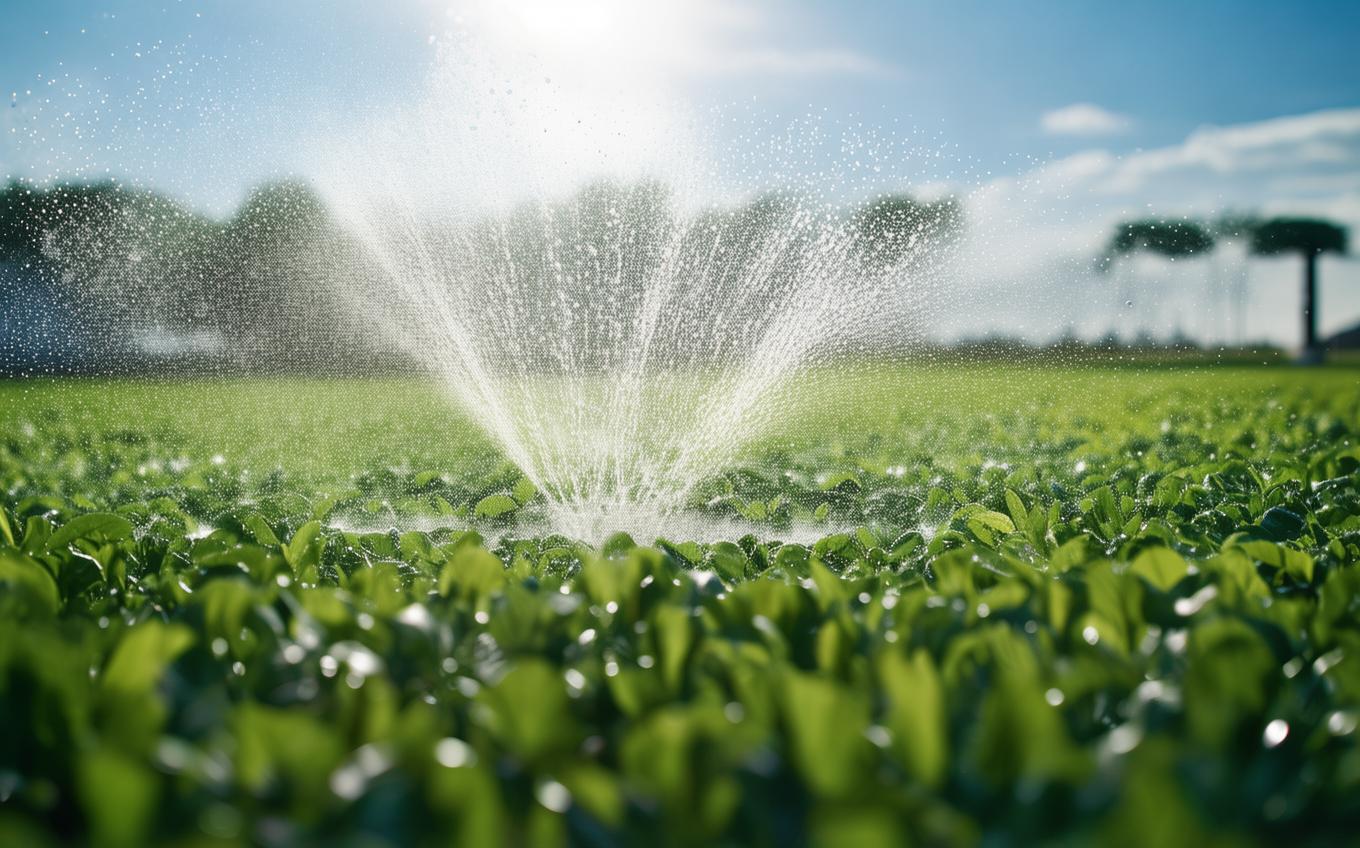
1. Basic Information
- Word: 灌溉
- Pinyin: guàn gài
- Literal Meaning: "to pour / to irrigate" + "to irrigate / to water"
- Primary Meaning: To irrigate; irrigation (the artificial application of water to land or soil to assist in growing crops)
2. In-depth Explanation
Context and Usage
"灌溉" is a formal, somewhat technical term used primarily in agricultural, environmental, and engineering contexts. It refers to the systematic supply of water to farmland, crops, or green spaces through artificial means — such as canals, pipes, sprinklers, or drip systems — rather than relying solely on natural rainfall.
In everyday conversation, Chinese speakers rarely use "灌溉" unless they are discussing farming, gardening on a large scale, water resource management, or environmental science. For casual watering of houseplants or a small garden, people would more commonly say "浇水" (jiāo shuǐ), which simply means "to water (plants)." The distinction is similar to the difference in English between "irrigating a field" and "watering your flowers."
"灌溉" can also be used metaphorically to describe the act of nurturing, cultivating, or enriching something abstract — for example, "灌溉心灵" (guàn gài xīn líng), meaning "to nourish the soul/mind," similar to how water nourishes crops. This metaphorical usage appears in literature, motivational writing, and educational contexts.
Character Breakdown
-
灌 (guàn): This character means "to pour," "to fill," or "to irrigate." It contains the "water" radical 氵 (三点水, sān diǎn shuǐ) on the left side, indicating its connection to water or liquid. The right side, 雚 (guàn), is a phonetic component that hints at the pronunciation. Originally, 灌 referred to pouring water into a container or channel.
-
溉 (gài): This character also means "to irrigate" or "to water." Like 灌, it features the water radical 氵 on the left. The right side, 既 (jì), serves as a phonetic component. Historically, 溉 referred specifically to watering fields or supplying water to crops.
Together, "灌溉" forms a compound word where both characters reinforce the same concept of supplying water, creating a term that specifically means "irrigation" in the agricultural sense. This doubling of similar-meaning characters is a common pattern in Chinese word formation, adding clarity and emphasis.
3. Example Sentences
- Chinese: 这个地区依靠河水灌溉农田。
- Pinyin: Zhè ge dì qū yī kào hé shuǐ guàn gài nóng tián.
- English: This region relies on river water to irrigate the farmland.
- Chinese: 现代化的灌溉系统大大节约了水资源。
- Pinyin: Xiàn dài huà de guàn gài xì tǒng dà dà jié yuē le shuǐ zī yuán.
- English: Modern irrigation systems have greatly conserved water resources.
- Chinese: 书籍灌溉着孩子们的心灵。
- Pinyin: Shū jí guàn gài zhe hái zi men de xīn líng.
- English: Books nourish the hearts and minds of children.
Cultural Notes
China has one of the world's oldest and most sophisticated traditions of irrigation. The Dujiangyan Irrigation System (都江堰, Dū jiāng yàn) in Sichuan Province, built around 256 BC during the Qin Dynasty, is a UNESCO World Heritage Site and still functions today. It was designed by the engineer Li Bing and his son to control flooding and irrigate the Chengdu Plain without the use of dams, using a clever system of channels and levees. This ancient engineering marvel demonstrates how central "灌溉" has been to Chinese civilization and agricultural development for over two thousand years.
In Chinese culture, water (水, shuǐ) is traditionally associated with life, nourishment, and prosperity. The concept of "灌溉" therefore carries positive connotations of growth, care, and sustainability — not just in agriculture, but also in metaphors about education and personal development.
Conclusion
To remember "灌溉" (guàn gài), think of it as the formal, agricultural term for "irrigation" — the large-scale, systematic watering of crops and land. Both characters contain the water radical 氵, which serves as a helpful visual cue. Use "灌溉" when discussing farming, water management, or environmental topics, and remember that for everyday plant watering, "浇水" (jiāo shuǐ) is the more appropriate word. The metaphorical use of "灌溉" to mean "nourishing" something abstract (like a mind or soul) is also common and adds richness to the word's usage.
Sources and Further Reading
Dictionary links are provided for independent reference. Example sentences and learning notes on this page are educational explanations rather than dictionary quotations.


Comments (0)
No comments yet. Be the first to comment!