Introduction
Liu Xiaosun (刘孝孙) was a poet of the Tang Dynasty (618–907 CE), a period widely regarded as the golden age of Chinese poetry. While he may not be as widely known as contemporaries such as Li Bai or Du Fu, his work offers a valuable window into the spiritual and philosophical preoccupations of Tang literati. This poem, titled "游清都观寻沈道士得仙字" ("Visiting Qingdu Temple in Search of Daoist Shen, Obtained the Character 'Immortal'"), belongs to a genre of poetry centered on visits to Daoist temples and encounters with reclusive masters. The title itself suggests a poetic gathering where participants drew lots for rhyme characters—here, the character "仙" (xiān, "immortal")—a common social practice among Tang-era scholars.
The poem is significant in Chinese literature as an exemplary expression of the deep intertwining of landscape appreciation, Daoist philosophy, and the scholar-official's yearning for spiritual transcendence. It captures the quintessential Tang aesthetic of seeking harmony between the human spirit and the natural world.
The Poem: Full Text and Translation
纷吾因暇豫,行乐极留连。
fēn wú yīn xiá yù, xíng lè jí liú lián.
Amid my bustling affairs, I seize a moment of leisure; seeking joy, I linger to the utmost.
寻真谒紫府,披雾觌青天。
xún zhēn yè zǐ fǔ, pī wù dí qīng tiān.
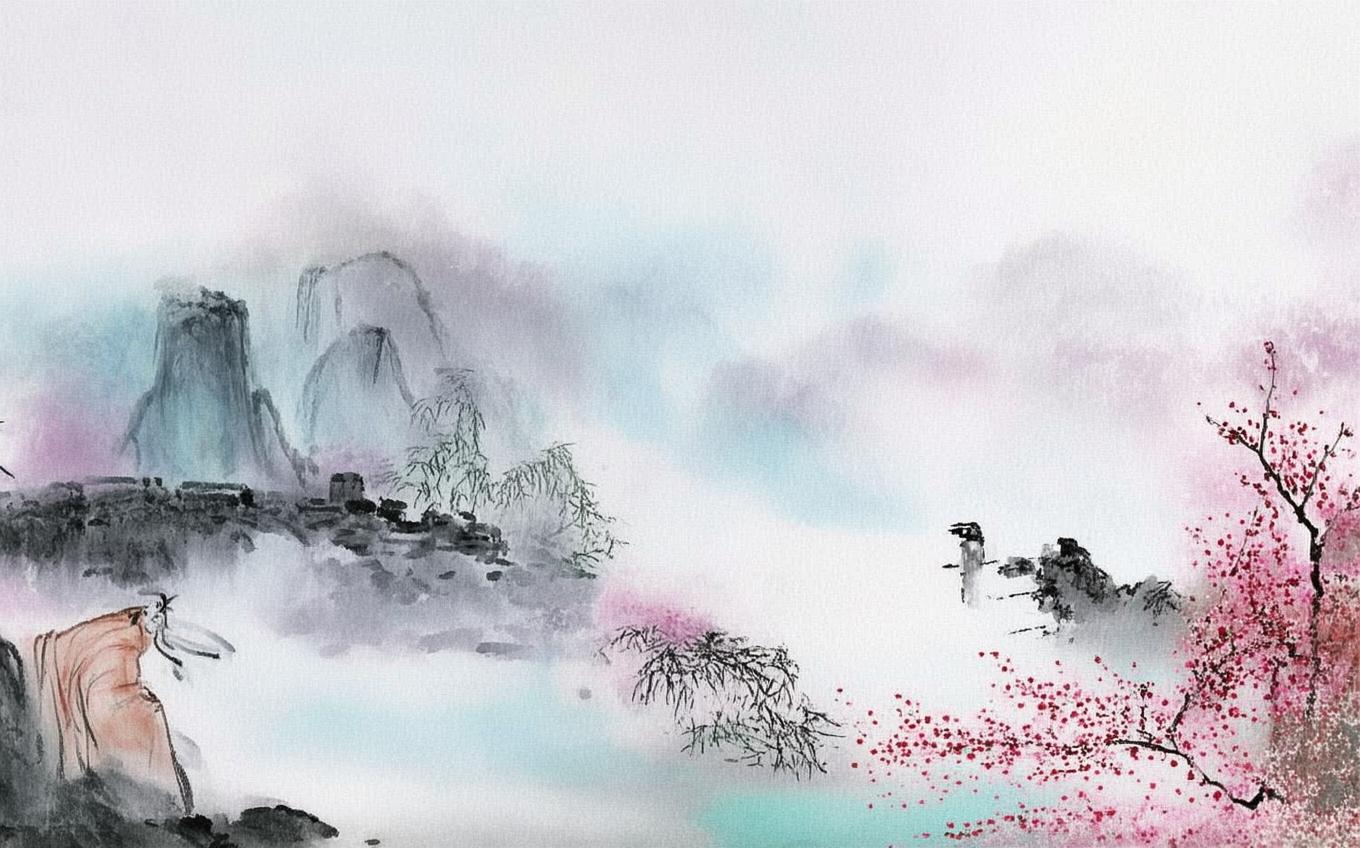
Seeking truth, I pay respects at the Purple Palace; parting the mist, I gaze upon the azure sky.
缅怀金阙外,遐想玉京前。
miǎn huái jīn què wài, xiá xiǎng yù jīng qián.
I fondly recall beyond the Golden Gate; I distantly imagine before the Jade Capital.
飞轩俯松柏,抗殿接云烟。
fēi xuān fǔ sōng bǎi, kàng diàn jiē yún yān.
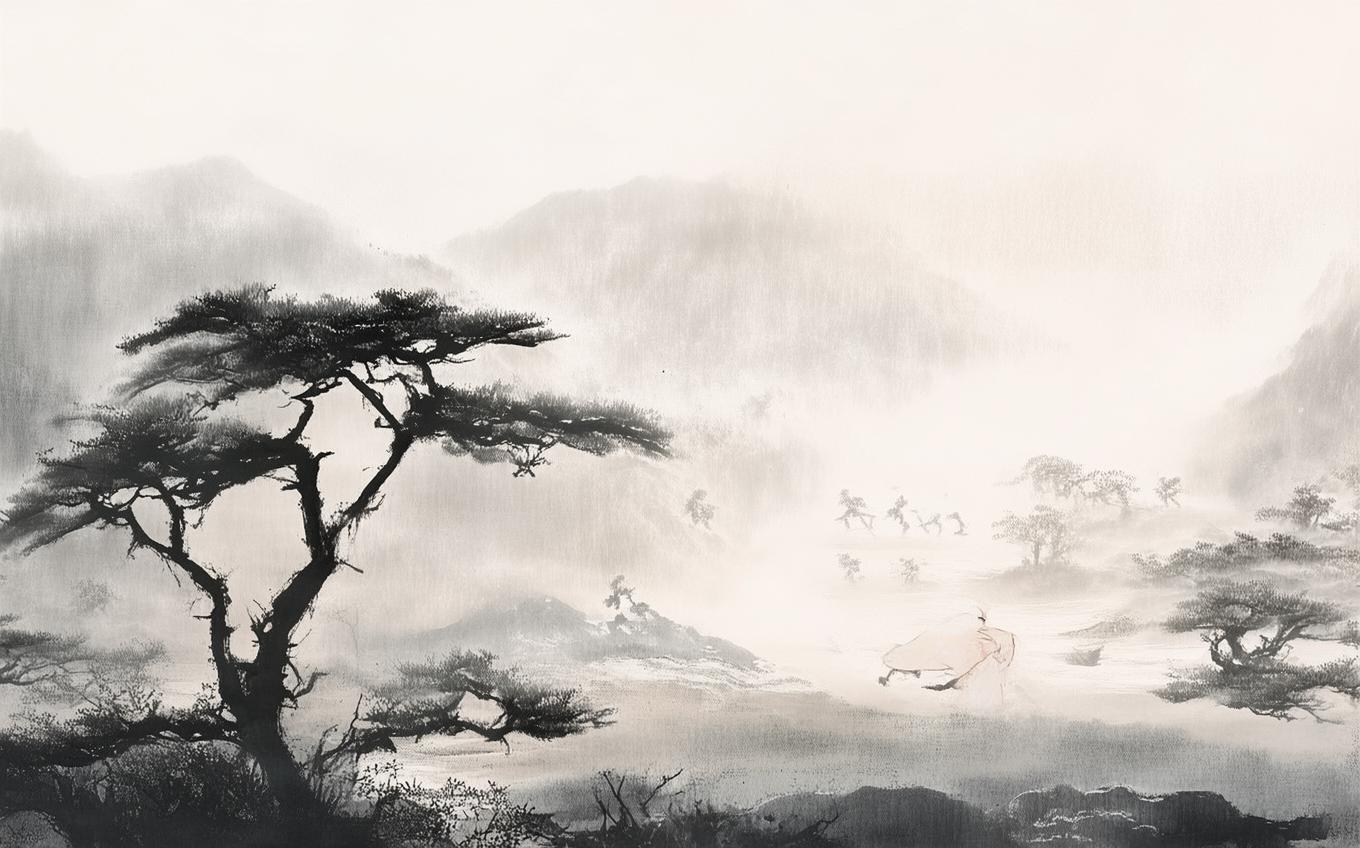
Flying pavilions overlook pines and cypresses; lofty halls connect with clouds and mist.
滔滔清夏景,嘒嘒早秋蝉。
tāo tāo qīng xià jǐng, huì huì zǎo qiū chán.
The clear summer scenery flows on and on; early autumn cicadas chirp softly.
横琴对危石,酌醴临寒泉。
héng qín duì wēi shí, zhuó lǐ lín hán quán.
I lay my zither across my lap, facing the perilous rocks; I pour sweet wine beside the cold spring.
聊祛尘俗累,宁希龟鹤年。
liáo qū chén sú lèi, níng xī guī hè nián.
I briefly cast off the burdens of the dusty world; rather than hoping for the longevity of tortoise and crane.
无劳生羽翼,自可狎神仙。
wú láo shēng yǔ yì, zì kě xiá shén xiān.
Without the trouble of growing wings, one can naturally become intimate with the immortals.
Line-by-Line Analysis
Lines 1–2: 纷吾因暇豫,行乐极留连。
The poem opens with the poet's declaration of temporary escape. The phrase "纷吾" (fēn wú)—"my bustling [affairs]"—immediately establishes a contrast between the chaotic demands of official life and the peaceful retreat he seeks. The word "暇豫" (xiá yù) means "leisure" or "free time," suggesting that this visit is a deliberate, cherished break. The phrase "行乐极留连" conveys an almost hedonistic delight in lingering—the poet does not rush through this experience but savors every moment. This opening sets up a fundamental tension in Chinese literati culture: the pull between civic duty and spiritual retreat.
Lines 3–4: 寻真谒紫府,披雾觌青天。
Here the poet introduces the Daoist framework explicitly. "寻真" (xún zhēn)—"seeking truth" or "seeking the Real"—is a term deeply rooted in Daoist practice, referring to the pursuit of ultimate reality beyond appearances. "紫府" (zǐ fǔ), the "Purple Palace," is a Daoist term for the dwelling place of immortals, often associated with the highest heavens. By "paying respects" (谒, yè) there, the poet positions himself as a humble seeker. The image of parting the mist (披雾) to gaze upon the azure sky (觌青天) is both literal—describing the mountain temple shrouded in clouds—and metaphorical, suggesting the clearing away of ignorance to perceive truth.
Lines 5–6: 缅怀金阙外,遐想玉京前。
These lines deepen the celestial imagery. "金阙" (jīn què), the "Golden Gate," and "玉京" (yù jīng), the "Jade Capital," are both Daoist terms for the celestial realm where immortals reside. The verbs "缅怀" (miǎn huái, "to fondly recall") and "遐想" (xiá xiǎng, "to distantly imagine") are significant—they suggest that the poet is not merely observing the temple but actively projecting his mind toward the transcendent. This mental journey is as important as the physical one. The parallel structure of these two couplets creates a sense of ascending movement, from the earthly temple to the heavenly realm.
Lines 7–8: 飞轩俯松柏,抗殿接云烟。
The poem now returns to the physical world, describing the temple architecture. "飞轩" (fēi xuān), "flying pavilions," is a common Chinese architectural term suggesting eaves that seem to soar, giving buildings a sense of lightness and upward motion. The pavilions "look down upon" (俯, fǔ) the pines and cypresses—trees that in Chinese culture symbolize endurance, steadfastness, and longevity. "抗殿" (kàng diàn), "lofty halls," suggests buildings that rise proudly, "connecting with clouds and mist" (接云烟). This blurring of the boundary between architecture and nature, between the man-made and the celestial, is a hallmark of Chinese landscape aesthetics. The temple is not separate from the natural world but an extension of it.
Lines 9–10: 滔滔清夏景,嘒嘒早秋蝉。
This couplet introduces a temporal complexity. "滔滔" (tāo tāo), meaning "surging" or "flowing on," describes the clear summer scenery, while "嘒嘒" (huì huì), an onomatopoeia for the soft chirping of cicadas, belongs to early autumn. The juxtaposition of summer and autumn imagery within the same moment creates a sense of time's fluidity—the poet seems to exist in a liminal space where seasons overlap, or perhaps he is describing the subtle transition from late summer to early autumn. The cicada (蝉, chán) is a rich symbol in Chinese poetry, representing both the brevity of life and, paradoxically, rebirth and immortality (as cicadas emerge from their shells). The sound of cicadas is often associated with the melancholy of passing time.
Lines 11–12: 横琴对危石,酌醴临寒泉。
This couplet presents the poet in a pose of perfect aesthetic contemplation. The zither (琴, qín) is the instrument of the Chinese scholar-gentleman, associated with refinement, self-cultivation, and the expression of one's inner nature. Laying it across his lap (横琴) while facing "perilous rocks" (危石, wēi shí) suggests a harmonious engagement with the rugged, untamed aspects of nature. Pouring sweet wine (酌醴) beside a cold spring (寒泉) completes the picture—the poet is partaking of both human culture (wine, music) and natural purity (spring water, rocks). The "cold spring" also carries Daoist connotations, as mountain springs were often associated with the elixir of life.
Lines 13–14: 聊祛尘俗累,宁希龟鹤年。
Here the poet articulates the purpose of his visit. "尘俗累" (chén sú lèi) refers to the "burdens of the dusty world"—the cares, obligations, and moral compromises of ordinary social life. The word "尘" (chén, "dust") is particularly evocative in Buddhist and Daoist contexts, where the material world is often described as "the dusty realm" (尘世, chén shì). The poet says he has "briefly cast off" (聊祛) these burdens. The phrase "宁希龟鹤年" is a striking declaration: rather than hoping for the longevity of tortoises and cranes—traditional symbols of long life in Chinese culture—the poet suggests something more valuable. This is not a rejection of longevity per se, but a reordering of priorities: spiritual freedom in the present moment surpasses the mere extension of years.
Lines 15–16: 无劳生羽翼,自可狎神仙。
The poem concludes with its most profound philosophical statement. "无劳生羽翼" means "without the trouble of growing wings"—a reference to Daoist tales of immortals who ascended to heaven on the backs of cranes or who sprouted wings themselves. The poet suggests that such supernatural transformation is unnecessary. "自可狎神仙" means "one can naturally become intimate with the immortals"—the word "狎" (xiá) implies familiarity, closeness, even playfulness. The message is clear: immortality is not achieved through magical means but through a state of mind. By shedding worldly attachments and harmonizing with nature, one becomes, in essence, an immortal already. This is a sophisticated philosophical position that aligns with the highest ideals of Daoist thought, where the distinction between the mundane and the transcendent dissolves.
Themes and Symbolism
The Quest for Immortality
The central theme of the poem is the search for immortality (仙, xiān), but Liu Xiaosun presents this quest in a distinctly philosophical rather than supernatural manner. Rather than seeking literal physical immortality through elixirs or magical practices, the poet discovers that spiritual transcendence is available in the here and now. The final couplet's assertion that one need not grow wings to be intimate with immortals represents a mature understanding of Daoist philosophy—immortality is a state of consciousness, not a physical condition.
Nature as Spiritual Teacher
Throughout the poem, nature serves as both the setting and the vehicle for spiritual transformation. The mist, the azure sky, the pines and cypresses, the cold spring, the cicadas—each element of the natural world contributes to the poet's awakening. This reflects the profound Chinese belief in the unity of humanity and nature (天人合一, tiān rén hé yī), where the natural world is not merely a backdrop but an active participant in spiritual cultivation.
The Aesthetics of Leisure
The poem celebrates leisure (暇豫, xiá yù) as a legitimate and even necessary pursuit for the cultivated person. In the Confucian tradition that dominated Chinese official life, duty and service were paramount. Yet this poem, like much of Tang poetry, affirms the value of stepping away from official responsibilities to nourish the spirit. The leisurely enjoyment of music, wine, and landscape is presented not as indulgence but as a form of self-cultivation.
Key Symbols
- The Purple Palace (紫府) and Jade Capital (玉京): Daoist celestial realms, representing the ultimate goal of spiritual aspiration.
- Pines and Cypresses (松柏): Evergreen trees symbolizing endurance, integrity, and the ability to thrive in harsh conditions—qualities admired in the Confucian gentleman.
- The Zither (琴): The instrument of the scholar, representing refinement, self-expression, and the harmonization of inner and outer worlds.
- The Cicada (蝉): A symbol of transformation and rebirth, as well as the fleeting nature of life.
- Tortoise and Crane (龟鹤): Traditional symbols of longevity, representing the conventional understanding of immortality that the poet transcends.
- Wings (羽翼): The supernatural means of ascension in Daoist mythology, which the poet declares unnecessary.
Cultural Context
The Tang Dynasty represents the zenith of Chinese cultural achievement, a period when poetry was not merely an art form but a social institution. Officials were expected to compose poetry, and gatherings often involved competitive verse-writing with assigned themes and rhyme characters. The title of this poem—"得仙字" ("obtained the character 'immortal'")—indicates that Liu Xiaosun was participating in just such a gathering, where he drew the character "仙" as his assigned rhyme.
The poem's setting, a Daoist temple (观, guàn), reflects the religious landscape of Tang China. Daoism held a special place in the Tang dynasty, as the imperial family claimed descent from Laozi (老子), the legendary founder of Daoism. Daoist temples dotted the sacred mountains of China, and visits to these sites were common among the literati, who sought both aesthetic inspiration and spiritual renewal.
The figure of "沈道士" (Daoist Master Shen) in the title represents the ideal of the reclusive sage—a person who has withdrawn from worldly affairs to cultivate the Dao. The search for such figures is a recurring motif in Chinese poetry, symbolizing the poet's own yearning for wisdom and transcendence.
The poem also reflects the syncretic nature of Chinese spirituality. While Daoist imagery predominates, the emphasis on casting off "dusty worldly burdens" (尘俗累) resonates with Buddhist concepts of detachment, and the appreciation of music and ritual propriety reflects Confucian values. This blending of traditions was characteristic of Tang intellectual life, where the "Three Teachings" (三教, sān jiào)—Confucianism, Daoism, and Buddhism—coexisted and influenced one another.
Conclusion
Liu Xiaosun's "游清都观寻沈道士得仙字" is a masterful expression of the Chinese ideal of spiritual cultivation through communion with nature. The poem moves gracefully between the physical and the metaphysical, between the earthly temple and the celestial realm, between the burdens of worldly life and the freedom of spiritual awakening. Its final message—that immortality is not a supernatural gift but a natural state available to those who shed their attachments—remains as relevant today as it was in the Tang Dynasty.
For modern readers, the poem offers a gentle reminder of the value of stepping away from the relentless demands of daily life, of seeking moments of stillness and beauty, and of recognizing that transcendence may be closer than we think. In a world of constant connectivity and ceaseless activity, Liu Xiaosun's invitation to "cast off the burdens of the dusty world" and find intimacy with the eternal in a quiet moment beside a cold spring speaks with undiminished power. The poem reminds us that sometimes, the most profound journeys are not those that take us far from home, but those that bring us back to ourselves.
Sources and Verification
- Verified text and attribution: 刘孝孙, “游清都观寻沈道士得仙字” (Tang dynasty).
- Primary dataset: Chinese Poetry open corpus.
- Source record:
35775b11-83ef-458b-9358-4f05285db0b1.
The Chinese source text and attribution are supplied from the verified record above. The English translation and commentary are educational explanations.
Comments (0)
No comments yet. Be the first to comment!