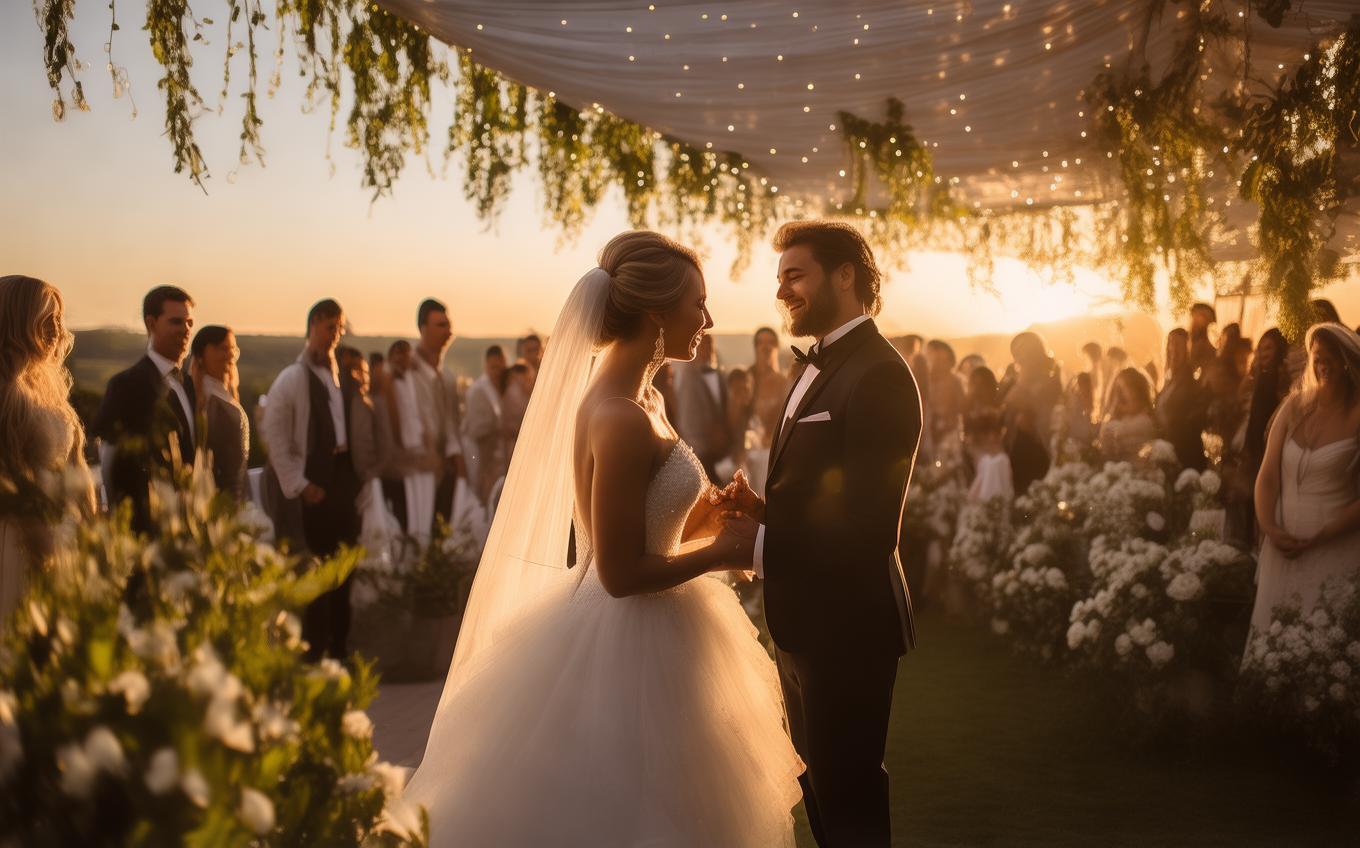
1. Basic Information
- Word: 婚礼
- Pinyin: hūn lǐ
- Literal Meaning: "Marriage ceremony" (婚 hūn = marriage; 礼 lǐ = ceremony/ritual)
- Primary Meaning: A wedding ceremony; the formal event celebrating a marriage.
2. In-depth Explanation
Context and Usage
"婚礼" refers specifically to the ceremonial aspect of a wedding, including rituals, vows, and celebrations. It is a formal term used in both spoken and written contexts. Unlike the broader English term "wedding," which can include pre- or post-ceremony events, "婚礼" focuses on the ceremony itself.
Character Breakdown
- 婚 (hūn): Means "marriage" or "to wed." The left radical (女) means "woman," and the right component (昏) originally meant "dusk," reflecting ancient evening wedding customs.
- 礼 (lǐ): Means "ritual," "ceremony," or "etiquette." It emphasizes the formal and traditional aspects of the event.
Together, the characters highlight the cultural importance of weddings as structured, ceremonial occasions.
3. Example Sentences
-
Chinese: 他们的婚礼在教堂举行。
Pinyin: Tāmen de hūnlǐ zài jiàotáng jǔxíng.
English: Their wedding ceremony was held in a church. -
Chinese: 婚礼上,新娘穿了一件红色的旗袍。
Pinyin: Hūnlǐ shàng, xīnniáng chuānle yī jiàn hóngsè de qípáo.
English: At the wedding, the bride wore a red qipao. -
Chinese: 我们正在计划一个简单的婚礼。
Pinyin: Wǒmen zhèngzài jìhuà yīgè jiǎndān de hūnlǐ.
English: We are planning a simple wedding ceremony.
Cultural Notes
In Chinese culture, "婚礼" often blends modern and traditional elements. Key customs include:
- Tea Ceremony: The bride and groom serve tea to elders as a sign of respect.
- Red Color Symbolism: Red (e.g., dresses, decorations) represents luck and happiness.
- Banquet: A lavish post-ceremony feast is common, emphasizing family and community bonds.
Unlike Western weddings, Chinese ceremonies may prioritize auspicious dates (chosen by the lunar calendar) and ancestor veneration.
Conclusion
"婚礼" (hūn lǐ) is the cornerstone of Chinese marital traditions, encapsulating ceremonial rituals and cultural values. Remember: 婚 = marriage, 礼 = ceremony, and together they create a meaningful celebration of union. Use this word to discuss weddings in a culturally rich context!
Sources and Further Reading
Dictionary links are provided for independent reference. Example sentences and learning notes on this page are educational explanations rather than dictionary quotations.

Comments (0)
No comments yet. Be the first to comment!