
1. Basic Information
- Word: 庆祝
- Pinyin: qìng zhù
- Literal Meaning: "庆" means "to celebrate" or "congratulate," and "祝" means "to wish" or "bless." Together, they form "to celebrate and wish."
- Primary Meaning: To celebrate; to observe or mark a happy or significant event with festivities or other enjoyable activities.
2. In-depth Explanation
Context and Usage
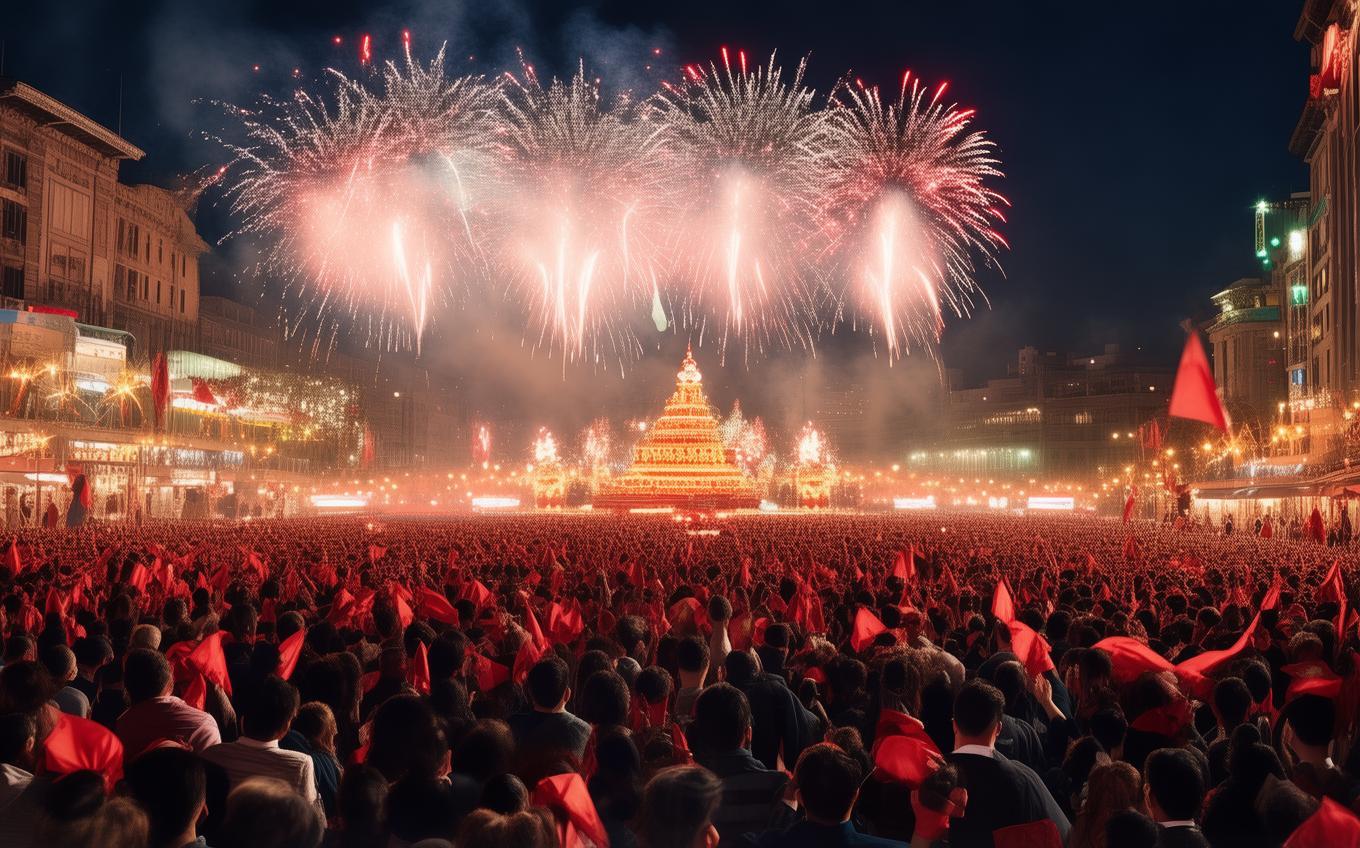
"庆祝" is commonly used to describe formal or informal celebrations, such as holidays, birthdays, achievements, or national events. It often implies a collective or public celebration rather than a personal one. For example, you can use it for celebrating a wedding anniversary, a company milestone, or National Day.
Character Breakdown
- 庆 (qìng): This character means "celebration" or "to congratulate." It often appears in words related to joyous occasions, like "国庆" (guó qìng, National Day).
- 祝 (zhù): This character means "to wish" or "bless." It’s used in contexts like "祝福" (zhù fú, blessings) or "祝贺" (zhù hè, congratulations).
Together, "庆祝" emphasizes both the act of celebrating and expressing good wishes for the occasion.
3. Example Sentences
-
Chinese: 我们庆祝了他的生日。
Pinyin: Wǒmen qìngzhùle tā de shēngrì.
English: We celebrated his birthday. -
Chinese: 全国人民庆祝国庆节。
Pinyin: Quánguó rénmín qìngzhù guóqìng jié.
English: The whole nation celebrates National Day. -
Chinese: 公司庆祝成立十周年。
Pinyin: Gōngsī qìngzhù chénglì shí zhōunián.
English: The company celebrated its 10th anniversary.
Cultural Notes
In Chinese culture, "庆祝" is often associated with communal or family gatherings. Major celebrations like the Spring Festival (春节) or Mid-Autumn Festival (中秋节) involve elaborate traditions, feasts, and public events. Unlike Western celebrations, which may focus more on individual milestones (e.g., personal birthdays), Chinese celebrations often emphasize collective joy and harmony.
Conclusion
"庆祝" (qìng zhù) is a versatile word used for various celebrations, from personal milestones to national holidays. Remember that it combines the ideas of celebration ("庆") and good wishes ("祝"). Use it when talking about festive occasions, and pay attention to the cultural emphasis on shared happiness in Chinese traditions.
Sources and Further Reading
Dictionary links are provided for independent reference. Example sentences and learning notes on this page are educational explanations rather than dictionary quotations.


Comments (0)
No comments yet. Be the first to comment!