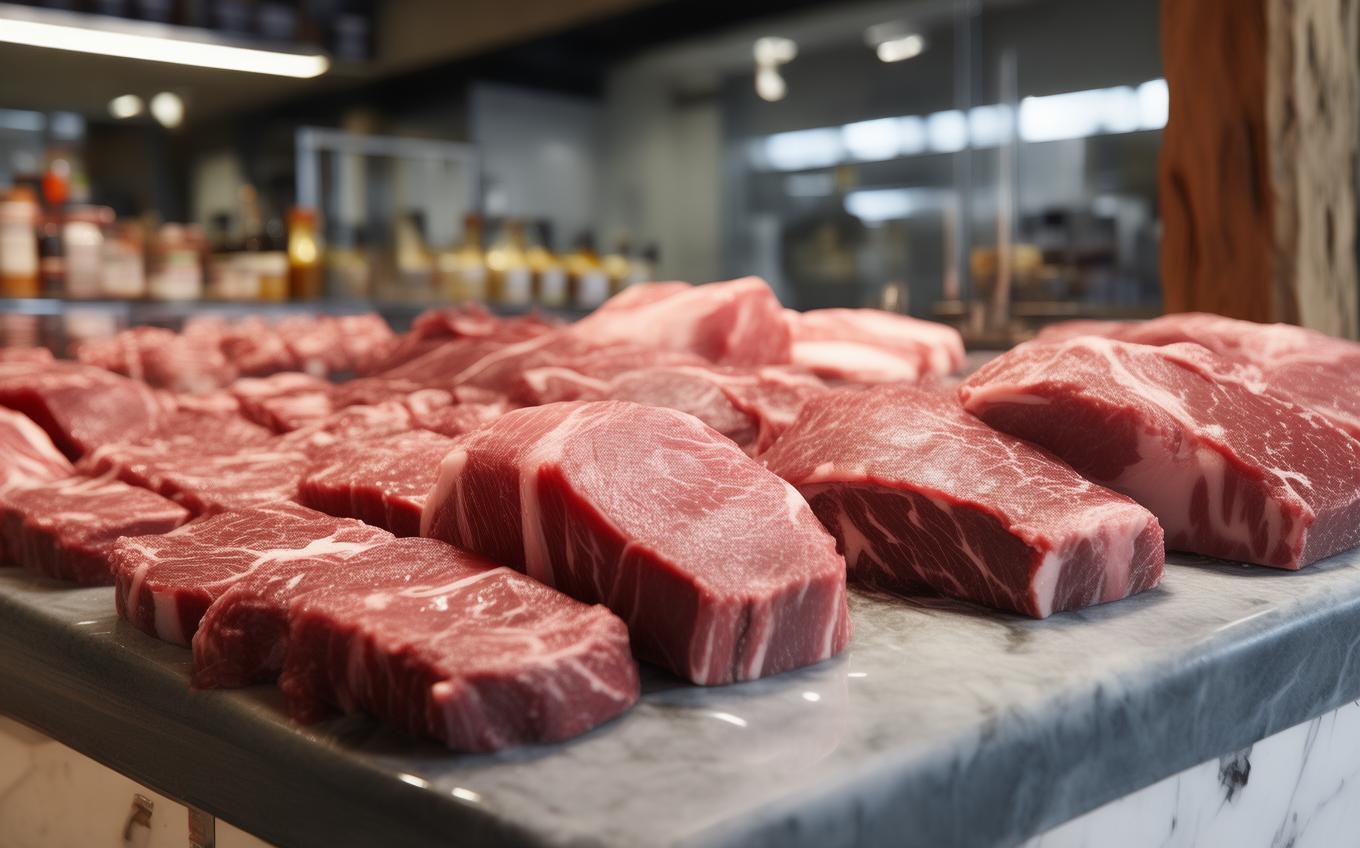
1. Basic Information
- Word: 肉类
- Pinyin: ròu lèi
- Literal Meaning: "Meat" (肉) + "Category/Type" (类) = "Categories of meat" or "Types of meat"
- Primary Meaning: Refers to meat in general or different kinds of meat (e.g., beef, pork, chicken).
2. In-depth Explanation
Context and Usage
"肉类" is a general term used to refer to meat as a food category. It is commonly seen in menus, grocery stores, and discussions about food. Unlike English, where "meat" can stand alone, Chinese often uses "肉类" to emphasize the variety or classification of meats. For example, you might see it in phrases like "各种肉类" (various types of meat) or "肉类食品" (meat products).
Character Breakdown
- 肉 (ròu): Means "meat" or "flesh." It can refer to animal meat or, in some contexts, the flesh of fruits.
- 类 (lèi): Means "category," "type," or "kind." When combined with 肉, it broadens the meaning to "types of meat."
3. Example Sentences
-
Chinese: 超市里有各种各样的肉类。
Pinyin: Chāoshì lǐ yǒu gèzhǒng gèyàng de ròulèi.
English: The supermarket has all kinds of meat. -
Chinese: 我不吃红肉类,只吃白肉。
Pinyin: Wǒ bù chī hóngròu lèi, zhǐ chī báiròu.
English: I don’t eat red meat; I only eat white meat. -
Chinese: 这个餐厅的肉类菜肴非常有名。
Pinyin: Zhège cāntīng de ròulèi càiyáo fēicháng yǒumíng.
English: The meat dishes at this restaurant are very famous.
Cultural Notes
In Chinese cuisine, meat plays a significant role, but the types consumed vary regionally. For example:
- Northern China favors pork and lamb (e.g., in hot pot).
- Southern China includes more poultry and seafood.
- Some festivals, like the Lunar New Year, feature special meat dishes (e.g., dumplings with pork).
Vegetarianism is less common traditionally, but modern diets are increasingly incorporating plant-based alternatives, sometimes labeled as "仿肉类" (imitation meat).
Conclusion
"肉类" (ròu lèi) is a useful term for discussing meat in Chinese. Remember:
- 肉 = meat, 类 = category → "meat types."
- Used in food contexts, especially for variety.
- Cultural preferences influence which "肉类" are popular regionally.
Now you can confidently talk about meat in Chinese! 🍖
Sources and Further Reading
Dictionary links are provided for independent reference. Example sentences and learning notes on this page are educational explanations rather than dictionary quotations.

Comments (0)
No comments yet. Be the first to comment!