1. Basic Information
- Word: 零食
- Pinyin: líng shí
- Literal Meaning: "scattered food" or "casual food"
- Primary Meaning: Snacks; small portions of food eaten between meals.
2. In-depth Explanation
-
Context and Usage:
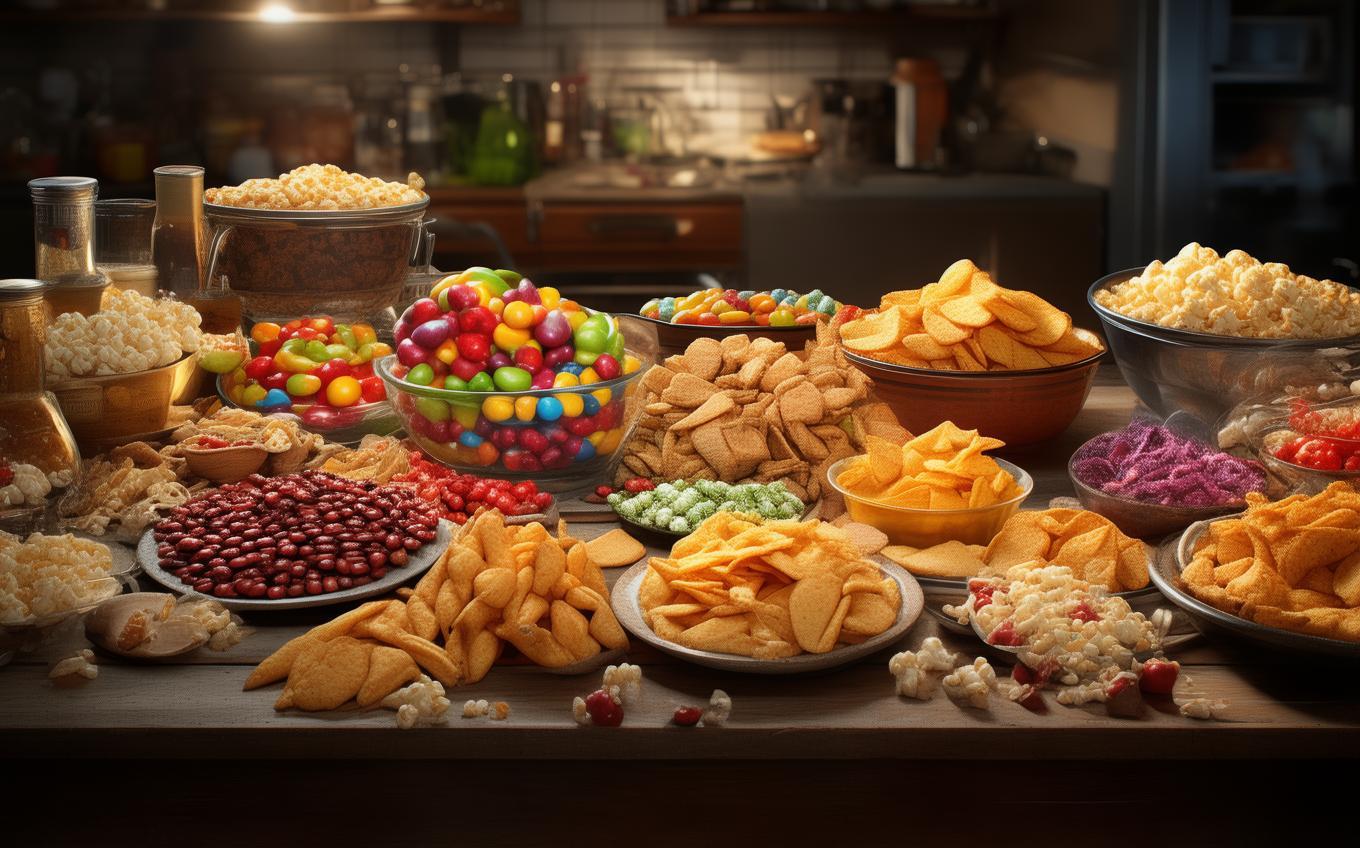
The word "零食" refers to any type of snack food, such as chips, candy, nuts, or dried fruit, that is eaten outside of regular meals. It is a neutral term and can be used in both formal and informal contexts. Unlike "小吃" (xiǎo chī), which often refers to local street food or light meals, "零食" specifically emphasizes small, portable foods consumed for enjoyment or to curb hunger between meals. -
Character Breakdown:
- 零 (líng): Means "scattered," "fragmentary," or "casual."
- 食 (shí): Means "food" or "to eat."
Together, the characters suggest "food eaten casually" or "scattered bites."
3. Example Sentences
-
Chinese: 我喜欢在看电影的时候吃零食。
Pinyin: Wǒ xǐhuān zài kàn diànyǐng de shíhòu chī língshí.
English: I like to eat snacks while watching movies. -
Chinese: 妈妈不让我吃太多零食。
Pinyin: Māma bù ràng wǒ chī tài duō língshí.
English: My mom doesn’t let me eat too many snacks. -
Chinese: 超市里有很多种类的零食。
Pinyin: Chāoshì lǐ yǒu hěn duō zhǒnglèi de língshí.
English: There are many kinds of snacks in the supermarket.
Cultural Notes
In Chinese culture, "零食" plays a significant role in daily life, especially among younger generations. It is common to share snacks with friends or colleagues as a casual social activity. However, older generations might view excessive snacking as unhealthy, preferring structured meal times. Popular Chinese snacks include dried plums (话梅, huà méi), roasted seeds (瓜子, guā zǐ), and rice crackers (米饼, mǐ bǐng).
Conclusion
"零食" (líng shí) is a versatile word meaning "snacks" or "casual food." It combines the ideas of scattered eating ("零") and food ("食"). Use it to talk about small bites enjoyed between meals, whether sweet, salty, or savory. Remember, while snacks are fun, moderation is key in Chinese dietary culture!
Sources and Further Reading
Dictionary links are provided for independent reference. Example sentences and learning notes on this page are educational explanations rather than dictionary quotations.

Comments (0)
No comments yet. Be the first to comment!