1. Basic Information
- Word: 馒头
- Pinyin: mántou
- Literal Meaning: "Steamed bread" (though "bread" is a loose translation; it’s more accurately a steamed bun)
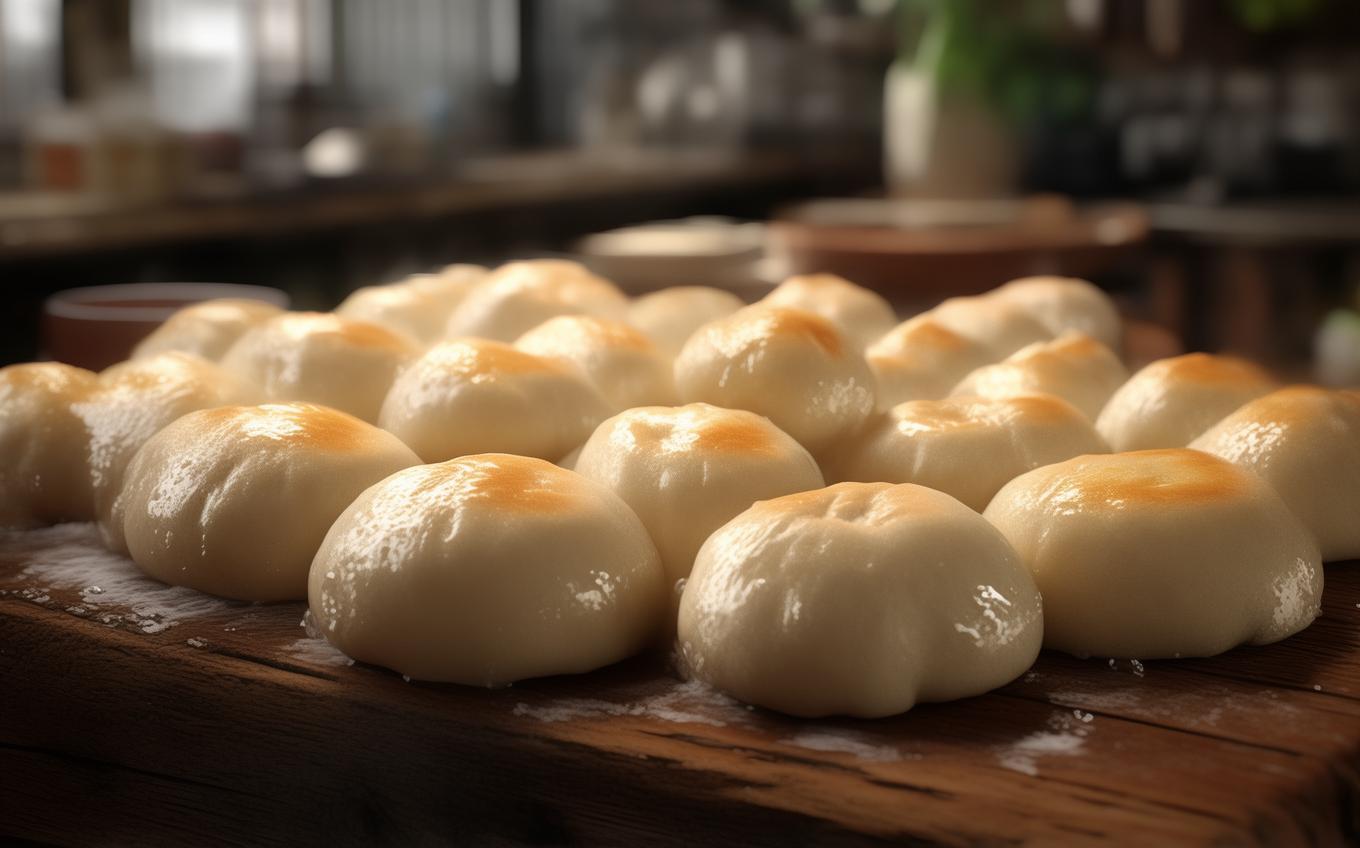
- Primary Meaning: A staple Chinese food made of wheat flour, water, and leavening agents, steamed until fluffy and soft. It is unsweetened and typically eaten as a side dish or with meals.
2. In-depth Explanation
Context and Usage
馒头 (mántou) is a fundamental part of Northern Chinese cuisine, where wheat is more commonly grown than rice. It serves a similar role to rice in Southern China—acting as a carbohydrate base for meals. Unlike Western bread, 馒头 is not baked but steamed, giving it a soft, pillowy texture. It is often paired with savory dishes, soups, or used to soak up sauces.
In modern usage, 馒头 can also refer to similar steamed buns, though regional variations may have different names (e.g., 包子 / bāozi for stuffed buns).
Character Breakdown
- 馒 (mán): This character doesn’t have a standalone meaning in modern Chinese but is used specifically in 馒头. Historically, it may have been associated with the word "蛮" (mán), meaning "barbarian," suggesting possible foreign origins of the food.
- 头 (tou): A suffix meaning "head" or "end," but here it serves as a nominalizer, turning the word into a noun.
Together, 馒头 simply refers to the food item with no direct literal meaning.
3. Example Sentences
-
Chinese: 我早餐吃了一个馒头。
Pinyin: Wǒ zǎocān chīle yīgè mántou.
English: I ate a steamed bun for breakfast. -
Chinese: 妈妈蒸了一锅馒头。
Pinyin: Māma zhēngle yī guō mántou.
English: Mom steamed a pot of steamed buns. -
Chinese: 北方人喜欢用馒头配菜吃。
Pinyin: Běifāng rén xǐhuān yòng mántou pèi cài chī.
English: Northern Chinese like to eat steamed buns with dishes.
Cultural Notes
馒头 has deep cultural roots in China, particularly in the north, where it has been a dietary staple for centuries. Historically, it was a practical way to preserve wheat flour without baking ovens. During festivals or family gatherings, making 馒头 at home is still a common tradition.
Interestingly, 馒头 is sometimes humorously called "Chinese bread" by foreigners, though its texture and taste are quite different from Western bread. In some regions, sweet or flavored versions exist, but the classic 馒头 is plain, meant to complement other dishes.
Conclusion
馒头 (mántou) is a simple yet essential Chinese food—soft, steamed, and versatile. Remember, it’s not sweet, and it’s best enjoyed with savory dishes. Whether for breakfast or dinner, 馒头 is a delicious part of Chinese culinary culture!
Sources and Further Reading
Dictionary links are provided for independent reference. Example sentences and learning notes on this page are educational explanations rather than dictionary quotations.



Comments (0)
No comments yet. Be the first to comment!