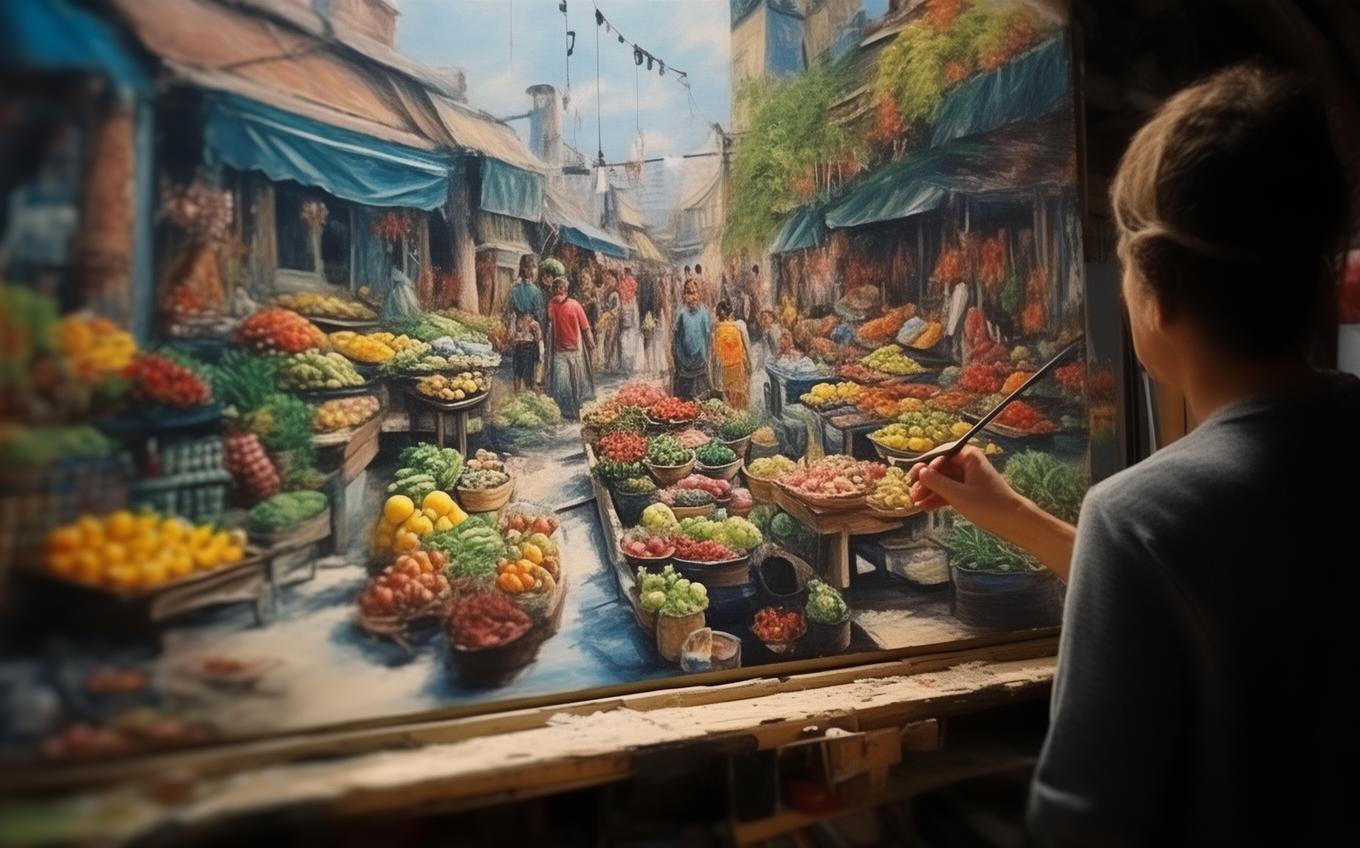
1. Basic Information
- Word: 画画
- Pinyin: huà huà
- Literal Meaning: "draw draw" or "paint paint" (repetition of the character 画)
- Primary Meaning: The act of drawing or painting, often used to describe creating visual art.
2. In-depth Explanation
- Context and Usage:
- "画画" is a verb phrase used to describe the activity of drawing or painting. It is commonly used in casual and formal contexts, such as in hobbies, art classes, or professional settings.
- The repetition of the character 画 emphasizes the action, making it clear that the speaker is referring to the act of creating art.
-
It can be used for any form of drawing or painting, whether it's sketching, watercolor, or digital art.
-
Character Breakdown:
- 画 (huà): This character means "to draw," "to paint," or "picture." It can also refer to a finished artwork.
- The repetition (画画) turns it into a verb phrase, emphasizing the action of drawing or painting.
3. Example Sentences
-
Chinese: 我喜欢画画。
Pinyin: Wǒ xǐhuān huà huà.
English: I like to draw/paint. -
Chinese: 她每天放学后都会画画。
Pinyin: Tā měi tiān fàngxué hòu dōu huì huà huà.
English: She draws/paints every day after school. -
Chinese: 画画可以帮助你放松心情。
Pinyin: Huà huà kěyǐ bāngzhù nǐ fàngsōng xīnqíng.
English: Drawing/painting can help you relax.
Cultural Notes
- In Chinese culture, painting and calligraphy (书法) are highly respected art forms with deep historical roots. Traditional Chinese painting often features landscapes, flowers, and birds, using ink and brush techniques.
- Many Chinese children learn to paint as part of their extracurricular activities, and it is seen as a way to cultivate patience and creativity.
Conclusion
"画画" (huà huà) is a versatile and commonly used term for drawing or painting in Chinese. Whether you're talking about a hobby, a profession, or a relaxing activity, this word is essential for anyone interested in art or Chinese language learning. Remember, the repetition of 画 makes it clear that you're referring to the action of creating art!
Sources and Further Reading
Dictionary links are provided for independent reference. Example sentences and learning notes on this page are educational explanations rather than dictionary quotations.


Comments (0)
No comments yet. Be the first to comment!