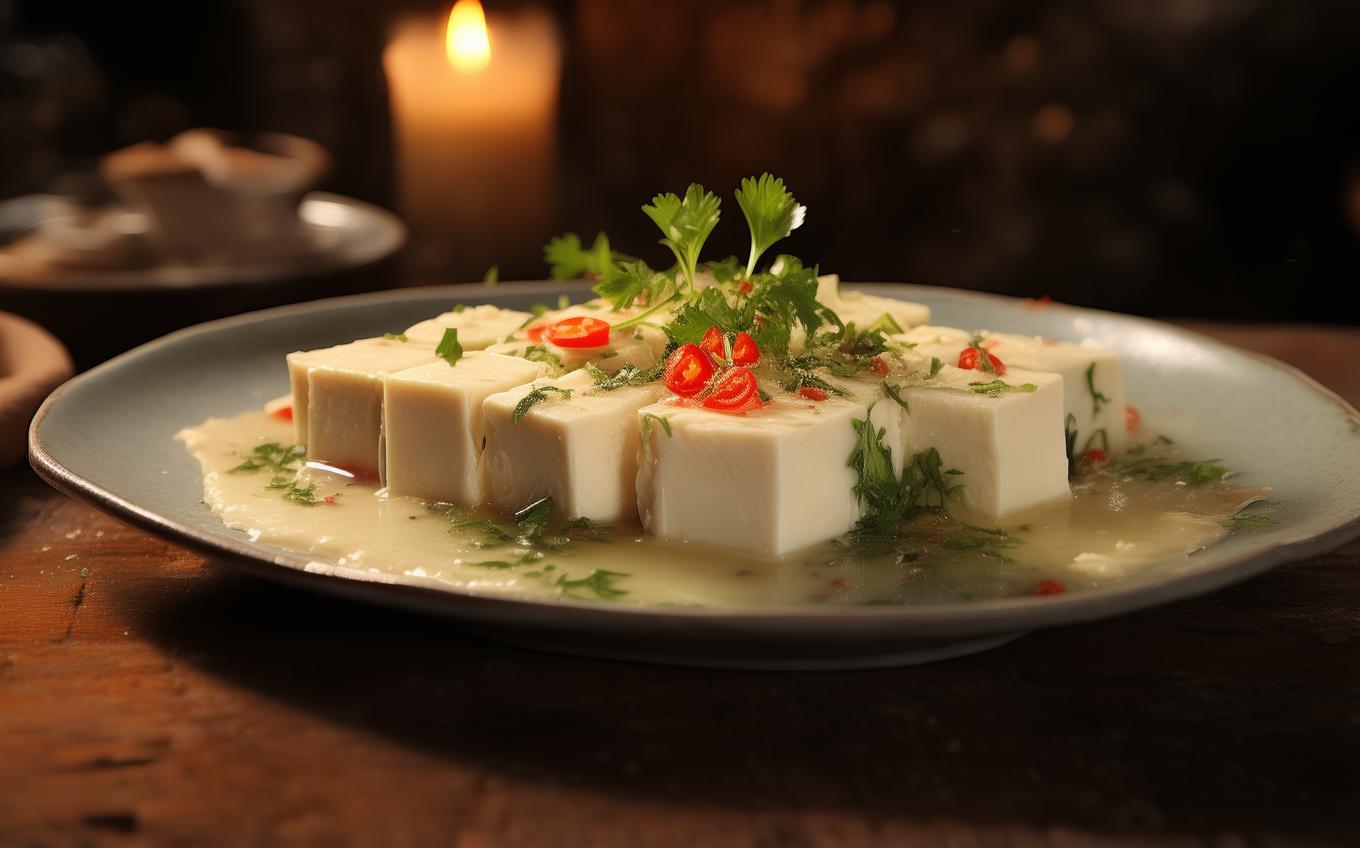
1. Basic Information
- Word: 豆腐
- Pinyin: dòu fu (Note: "fu" is neutral tone)
- Literal Meaning: "Bean" (豆) + "curdled" or "fermented" (腐)
- Primary Meaning: Tofu (a soft, white food made from soybeans, widely used in Chinese cuisine)
2. In-depth Explanation
Context and Usage
"豆腐" refers to tofu, a staple ingredient in Chinese cooking. It is versatile and can be prepared in savory or sweet dishes, such as stir-fries, soups, or desserts. The word is neutral in tone and commonly used in daily conversations about food.
Character Breakdown
- 豆 (dòu): Means "bean," referring to the soybean origin of tofu.
- 腐 (fu): Implies a "fermented" or "curdled" process, reflecting how soy milk is transformed into tofu.
3. Example Sentences
-
Chinese: 我喜欢吃麻婆豆腐。
Pinyin: Wǒ xǐhuān chī mápó dòufu.
English: I like to eat mapo tofu. -
Chinese: 豆腐富含蛋白质,对身体很好。
Pinyin: Dòufu fù hán dànbáizhì, duì shēntǐ hěn hǎo.
English: Tofu is rich in protein and very good for health. -
Chinese: 这家店的豆腐汤很出名。
Pinyin: Zhè jiā diàn de dòufu tāng hěn chūmíng.
English: This restaurant’s tofu soup is very famous.
Cultural Notes
Tofu has been a key part of Chinese cuisine for over 2,000 years, originating during the Han Dynasty. It is especially important in Buddhist vegetarian diets. Dishes like "mapo tofu" (spicy tofu) and "stinky tofu" (fermented tofu) showcase its cultural significance.
Conclusion
"豆腐" (dòufu) is a nutritious and versatile food made from soybeans, deeply rooted in Chinese culinary traditions. Remember it as "tofu" in English, and try it in various dishes to appreciate its cultural importance!
Sources and Further Reading
Dictionary links are provided for independent reference. Example sentences and learning notes on this page are educational explanations rather than dictionary quotations.


Comments (0)
No comments yet. Be the first to comment!