Analysis of "经破薛举战地" - Classical Chinese Poetry
Introduction
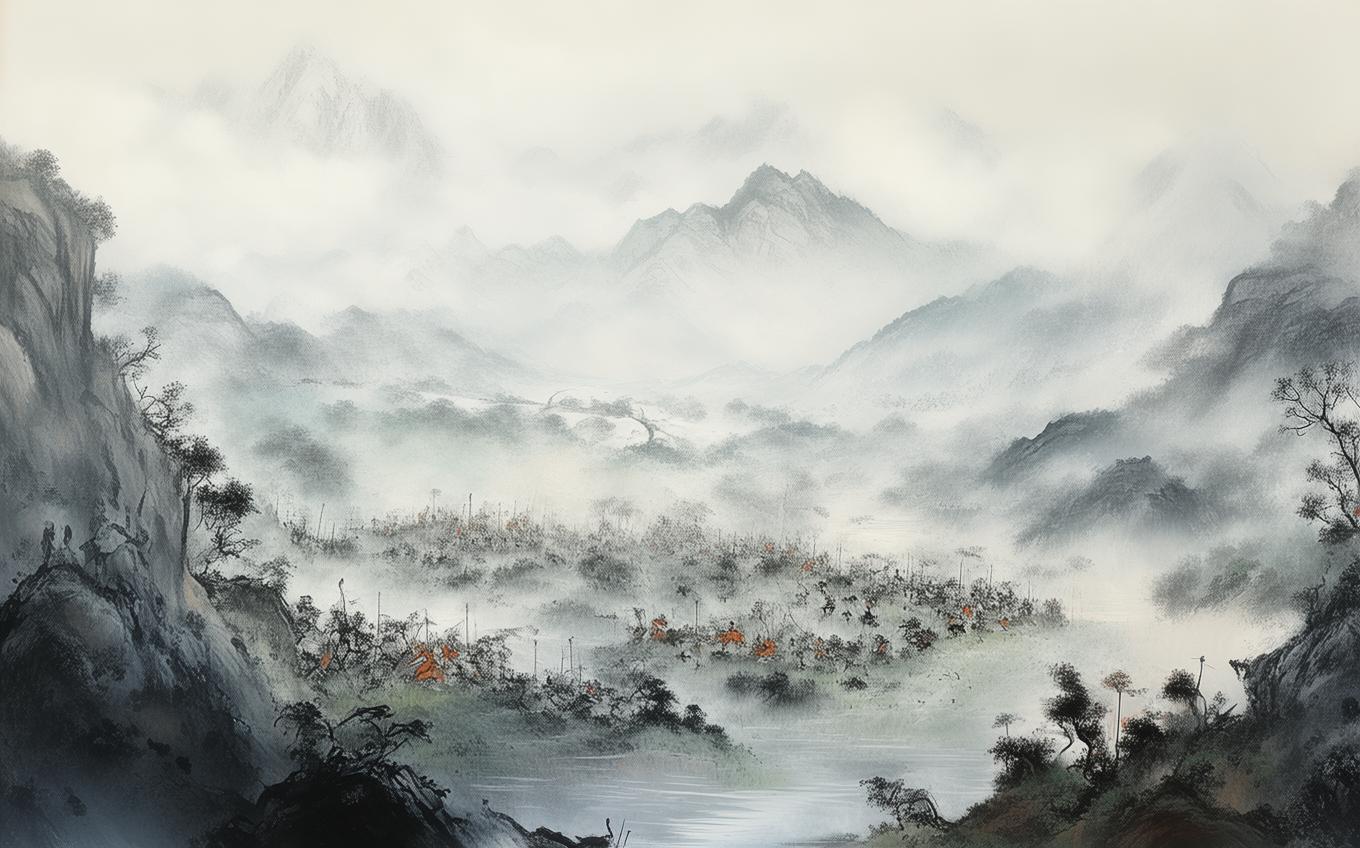
The poem “经破薛举战地” (Passing by the Old Battlefield of Xue Ju) comes from the brush of a most unlikely poet: Emperor Taizong of the Tang dynasty, Li Shimin (598–649). One of China’s greatest rulers, he was also a battle‑hardened general who personally led the campaigns that unified the empire. This poem, written years after his decisive victory over the warlord Xue Ju in 618, is a rare fusion of martial memory, imperial reflection, and philosophical melancholy. As the emperor’s carriage halts beside the now‑silent plain where he once risked everything, the verses move from the fire of youthful heroism to the quiet erosion of time. The poem offers English readers a deeply personal window into how a warrior‑sovereign viewed the transience of even the grandest human deeds—a theme that resonates across cultures.
The Poem: Full Text and Translation
Each line is given in Chinese characters, followed by Pinyin with tone marks, and a faithful English translation.
昔年怀壮气
Xīnián huái zhuàngqì
In bygone years I cherished heroic spirit,提戈初仗节
Tí gē chū zhàng jié
Grasping my halberd, first taking up the tally of command.心随朗日高
Xīn suí lǎngrì gāo
My heart soared high with the bright sun,志与秋霜洁
Zhì yǔ qiūshuāng jié
My resolve as pure as autumn frost.移锋惊电起
Yí fēng jīng diàn qǐ
Shifting blades like startling lightning rising,转战长河决
Zhuǎnzhàn cháng hé jué
Turning battles like the long river bursting its banks.营碎落星沉
Yíng suì luòxīng chén
Camps shattered, falling stars sinking;阵卷横云裂
Zhèn juǎn héngyún liè
Formations rolled up, banks of clouds torn apart.一挥氛沴静
Yī huī fēn lì jìng
With one sweep the pestilential miasma calmed;再举鲸鲵灭
Zài jǔ jīngní miè
With another stroke the whale‑like monsters


Comments (0)
No comments yet. Be the first to comment!