Introduction
Among the many treasures of Tang dynasty poetry, the occasional verses composed for imperial outings offer a vivid window into the splendor and cultural confidence of China’s golden age. One such poem is “石淙” (Shícóng, “The Stone Gorge”), written by the court poet Song Zhiwen (宋之问, c. 656–712) in response to an imperial command. The poem was composed in 700 CE, when the formidable Empress Wu Zetian (武则天) led a grand excursion to the Shicong River near Mount Song, a site known for its dramatic rock formations and rushing waters. She ordered her accompanying officials to compose poems celebrating the landscape and the occasion—a ritual that wove together nature, politics, and art. Song Zhiwen’s offering is a masterful example of Tang court poetry, blending breathtaking natural imagery with graceful flattery and profound cultural symbolism. This piece not only showcases the poet’s technical skill but also reveals much about the Daoist-tinged worldview of the Tang elite.
The Poem: Full Text and Translation
离宫秘苑胜瀛洲
Lí gōng mì yuàn shèng Yíngzhōu
The secluded palace and secret garden surpass the immortal Yingzhou Isle.
别有仙人洞壑幽
Bié yǒu xiān rén dòng hè yōu
There is a separate immortals’ cave and ravine, secluded and deep.
岩边树色含风冷
Yán biān shù sè hán fēng lěng
By the cliff, the trees’ hues carry a chill from the wind.
石上泉声带雨秋
Shí shàng quán shēng dài yǔ qiū
On the rocks, the spring’s sound brings the feel of autumn rain.
鸟向歌筵来度曲
Niǎo xiàng gē yán lái dù qǔ
Birds come to the banquet of song to perform melodies.
云依帐殿结为楼
Yún yī zhàng diàn jié wéi lóu
Clouds cling to the canopied palace, forming storied towers.
微臣昔忝方明御
Wēi chén xī tiǎn fāng míng yù
This humble minister once had the honor of serving an enlightened ruler.
今日还陪八骏游
Jīn rì hái péi bā jùn yóu
Today once more I accompany the tour of the Eight Magnificent Steeds.
Line-by-Line Analysis
Couplet 1:
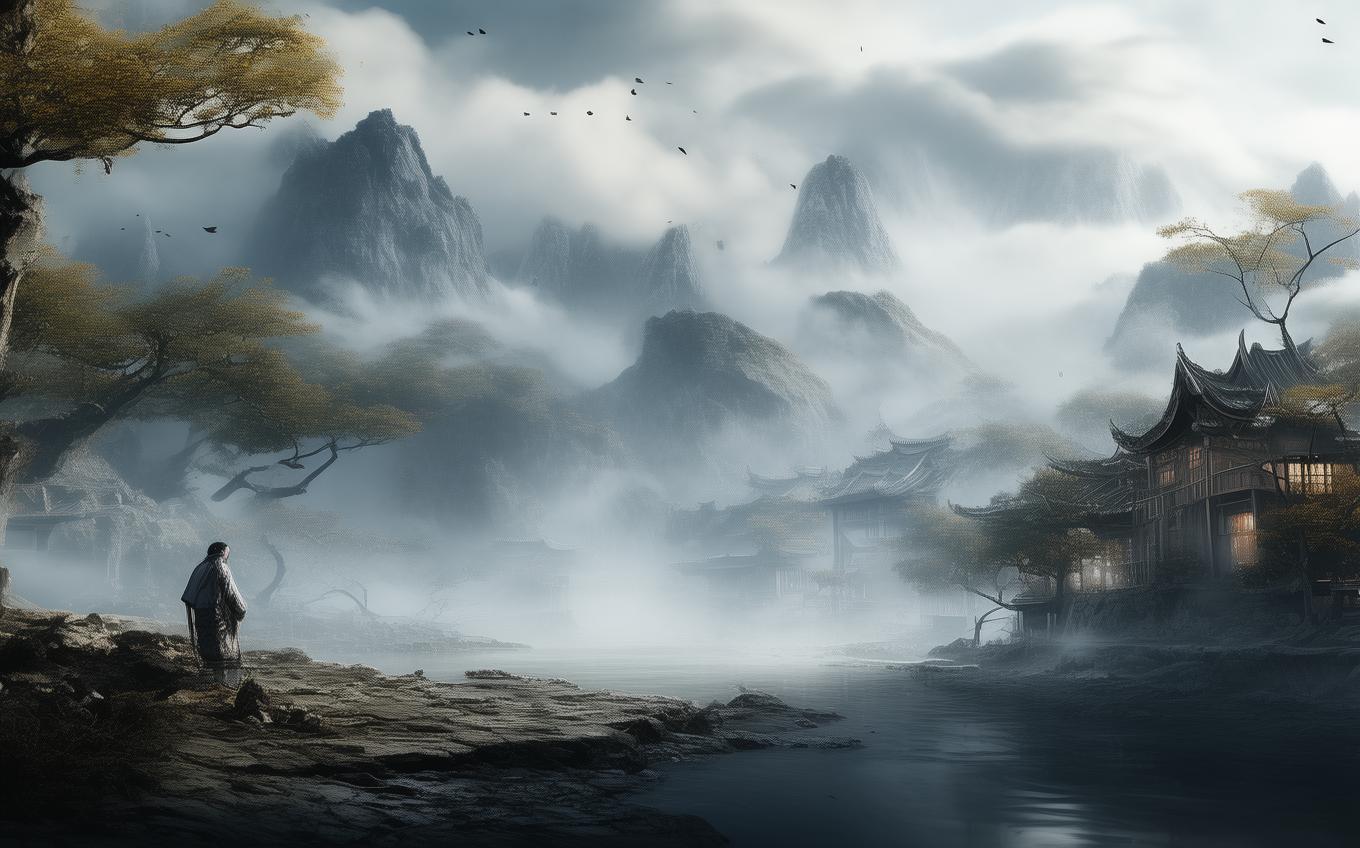
The poem opens with a bold, celestial claim. “离宫秘苑” (the “detached palace” or temporary imperial lodge) and its surrounding secret gardens are said to surpass 瀛洲 (Yíngzhōu), one of the mythical island paradises of the Daoist immortals. Right away, the poet elevates the earthly imperial site to a supernal realm, framing Empress Wu’s presence as an occasion that turns a rocky river gorge into a place more wonderous than the heavens. The second line deepens this motif: here, one finds caves and ravines that seem to belong to xiān rén —immortals. The word “幽” (yōu, deep, secluded, hidden) suggests a mysterious beauty removed from the mundane world. Together, these lines set a tone of sacred awe.
Couplet 2:
Song shifts to sensory details that fuse climate and landscape. By the cliff side, the colors of the trees seem imbued with a cold wind — an almost synesthetic image in which vision conveys temperature. Then, the sound of the spring water rushing over stones evokes the crispness of an autumn shower, even if it is summertime. The phrase “带雨秋” (bearing autumn rain) projects a sense of refreshing coolness and hints at the timeless, slightly melancholic beauty of the natural world. This interplay of sensory impressions not only paints the scenery but also aligns the gorge with a higher, poetic reality where seasons and elements coexist in perfect harmony.
Couplet 3:
Now the poem transitions to the human activity — the grand imperial banquet. Yet even here, nature is not excluded; rather, it participates joyfully. Birds arrive at the feast as if to offer their own melodies (“度曲”), merging their wild music with the ordered performance of court musicians. Clouds, too, seem to attach themselves to the “帐殿” (the great tent-palace set up for the occasion), coalescing into the shapes of multi-storied buildings. This vision of avian and atmospheric cooperation suggests that the entire cosmos celebrates the Empress’s presence. It is a typical courtly hyperbole, but executed with such elegance that it convinces aesthetically.
Couplet 4:
In the closing lines, the poet turns to personal expression, employing the self-deprecating term “微臣” (humble minister). He recollects that he once had the privilege of serving a “方明御” — a sagely, enlightened sovereign (referring to both Wu Zetian and, indirectly, to the ideal rulers of antiquity). “八骏” (the Eight Steeds) alludes to the legendary horses of King Mu of Zhou, who journeyed to the farthest reaches of the world; here they symbolize the imperial retinue’s majestic progress. To be allowed to “accompany” such a tour is the highest honor. This final couplet balances heartfelt gratitude with a loyal subject’s humility, sealing the poem on a note of intimate reverence.
Themes and Symbolism
Immortality and Sacred Space:
Yingzhou and the “immortals’ cave” are direct references to Daoist paradise lands. By equating the Shicong gorge with these mythical places, the poem reflects the Tang court’s fascination with immortality and the belief that the emperor’s virtue could turn real landscapes into blessed realms.
Harmony Between Humanity and Nature:
The birds and clouds are not mere backdrop; they actively engage with the human celebration. This mirrors the Chinese philosophical ideal of tiān rén hé yī (天人合一, the unity of heaven and humanity), where a sagely ruler’s moral power synchronizes society and the cosmos.
Courtly Gratitude and Imperial Majesty:
The eight steeds link the empress to mythic kings, while the poet’s self-effacement is a form of ritual politeness. The poem subtly legitimizes Wu Zetian’s rule by embedding her in a cosmic and historical framework.
Synesthesia and Seasonal Fluidity:
The “chill” in tree colors and the “autumn” in spring water compress time and sensation, creating a landscape that exists outside ordinary chronology — an eternized moment befitting an immortal realm.
Cultural Context
Song Zhiwen’s “石淙” was produced during the Shicong Gathering of 700 CE,
Comments (0)
No comments yet. Be the first to comment!