Introduction
Emperor Xuanzong of Tang (唐玄宗, personal name Li Longji 李隆基, r. 712–756) presided over one of the most brilliant and tumultuous eras in Chinese history. A generous patron of the arts and an accomplished poet himself, he often exchanged verses with his courtiers—a practice that blended personal expression with political theater. The poem “南出雀鼠谷答张说” (“Leaving the Que Shu Valley to the South: A Reply to Zhang Yue”) was composed around 724, as the emperor journeyed back to the capital Chang’an after an imperial tour of the eastern regions. It responds to a poem by his trusted chancellor Zhang Yue (张说), a leading literary figure of the day. Occasional verse like this offers a rare glimpse into the mind of an emperor: majestic yet self‑effacing, cosmic yet intimately observant of the landscape.
The Poem: Full Text and Translation
雷出应乾象
léi chū yìng qián xiàng
Thunder bursts forth, answering the celestial sign of Qian;
风行顺国人
fēng xíng shùn guó rén
The wind travels smoothly, following the hearts of the kingdom’s people.
川途犹在晋
chuān tú yóu zài jìn
The river route still lies within the borders of Jin;
车马渐归秦
chē mǎ jiàn guī qín
Yet our carriages and horses gradually return to the land of Qin.
背陕关山险
bèi shǎn guān shān xiǎn
Turning our backs on the perilous passes and mountains of Shaan;
横汾鼓吹频
héng fén gǔ chuī pín
Crossing the Fen River, the clamor of drums and pipes grows frequent.
草依阳谷变
cǎo yī yáng gǔ biàn
Grasses change color, nestling against the sun‑drenched valley;
花待北岩春
huā dài běi yán chūn
Flowers wait for spring to reach the northern cliff.
闻有鹓鸾客
wén yǒu yuān luán kè
I hear there is a guest, a simurgh‑like talent;
清词雅调新
qīng cí yǎ diào xīn
Whose pure words and elegant tones are refreshingly new.
求音思欲报
qiú yīn sī yù bào
Seeking that music, I long to respond in kind;
心迹竟难陈
xīn jì jìng nán chén
Yet the tracks of my heart are, after all, difficult to lay out.
Line-by-Line Analysis
The opening couplet establishes a cosmic connection. “Thunder answers the sign of Qian” alludes to the trigram Qian (☰) in the Yijing (Book of Changes), which symbolizes Heaven, creative power, and the ruler. By linking the thunderstorm to this principle, Xuanzong casts his own procession as a natural world‑event. The second line, “the wind travels smoothly, following the nation’s people,” echoes the Confucian ideal that a virtuous sovereign moves in harmony with the people’s will—the breeze of his governance is gentle and welcomed.
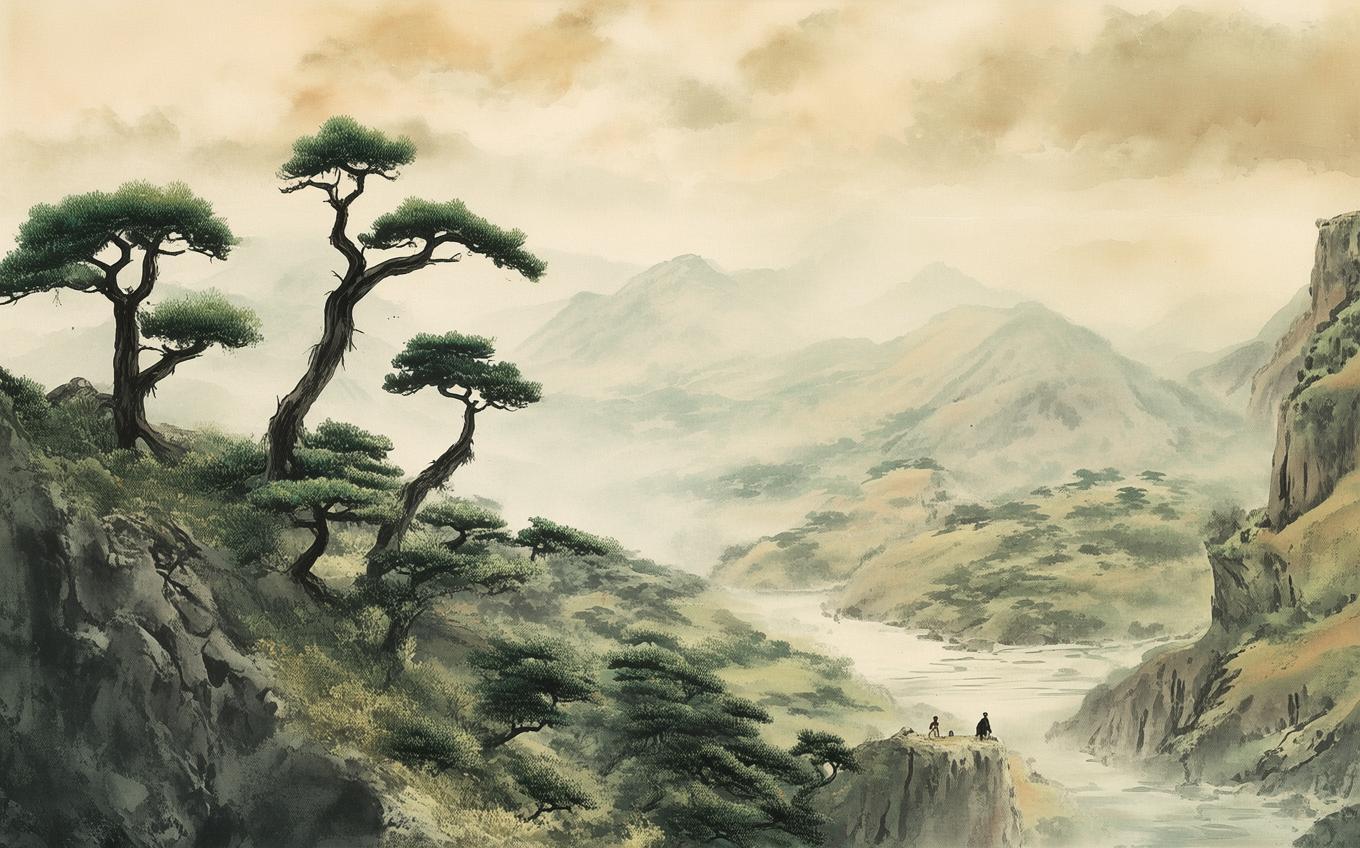
Lines three and four trace the geography of return. “Still within Jin” (modern Shanxi) anchors the poem in the present moment, while “gradually return to Qin” (the region around Chang’an) injects a sense of homecoming. The contrast between the lingering river journey and the steady advance of the imperial carriages conveys both the length of the trip and the emperor’s patient acceptance of the road.
In the fifth and sixth lines, the journey’s danger and pageantry are juxtaposed. “Turning our backs on the perilous passes and mountains of Shaan” signals relief: they have left behind the most treacherous terrain. “Crossing the Fen River, the noisy music is frequent” evokes a scene of celebration. The Fen River was famously visited by Emperor Wu of the Han dynasty, a previous golden age, so the line layers historical grandeur onto Xuanzong’s own tour. The “drums and pipes” (gǔ chuī) are more than entertainment; they are the sonic emblem of imperial authority.
The seventh and eighth couplets turn to intimate nature imagery. Grasses change color because they cling to the sunny side of the valley—a delicate observation that hints at adaptability and the passage of seasons. Flowers on the north cliff must wait for spring; there is a patient promise of renewal. In a poem of political return, these lines also suggest that the land itself thrives under the sovereign’s presence, the “sunny valley” perhaps a metaphor for his enlightened gaze.
The final four lines shift to the personal address. Zhang Yue is called a “鹓鸾客” (yuān luán kè), a guest like the simurgh, a mythical bird associated with high officials and men of virtue. The emperor praises his chancellor’s poem as “pure words and elegant tones, refreshingly new.” But when Xuanzong wishes to reply with equal music, he confesses, “the tracks of my heart are difficult to lay out.” This startling humility—an emperor admitting his inmost feelings cannot easily be expressed—humanizes the Son of Heaven and elevates the poetic exchange beyond mere flattery. It is a graceful bow to a trusted minister and a subtle acknowledgment of the limits of language.
Themes and Symbolism
Cosmic kingship and human virtue. The poem opens with natural phenomena—thunder and wind—reconfigured as responses to both Heaven and the people. This blend of Daoist cosmology and Confucian rule sets the emperor as the pivot between the cosmic and the social orders.
**The journey as ritual


Comments (0)
No comments yet. Be the first to comment!