Analysis of "端午" - Classical Chinese Poetry
Introduction
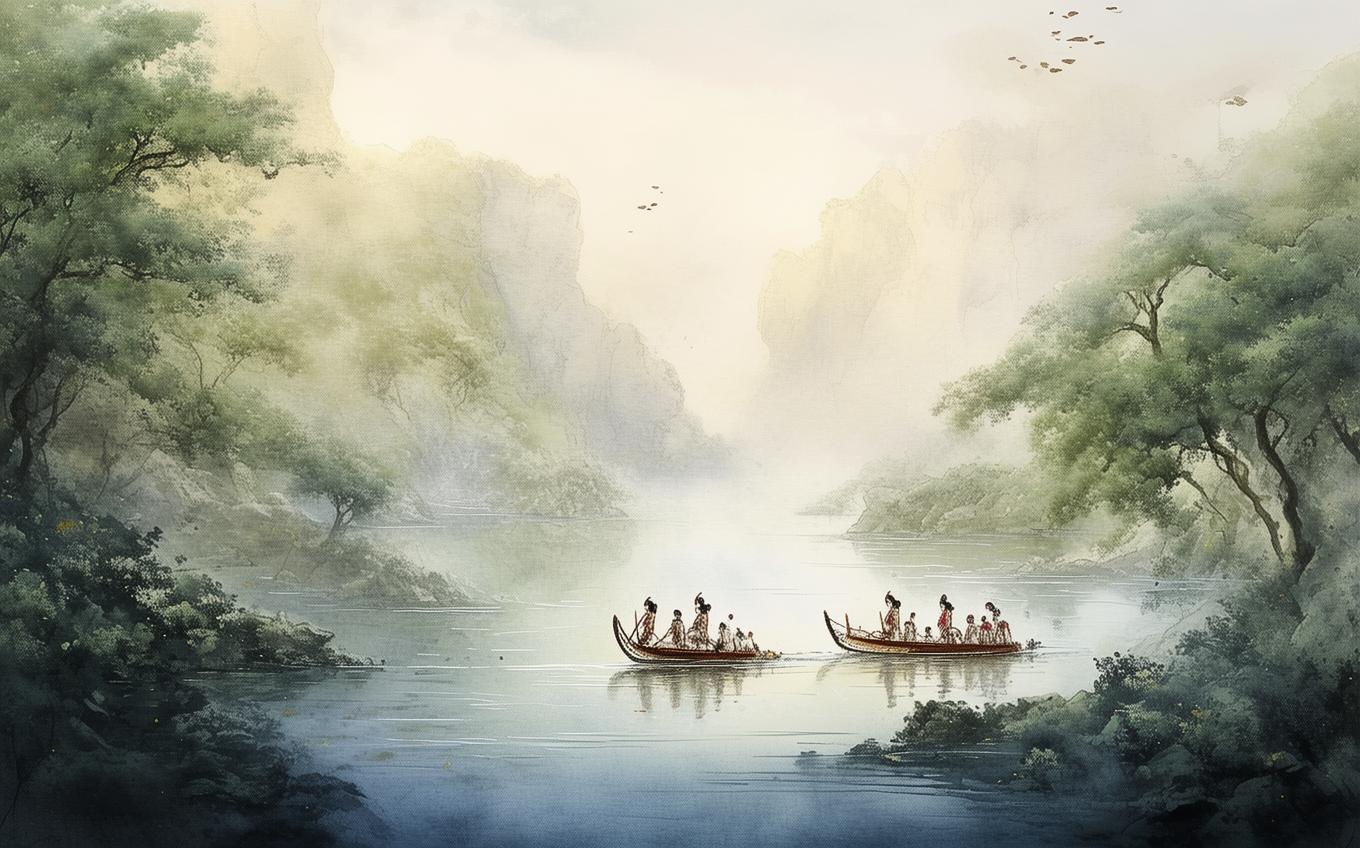
Dragon Boat Festival, or Duanwu (端午), has inspired countless poets throughout Chinese history. One of the most charming and intimate depictions comes from Lu You (陆游, 1125–1210), a prolific poet of the Southern Song Dynasty. Known for his fervent patriotism and lyrical sensitivity, Lu You also captured simple moments of everyday life. His poem “乙卯重五诗” (Yǐmǎo Chóngwǔ Shī) — “A Poem on the Dragon Boat Festival of the Year Yimao” — written in 1195 when he was seventy, presents a quiet, personal view of the festival. Rather than grand narratives of Qu Yuan or dragon boat races, the poem focuses on folk customs, family activities, and the poet’s calm acceptance of aging. It offers English-speaking readers a window into how the festival was celebrated in a Song Dynasty household, blending cultural richness with universal emotions.
The Poem: Full Text and Translation
重五山村好,榴花忽已繁。
Chóngwǔ shāncūn hǎo, liúhuā hū yǐ fán.
Dragon Boat Festival in the mountain village is lovely, pomegranate blossoms have suddenly grown lush.
粽包分两髻,艾束著危冠。
Zòngbāo fēn liǎng jì, àishù zhuó wēiguān.
Zongzi are divided into two pointed bundles, wormwood sprigs are tied to my tall hat.
旧俗方储药,羸躯亦点丹。
Jiùsú fāng chǔ yào, léiqū yì diǎn dān.
Following old customs, medicines are being stored; on my frail body, cinnabar dots are also applied.
日斜吾事毕,一笑向杯盘。
Rì xié wú shì bì, yī xiào xiàng bēipán.
As the sun sets, my tasks are done, with a smile I turn to wine cup and plate.
Line-by-Line Analysis
Line 1: 重五山村好,榴花忽已繁。
The poem opens with serene joy. “重五” refers to the fifth day of the fifth lunar month, the Dragon Boat Festival. The poet situates himself in a mountain village (山村), far from the political turmoil of the court. The word “好” (fine, lovely) sets a positive tone. The pomegranate flower (榴花) is a seasonal marker, as it blooms vividly in early summer. “忽已繁” (suddenly grown lush) suggests delighted surprise — time has slipped by, and nature has burst into color almost unnoticed. This quiet observation reveals the poet’s receptive, unhurried mindset.
Line 2: 粽包分两髻,艾束著危冠。
Here Lu You details two iconic customs. Zongzi (粽包), sticky rice dumplings wrapped in bamboo leaves, are shaped “分两髻” — divided into two pointed “buns” resembling a girl’s double hair-knots, a traditional festive shape. This image conveys homely warmth and meticulous preparation. Then, wormwood (艾束) is fastened to a “危冠” — a tall hat. In folk tradition, hanging mugwort or calamus on doors and wearing them on the head wards off evil spirits and diseases. The poet dons his festival hat with a playful dignity, blending ritual with personal style.
Line 3: 旧俗方储药,羸躯亦点丹。
Dragon Boat Festival is associated with summer health practices. “储药” (storing medicine) refers to the belief that herbs collected at noon on this day possess maximum potency. Lu You acknowledges his “羸躯” (frail body) — an honest mention of old age. “点丹” means applying small dots of cinnabar (realgar) paste, often on a child’s forehead to repel insects and evil, but here the elderly poet does it too. The word “亦” (also) carries a gentle self-mockery and humility. He participates in the same protective rites as children, accepting human vulnerability with grace.
Line 4: 日斜吾事毕,一笑向杯盘。
The closing couplet is a masterpiece of contentment. The scene shifts to afternoon’s end: the sun slants westward. All festival duties — making zongzi, arranging herbs, preparing medicines — are complete. “一笑” (a smile) is the emotional heart of the poem. It is not a loud laugh but a quiet, satisfied recognition. Turning “向杯盘” (toward wine cup and plate), the poet looks forward to a simple meal and a drink, possibly realgar wine (雄黄酒), traditional for the occasion. There is no loneliness, only fulfillment in small pleasures.
Themes and Symbolism
Festival as a Sanctuary of Simplicity: Lu You chooses the village setting over official celebrations, emphasizing personal and family-centered observances. The poem celebrates domesticity — making zongzi, wearing mugwort — as a source of quiet happiness.
Aging and Mortality: The frail body (“羸躯”) and the cinnabar dot carry dual meanings. They acknowledge physical decline while also affirming life through participation in protective rituals. The poet meets the passage of time with a smile, not with regret.
Nature and Seasonal Rhythm: The pomegranate blossoms mark time’s movement. Nature’s beauty is spontaneous (“忽已繁”), paralleling the ease with which the poet embraces the day. The setting sun (“日斜”) brings gentle closure, a natural metaphor for life’s later years.
Symbolism:
- Zongzi (粽) — Remembrances of Qu Yuan, but here also a symbol of shared family labor and tradition.
- Wormwood (艾) and cinnabar (丹) — Defenders against evil and disease, embodying the ancient Chinese fusion of medicine, superstition, and seasonal wisdom.
- Wine cup and plate (杯盘) — Simple earthly enjoyment, an echo of Taoist and Confucian ideals of finding contentment in the present.
Cultural Context
The Dragon Boat Festival is rooted in the commemoration of Qu Yuan, the loyal minister and poet of the Chu kingdom who drowned himself in protest against corruption. Over centuries, the festival evolved to include dragon boat races, eating zongzi, and various health customs. Lu You wrote this poem in 1195, nearly a millennium after Qu Yuan’s death. By then, Duanwu had become a major folk festival, deeply woven into the agricultural calendar.
Lu You himself lived during the Southern Song, a period when northern China was occupied by the Jurchen Jin dynasty. His famous patriotic poems call for national recovery, but this poem retreats into private life. This shift does not indicate indifference; rather, it shows the consolations of home, tradition, and nature during a time of political disappointment. The poem reflects a Chinese cultural value: while grand duties are important, finding peace in daily rituals and family is equally honored. The meticulous care for seasonal customs also mirrors Confucian respect for li (礼) — propriety and ritual — that orders human life harmoniously with the cosmos.
Conclusion
Lu You’s “乙卯重五诗” captures the Dragon Boat Festival not as a grand spectacle but as an intimate, personal experience. In just twenty Chinese characters, it paints a picture of floral beauty, festive food, folk medicine, and serene old age. The poem’s enduring appeal lies in its delicate balance of cultural detail and universal emotion — the joy of completing a day’s work, the smile at a setting sun, the warmth of a wine cup. For English-speaking readers, it offers an accessible and profound glimpse into how Chinese poetry transforms ordinary moments into lasting art, reminding us that content can be found in simplicity, even as the sun slants and years pass.
Comments (0)
No comments yet. Be the first to comment!