Introduction
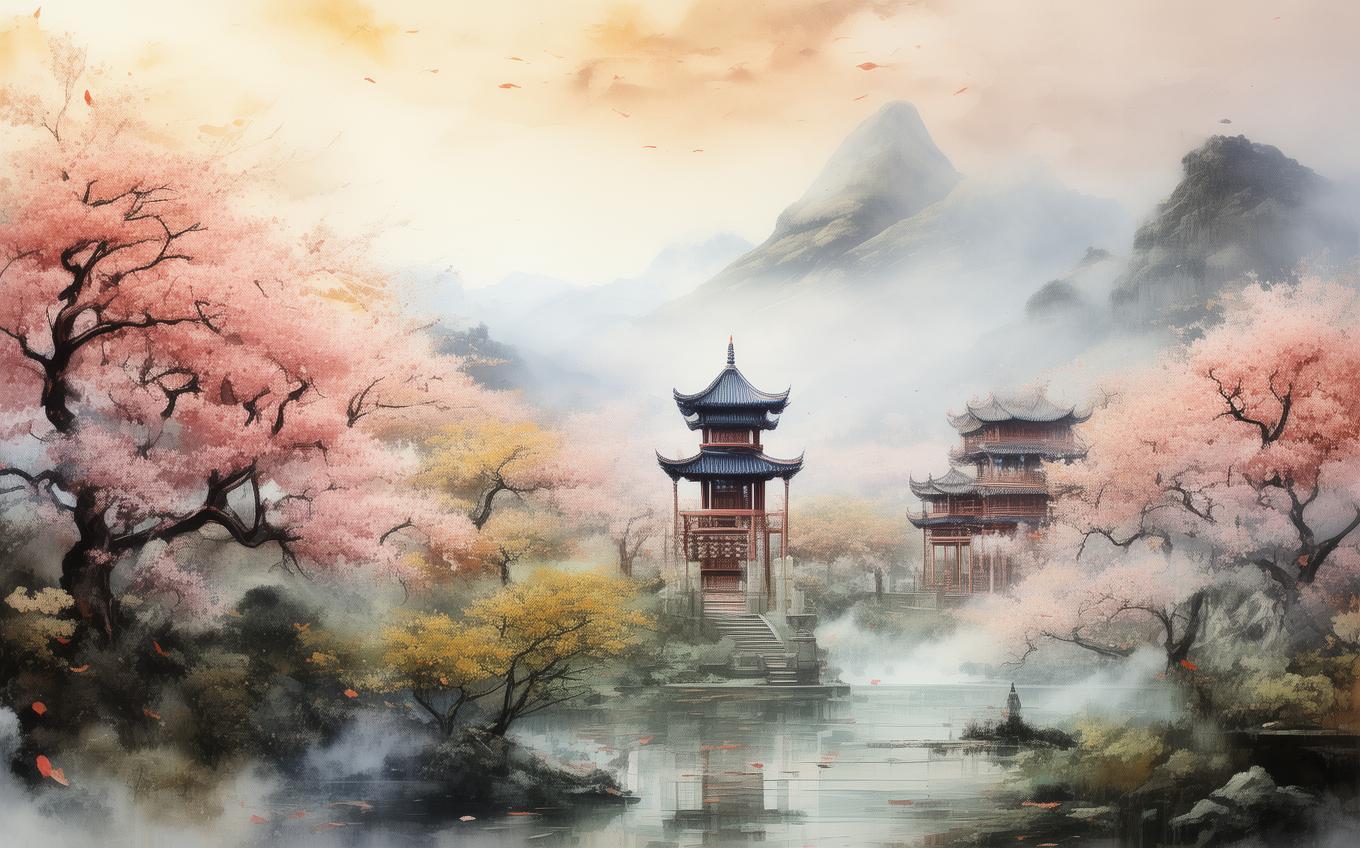
The poem "春中兴庆宫酺宴" (Spring Banquet at Xingqing Palace) was composed by Emperor Xuanzong of Tang (唐玄宗, personal name Li Longji 李隆基, reigned 712–756), one of the most culturally brilliant yet politically tumultuous periods in Chinese history. As both the Son of Heaven and a patron of the arts, Xuanzong often expressed his vision of harmonious rule through poetry, and this piece — written to commemorate a grand state feast — offers a rare window into the splendor of the Tang court. It is not merely an imperial self-portrait; it is a carefully crafted political statement wrapped in the imagery of celebration. For English-speaking readers, the poem illuminates how a Tang emperor merged statecraft with aesthetics, turning a banquet into a metaphor for a well-ordered empire.
The Poem: Full Text and Translation
九达长安道,
Jiǔ dá Cháng'ān dào,
The highway to Chang’an reaches in all directions,
三阳别馆春。
Sān yáng bié guǎn chūn.
At this auxiliary palace, spring brings the threefold yang warmth.
还将听朝暇,
Hái jiāng tīng cháo xiá,
I take the leisure after morning court,
回作豫游晨。
Huí zuò yù yóu chén.
And turn it into a morning of joyful excursion.
不战要荒服,
Bú zhàn yāo huāng fú,
Without warfare, the distant barbarians submit;
无刑礼乐新。
Wú xíng lǐ yuè xīn.
Without punishments, rites and music renew themselves.
合酺覃土宇,
Hé pú tán tǔ yǔ,
I grant a shared feast that extends to the realm's borders,
欢宴接群臣。
Huān yàn jiē qún chén.
A joyful banquet to gather all my ministers.
玉斝飞千日,
Yù jiǎ fēi qiān rì,
Jade goblets fly as if a thousand days could pass,
琼筵荐八珍。
Qióng yán jiàn bā zhēn.
On gem-like mats, the eight delicacies are served.
舞衣云曳影,
Wǔ yī yún yè yǐng,
Dancing robes trail shadows like drifting clouds,
歌扇月开轮。
Gē shàn yuè kāi lún.
Singers’ fans open rounds as full as the moon.
伐鼓鱼龙杂,
Fá gǔ yú lóng zá,
Drumming mingles with fish and dragon pageantry,
撞钟角觝陈。
Zhuàng zhōng jué dǐ chén.
Bells resound as wrestlers display their strength.
曲终酣兴晚,
Qǔ zhōng hān xìng wǎn,
The music ends, yet the revelry lingers late,
须有醉归人。
Xū yǒu zuì guī rén.
Surely there will be those returning home drunk.
Line-by-Line Analysis
The poem opens with an empire-wide perspective. The “highway to Chang’an” reaching in all directions (九达长安道) is not only a literal reference to the capital’s superb road network but a political metaphor: the Tang throne is the center to which all paths converge, suggesting stability and centrality. “Threefold yang warmth” (三阳) refers to the first month of spring in the traditional calendar, when the yang energy begins to rise strongly — symbolizing renewal and the emperor's virtuous influence radiating like spring sunlight through the “auxiliary palace” (Xingqing Palace was originally a detached palace before becoming an imperial residence).
The next couplet shifts to the emperor’s personal rhythm: “I take the leisure after morning court” presents a ruler so effective that even his workday ends early enough for an excursion. This is a powerful image of effortless governance, a key Confucian ideal. The use of “joyful excursion” (豫游) echoes ancient sage-kings who toured their realms to observe the people’s welfare, here internalized as a festive morning within the palace grounds.
Lines five and six state the poem’s political thesis with surprising directness: “Without warfare, the distant barbarians submit; / Without punishments, rites and music renew themselves.” These are not idle boasts but references to core Confucian doctrine: a truly virtuous ruler transforms the world through moral example rather than force. The yaohuang (要荒) refer to the outermost zones of the traditional “five domains” of submission; that they come willingly marks the emperor’s civilizing power. Similarly, “rites and music renew themselves” suggests a society so harmonious that legal coercion is unnecessary — an idealized vision of the early Tang golden age under Xuanzong’s reign.
The banquet imagery then unfolds lavishly. “Shared feast” (合酺) was a specific Tang institution: an imperial banquet open not only to officials but sometimes extending symbolic grace to commoners across the land. The phrase “extends to the realm's borders” (覃土宇) transforms the feast into a ritual of unity. “Jade goblets fly as if a thousand days could pass” alludes to ancient tales of wine so fine it can make a thousand days feel like a moment, while the “eight delicacies” (八珍) — the canonical list of the finest ancient dishes — marks the ultimate culinary refinement.
The performance couplets are masterful sensory blends. “Dancing robes trail shadows like drifting clouds” captures the ethereal motion of court dancers, the silk sleeves billowing so effortlessly they seem to merge with the very weather of the auspicious day. “Singers’ fans open rounds as full as the moon” plays on the full moon as a symbol of completeness and family reunion, now projected onto the circular fans that punctuate the singing. Then noisy spectacle erupts: “drumming mingles with fish and dragon pageantry” refers to a type of variety show with mythical sea-creature puppets, while “bells resound as wrestlers display their strength” adds a note of robust physicality — the court entertainments encompass both high aesthetic grace and earthy folk energy.
The final couplet closes with a gentle, almost humorous image: the music has stopped, but the joyful mood persists deep into the night, and “surely there will be those returning home drunk.” This is not a drunkenness of excess but of communal happiness — the emperor himself imagines his guests so overcome by good cheer that they need help home. It humanizes the imperial persona, ending a poem of majestic ritual on a note of shared warmth.
Themes and Symbolism
Harmonious Rule through Virtue is the central theme. The entire feast is presented as the natural outcome of a well-governed state: peace abroad, ritual order at home, and the emperor’s ability to balance duty and enjoyment. The poem is itself a performance of Confucian kingship. The spring setting reinforces this — the yang energy of the season mirrors the ruler’s benevolent power, making the palace a microcosm of a flourishing empire.
Unity and Inclusiveness runs through the imagery. The feast “extends to the realm’s borders,” the entertainments mix elite refinement (cloud-robes, moon-fans) with popular spectacles (fish-dragon plays, wrestling), and even the guests departing drunk suggests a common humanity that transcends rank. Xingqing Palace, which was known for its complex of halls and gardens blending natural and man-made beauty, becomes a space where the boundaries between ruler and subject dissolve in joy.
Symbolic use of numbers and cosmic order: “Three yang” (三阳) is a trigram from the Book of Changes indicating the rebirth of light after winter; “thousand days” (千日) is a mythic span of intoxication; “eight delicacies” (八珍) represents the canonical completeness of the feast. All these numbers metaphorically embed the banquet in a cosmic framework, making the meal a ritual reenactment of universal harmony.
The drunken return as political metaphor: In classical poetry, drunkenness often suggests a state of spiritual freedom or contentment under a good ruler. The “intoxicated returnees” affirm that the feast has succeeded: no one departs sober and constrained, everyone is fully immersed in the shared joy. It is an image of a society at ease with itself under a benevolent monarch.
Cultural Context
Emperor Xuanzong’s early reign (known as the Kaiyuan era, 713–741) is often celebrated as the pinnacle of Tang dynasty culture — economic prosperity, military strength, and an extraordinary flourishing of the arts. Xingqing Palace (兴庆宫) was his favorite residence, originally a mansion he had inhabited as a prince, which he later expanded into a magnificent palace complex with lotus ponds, pleasure pavilions, and a tower said to be where he met with the legendary poet Li Bai. The “酺宴” (pú yàn), or state banquet, was an ancient ritual revived by Xuanzong, in which the emperor provided food and drink to his subjects as a sign of grace and unity. Such events were recorded in poems by both the emperor and his invited poets, becoming a distinct sub-genre of Tang court poetry.
This poem reflects a deeply ingrained Chinese political philosophy: the ruler’s inner virtue naturally manifests in external order, so that a peaceful realm can be enjoyed rather than merely governed. The poem’s insistence on “no warfare” and “no punishments” echoes the Daoist-inflected Confucian ideal of wuwei (无为, non-coercive action) popular at Xuanzong’s court. However, the poem also contains a subtle tension — written likely at the height of Xuanzong’s power, it cannot know the catastrophe that would soon follow (the An Lushan Rebellion of 755 would shatter this world). For readers today, the poem is thus doubly poignant: a perfect crystal of a golden age, just before its fall.
Conclusion
"春中兴庆宫酺宴" is far more than a simple banquet poem. It is an emperor’s aspiration cast in verse: a vision of the state as an extended family gathering, of power expressing itself through generosity rather than fear, and of art as the truest testimony of good governance. Its vivid imagery — cloud-dancers, moon-fans, dragon pageants, jade goblets — has enchanted readers for centuries, yet its deeper message is one of harmony between the human and natural worlds, between ruler and ruled. In our own age of constant noise and division, this Tang poem whispers a seductive alternative: a world so well-ordered that even an emperor can pause after morning court for a morning of joy, and his people can return home happily drunk under the spring moon.
Comments (0)
No comments yet. Be the first to comment!