Analysis of "早登太行山中言志" – Classical Chinese Poetry
Introduction
"早登太行山中言志" (Zǎo Dēng Tàiháng Shān Zhōng Yán Zhì) – "Declaring My Aspirations While Ascending the Taihang Mountains at Dawn" – is a powerful poem by Emperor Xuanzong of Tang (唐玄宗, Lǐ Lōngjī), who reigned from 712 to 756 CE. Known for the golden age of the Kaiyuan era, Xuanzong was both a patron of the arts and an accomplished poet. This poem was composed during an imperial inspection tour, as the emperor crossed the rugged Taihang range with his entourage. It blends vivid natural description with a ruler’s solemn reflection on governance, duty, and the weight of tradition. In Chinese literature, it stands out as a rare window into the heart of an emperor who seeks to balance his own ambitions with Confucian ideals of humility and care for the common people.
The Poem: Full Text and Translation
Below is the complete poem, presented line by line with Chinese characters, pinyin, and a faithful English translation.
清跸度河阳,
Qīng bì dù Héyáng,
With the clear imperial whistle we cross Heyang.凝笳上太行。
Níng jiā shàng Tàiháng.
Coagulated reed-pipe music ascends the Taihang.火龙明鸟道,
Huǒ lóng míng niǎodào,
Torch-bearing dragons light the bird-like path,铁骑绕羊肠。
Tiě qí rào yángcháng.
Iron-clad horsemen wind around sheep-gut trails.白雾埋阴壑,
Bái wù mái yīn hè,
White mist buries the shadowy ravines,丹霞助晓光。
Dān xiá zhù xiǎoguāng.
Vermilion clouds assist the dawn’s glow.涧泉含宿冻,
Jiàn quán hán sù dòng,
Mountain torrents hold the night’s ice,山木带余霜。
Shān mù dài yú shuāng.
Forest trees wear the lingering frost.野老茅为屋,
Yě lǎo máo wèi wū,
An old rustic has thatch for his roof,樵人薜作裳。
Qiáo rén bì zuò shang.
A woodcutter makes clothes from fig-vine.宣风问耆艾,
Xuān fēng wèn qí ài,
Spreading moral influence, I consult the elders,敦俗劝耕桑。
Dūn sú quàn gēng sāng.
Honest customs encourage ploughing and mulberry cultivation.凉德惭先哲,
Liáng dé cán xiān zhé,
My meager virtue shames past sages,徽猷慕昔皇。
Huī yóu mù xī huáng.
I long for the wise plans of ancient sovereigns.不因今展义,
Bù yīn jīn zhǎn yì,
Were it not to manifest righteousness now,何必冒垂堂。
Hébì mào chuítáng.
Why would I brave the sheer precipice?
Line-by-Line Analysis
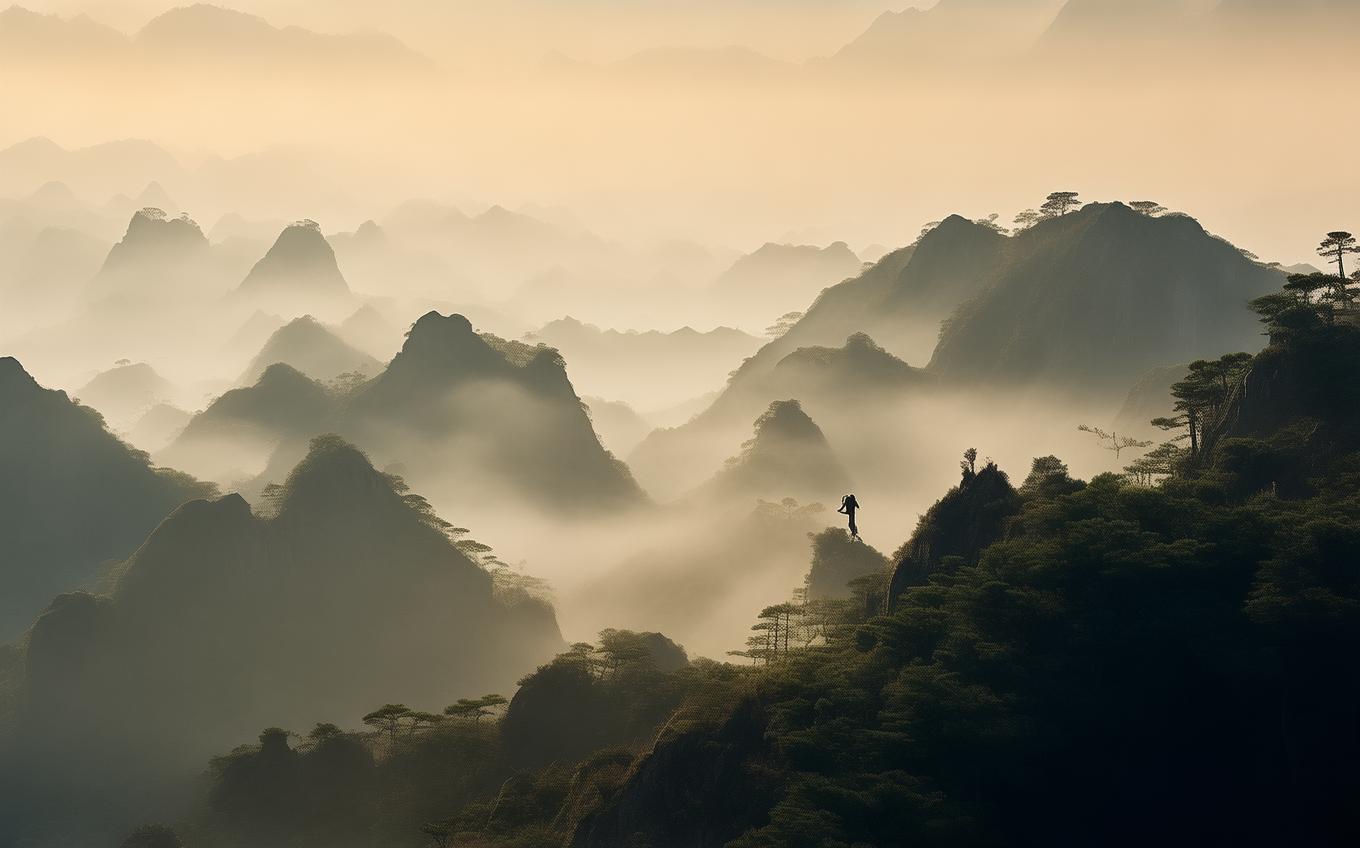
The poem opens with the grandeur and difficulty of the imperial journey. "清跸度河阳" sets the scene: "清跸" (qīng bì) is the clear signal whistle that clears the way for the emperor’s procession, evoking order and authority. Crossing Heyang, a county near the Yellow River, the party approaches the mountains. "凝笳上太行" uses the term "凝笳" (níng jiā), which suggests reed instruments playing a solemn, almost frozen melody; the music seems to thicken in the cold, mirroring the ascension’s strain. The Taihang Mountains, a jagged barrier in northern China, become both a physical and symbolic challenge.
In the next two couplets, the imagery shifts to sensory overload. "火龙明鸟道" paints a dramatic picture: soldiers carry torches, forming a fiery dragon that illuminates paths so narrow and winding only birds could normally traverse them. "铁骑绕羊肠" reinforces the danger; armored cavalry must negotiate tracks as slender as sheep intestines. Here, the emperor’s earthly might is dwarfed by nature’s scale, yet the light against the darkness suggests resolve. Then "白雾埋阴壑,丹霞助晓光" captures dawn breaking. White fog seems to swallow the dark gorges, while crimson clouds heighten the morning light—a stunning contrast of yin and yang that transforms the harsh landscape into a canvas of hope.
The middle section turns to the cold, lingering traces of winter. "涧泉含宿冻" describes streams still frozen overnight, and "山木带余霜" shows branches clinging to frost. These lines do more than report weather; they mirror the hardness of the journey and perhaps the emperor’s sense of burdens long carried. Immediately after, the poem’s gaze falls upon simple mountain folk. "野老茅为屋" paints a thatched hut, and "樵人薜作裳" a woodcutter in vine-made clothing. The abrupt shift from imperial splendor to peasant austerity is intentional: Xuanzong reminds himself that his realm is built on such lives.
This awareness leads directly into a declaration of purpose. "宣风问耆艾" refers to the Confucian duty of a ruler to disseminate moral influence (宣风) and seek wisdom from the aged (耆艾). "敦俗劝耕桑" emphasizes encouraging agriculture—ploughing (耕) and silkworm-raising (桑)—the foundations of the Tang economy. The verbs "问" (consult) and "劝" (exhort) show a ruler actively engaging, not merely observing.
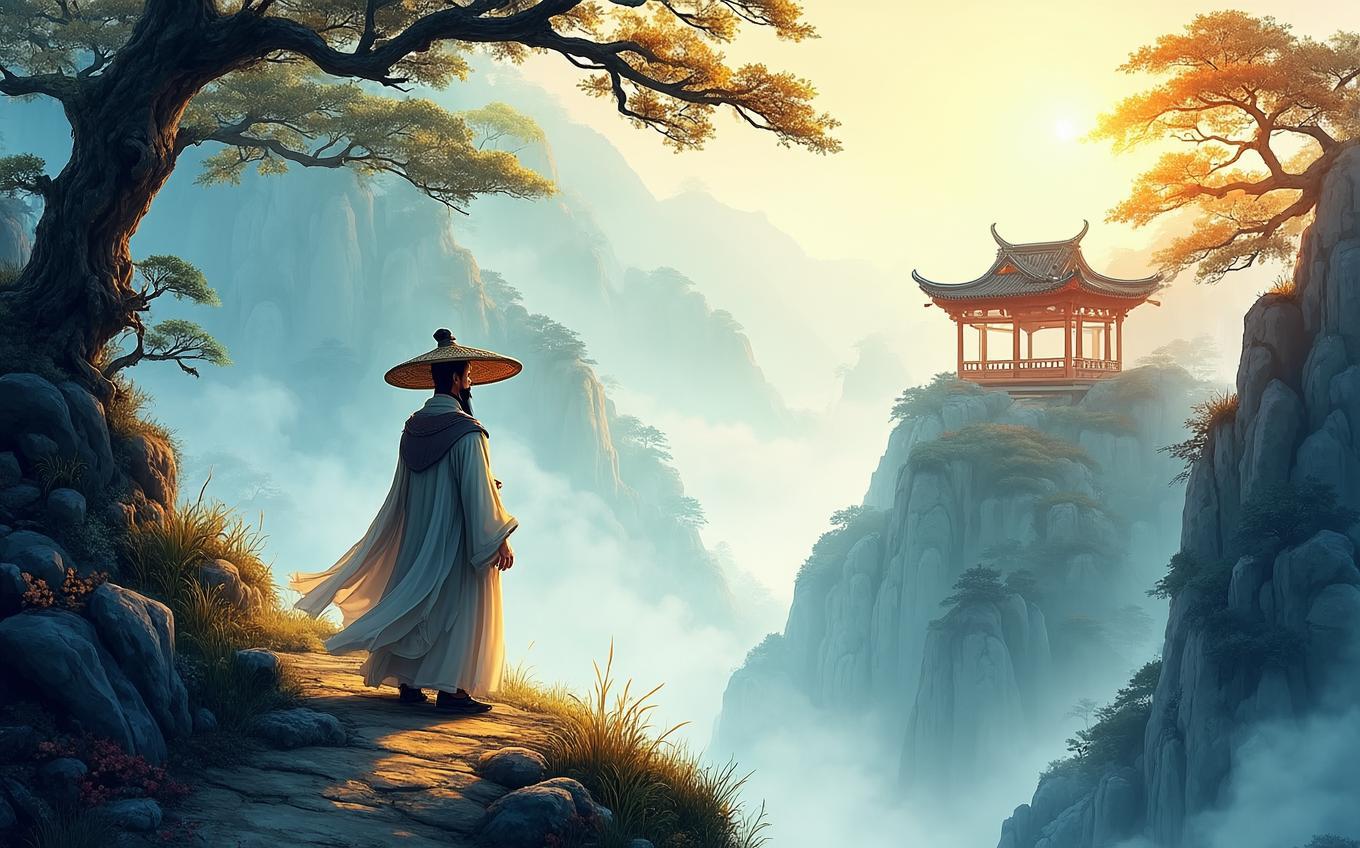
The final four lines are the emotional heart. "凉德惭先哲,徽猷慕昔皇" expresses profound humility: Xuanzong feels his own “virtue is meager” (凉德) compared to ancient sages, and he yearns to emulate the glorious plans (徽猷) of past sovereigns. The word "惭" (ashamed) is striking; an all-powerful emperor confesses inadequacy. Then the coda: "不因今展义,何必冒垂堂." He states that only to demonstrate righteousness (展义) would he dare to “brave the sheer precipice” (冒垂堂). The term "垂堂" literally means a high, hazardous place, symbolizing not just the mountain but the perils of rule itself. The poem ends on a note of moral resolution: leadership is a dangerous undertaking, justified only by a sincere desire to do good.
Themes and Symbolism
The dominant theme is righteous governance (展义). Xuanzong frames his mountain ascent as a metaphor for the ruler’s journey: filled with obstacles, requiring guidance from tradition, and only worthwhile if it serves the people. Nature here is both majestic and indifferent; the mist, frost, and narrow trails test human endurance, much like the complexities of empire.
Humility and self-reflection form another core strand. By confessing his “meager virtue” and longing after ancient models, Xuanzong aligns himself with the Confucian ideal of the sage-king who constantly examines himself. The poem thus becomes a public act of self-correction, meant to inspire his officials and subjects.
Key symbols include:
- Taihang Mountains: A real and symbolic obstacle; crossing them represents overcoming the challenges of ruling a vast, diverse land.
- Torch-bearing dragon (火龙): Imperial power bringing light and order to wild, dark places.
- Dawn and vermilion clouds (丹霞助晓光): Renewal and the hope that follows hardship, reflecting the emperor’s optimism for his reign.
- Thatched hut and vine clothing: Reminders of the common people’s simplicity and the emperor’s duty to improve their lives.
- Precipice (垂堂): The ever-present danger of moral failure; only a righteous purpose makes the risk acceptable.
Cultural Context
Tang Xuanzong’s Kaiyuan era (713–741) was a period of extraordinary cultural flowering and military strength, often seen as a peak of Chinese civilization. Confucianism, with its emphasis on benevolent rule, ritual, and moral cultivation, deeply influenced court ideology. Imperial inspection tours (巡幸) were ceremonial but also practical: they allowed the emperor to survey public sentiment, honor local elders, and promote agriculture. This poem captures that fusion of ritual and personal introspection.
Xuanzong’s admission of “凉德” echoes a long tradition of ruler humility in Chinese letters, from the Duke of Zhou to Emperor Taizong. It also foreshadows the later crisis of his reign—the An Lushan Rebellion—though at the time of writing, the empire appeared stable. The poem thus preserves a moment of earnest ambition before tragedy struck, making it a poignant artifact of Tang glory and vulnerability.
Conclusion
"早登太行山中言志" transcends its time by offering a deeply human portrait of a ruler caught between power and responsibility. Its vivid imagery—frozen streams, torch-lit paths, humble woodcutters—remains visceral even today. For modern readers, the poem is a reminder that leadership demands not only strength but also the courage to face one’s own shortcomings. In Xuanzong’s dawn ascent, we see the eternal struggle to align personal ambition with a greater good, a challenge as towering and beautiful as the Taihang Mountains themselves.

Comments (0)
No comments yet. Be the first to comment!