Analysis of "送胡真师还西山" - Classical Chinese Poetry
Introduction
Wang Wei (王维, 699–759) is one of the most celebrated poets of the Tang Dynasty, often hailed as the "Poet Buddha" for his deeply tranquil, meditative verses that blend nature with Zen Buddhist and Daoist sensibilities. A master of both poetry and painting, Wang Wei's works are renowned for their spare language, vivid imagery, and a profound sense of quiet transcendence. The poem "送胡真师还西山" (Sòng Hú Zhēnshī Huán Xīshān, "Farewell to Master Hu Returning to West Mountain") belongs to his body of farewell verses, but with a distinctively Daoist spiritual flavor. It bids goodbye to a Daoist master who is leaving the mundane world for a mountain retreat, weaving together themes of alchemy, immortality, and the gentle tension between earthly attachment and celestial freedom. The poem embodies the Tang ideal of the cultured hermit and reflects the era's rich interplay between Confucian duty and Daoist escape.
The Poem: Full Text and Translation
先生何处去?王屋访茅君。
Xiānshēng héchù qù? Wángwū fǎng Máo jūn.
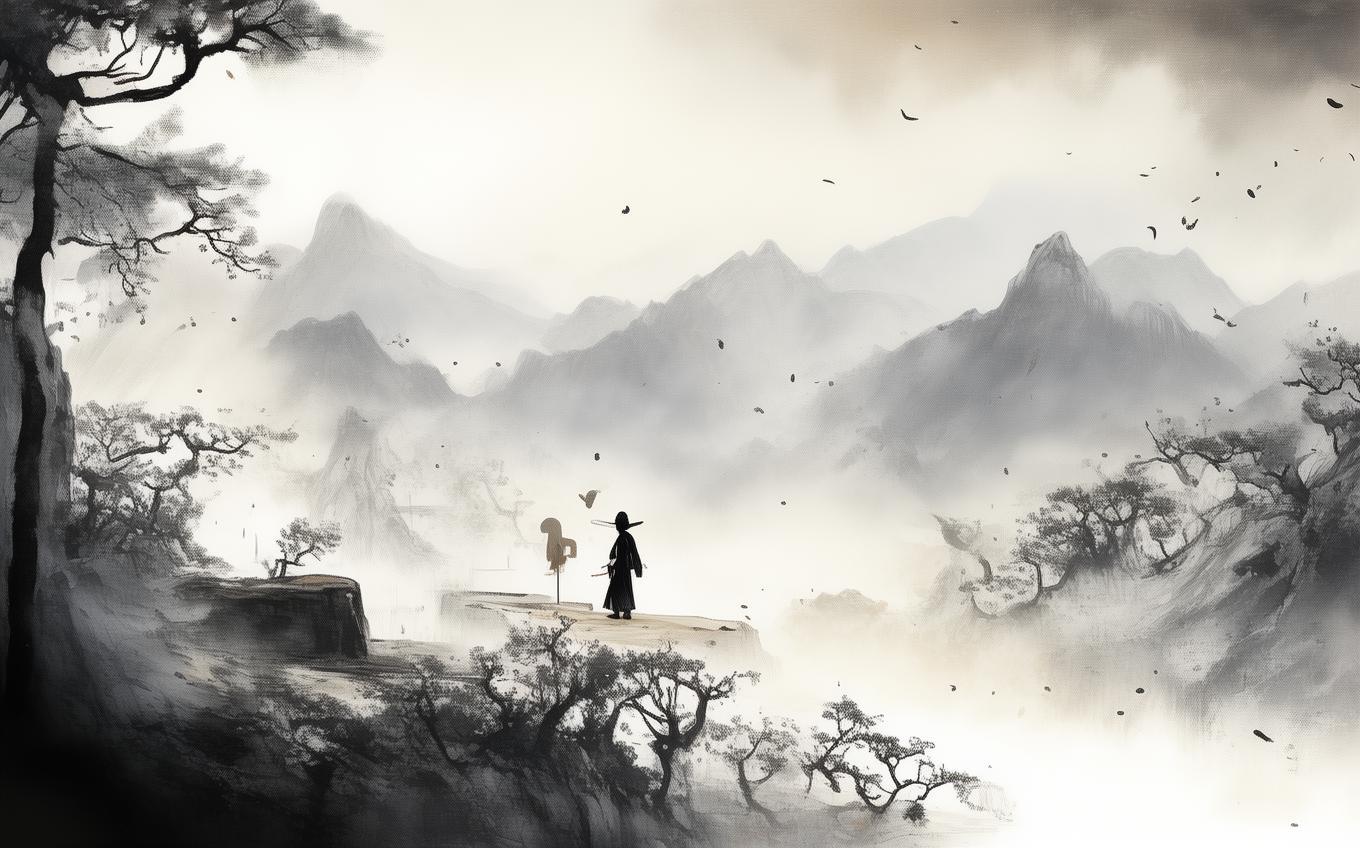
Where are you going, Master? To Mount Wangwu, to visit Lord Mao.
别妇留丹诀,驱鸡入白云。
Bié fù liú dān jué, qū jī rù bái yún.
You leave your wife the alchemical recipe, driving chickens into the white clouds.
人间若剩住,天上复离群。
Rénjiān ruò shèng zhù, tiānshàng fù lí qún.
If you linger too long in the human world, you'll again be parted from the heavenly flock.
当作辽城鹤,仙歌使尔闻。
Dàng zuò Liáochéng hè, xiān gē shǐ ěr wén.
You should become a crane of Liaocheng, and let the immortal songs reach your ears.
Line-by-Line Analysis
“先生何处去?王屋访茅君。”
The poem opens with a gentle, conversational question: "Where are you going, Master?" The word “先生” (xiānshēng) means "master" or "teacher," a respectful address that immediately sets a tone of admiration. The answer is rich with geographical and mythological resonance: “Mount Wangwu” (王屋山, located in modern-day Henan) is one of the sacred Daoist mountains, believed to be the dwelling place of immortals and the locus of intense spiritual cultivation. “Lord Mao” (茅君) refers to Mao Ying, a legendary Daoist figure who, together with his brothers, achieved transcendence and became the deity of Mount Mao (another sacred peak). The reference to visiting Lord Mao frames the master’s journey not as a simple trip home, but as a pilgrimage toward spiritual realization—a return to a mythical source of Daoist wisdom.
“别妇留丹诀,驱鸡入白云。”
This couplet captures the moment of parting in a startlingly intimate and symbolic manner. The master says goodbye to his wife and leaves her the “丹诀” (dān jué), the secret recipe for the elixir of immortality—an act that mixes worldly care with esoteric transmission. Then we encounter the curious image “驱鸡入白云”: “driving chickens into white clouds.” Chickens are humble, earthly creatures, symbols of daily domestic life; driving them into the clouds transforms a mundane task into an ascent toward purity. The white clouds (白云, bái yún) are a classic Daoist metaphor for the realm of hermits and immortals, free from the dust of the world. Wang Wei paints the master’s departure not as a dramatic renunciation but as a seamless transition—he tends to his chickens and simultaneously strides into the transcendent, erasing the boundary between the ordinary and the sacred.
“人间若剩住,天上复离群。”
The third couplet shifts to a reflective warning. “If you linger too long (若剩住) in the human world, you'll again be separated from the group (离群) in heaven.” The word “剩” (shèng) implies excess, staying beyond the right time. The master’s true community is not earthly but celestial; lingering among mortals would cause him to miss his place in the heavenly flock. The phrase “离群” echoes both the social isolation of the hermit and the spiritual isolation of one who delays transcendence. This is typical Wang Wei: a quiet, almost reluctant recognition that the pull of the immortal world must eventually outweigh domestic affection.
“当作辽城鹤,仙歌使尔闻。”
The final couplet offers a hopeful, visionary conclusion. The “crane of Liaocheng” (辽城鹤) refers to a well-known Daoist legend: a man named Ding Lingwei from Liaodong (modern northeast China) became an immortal and later returned to his hometown as a white crane, perching on a city pillar while an immortal song was sung to him. To “become a crane” is to achieve transformation and immortality. The poet counsels the master to accept this destiny, so that the “immortal songs” (仙歌, xiān gē) will be heard by him—a metaphor for the true music of the cosmos, audible only to those who have crossed over. The closing tone is one of gentle encouragement and awe, as Wang Wei imagines the master not fading into obscurity but joining a timeless symphony.
Themes and Symbolism
- Parting without sorrow: Unlike many farewell poems that wallow in sadness, this poem treats departure as an elevation. The master leaves the mundane world for a higher sphere, so the poet’s tone is one of blessing rather than lament.
- The seamless weave of mundane and transcendent: The image of “driving chickens into white clouds” perfectly encapsulates the Daoist ideal that enlightenment is not found by abandoning life but by carrying life’s small tasks into the realm of the pure.
- Alchemy and transformation: The “丹诀” (alchemical recipe) and the “crane” (a shape-shifted immortal) underscore the Daoist pursuit of physical and spiritual transmutation.
- Community in heaven: The reference to “天上离群” suggests that even immortals form a society, and the poet views earthly relationships as temporary holding patterns before one rejoins a truer, celestial family.
Cultural Context
The Tang Dynasty (618–907) saw a vibrant synthesis of Confucianism, Buddhism, and Daoism, and many scholar-officials like Wang Wei embraced multiple traditions. Reclusion was not just a political escape but a respected spiritual path. Mountains like Wangwu were practically mapped as nodes of numinous power, and “fangshi” (masters of esoterica) such as Hu Zhenshi were valued for their alchemical knowledge. The poem reflects the cultural practice of sending off a Daoist master with verses that honored his quest, thereby sharing in his merit. Wang Wei himself, deeply influenced by Buddhist emptiness and Daoist naturalness, often wrote parting poems that redirected emotional attachment toward philosophical acceptance. The mention of Liaocheng crane ties to a shared body of immortality lore that would have been instantly recognizable to his audience.
Conclusion
Wang Wei’s “送胡真师还西山” is a tiny jewel of Tang poetry that transports the reader from a doorstep farewell to the realm of white clouds and crane immortals. Through simple language that radiates calm, the poet transforms a personal goodbye into a meditation on what it means to live somewhere “in between”—between home and retreat, wife and elixir, human community and heavenly flock. Its enduring appeal lies in this quiet bridging of worlds: we are invited to see the sacred in the chickens, the transcendent in the parting, and the eternal in a song just beyond hearing. In a modern world that often forces stark choices between the practical and the spiritual, Wang Wei’s poem whispers an ancient reassurance: one can walk into the white clouds, even while tending to the morning chores.
Comments (0)
No comments yet. Be the first to comment!