Analysis of "傀儡吟" - Classical Chinese Poetry
Introduction
The Tang dynasty (618–907 CE) represents the golden age of Chinese poetry, and within that luminous tradition few voices are as haunting and singular as that of Li He (李贺, Lǐ Hè, 791–817). Known as the “Ghostly Genius” (诗鬼, shī guǐ) for his otherworldly imagery and fascination with mortality, Li He crafted poems that often blur the boundary between reality and illusion. His short life, marked by chronic illness and a thwarted official career, infused his work with a profound sense of transience. The poem “傀儡吟” (Kuǐlěi Yín, “Song of the Puppet”) is one of his most famous quatrains, a miniature masterpiece that uses the metaphor of a puppet show to meditate on the nature of existence itself. With startling economy, it asks whether our lives are anything more than a brief, manipulated performance before the silence falls.
The Poem: Full Text and Translation
刻木牵丝作老翁,
Kè mù qiān sī zuò lǎo wēng,
Carved from wood and pulled by strings, it is made into an old man.
鸡皮鹤发与真同。
Jī pí hè fà yǔ zhēn tóng.
With chicken-like wrinkles and crane-like white hair, exactly like the real thing.
须臾弄罢寂无事,
Xū yú nòng bà jì wú shì,
In a moment the show is over, and all falls into silence, still and void.
还似人生一梦中。
Huán sì rén shēng yī mèng zhōng.
Truly, it mirrors human life — nothing but a dream within a dream.
Line-by-Line Analysis
The poem opens with a crisp, almost clinical description of the puppet’s construction. “刻木牵丝” (kè mù qiān sī) — “carved from wood and pulled by strings” — immediately strips away any romantic veil. Li He draws attention to the artificiality, the mechanical manipulation that gives the figure its semblance of life. The choice of “老翁” (lǎo wēng, old man) is significant: old age is the natural culmination of a long life, yet here it is merely part of the design, a costume donned by an inert object.
The second line sharpens the paradox. “鸡皮鹤发” (jī pí hè fà) — “chicken skin and crane’s hair” — are conventional Chinese metaphors for the wrinkles and white hair of old age. Poultry skin is puckered and rough; the crane is a symbol of longevity, its white plumage associated with the elderly. The phrase “与真同” (yǔ zhēn tóng), “identical to the real,” delivers a jolt. The puppet is so lifelike that it blurs the distinction between counterfeit and genuine. And yet, we are never allowed to forget that beneath the verisimilitude there is only wood and string.
The third line executes a sudden dramatic shift. “须臾” (xū yú) means “in a brief moment,” a favorite Buddhist and Daoist term for the fleetingness of time. The performance ends — “弄罢” (nòng bà) — and what follows is “寂无事” (jì wú shì), a profound quietude in which nothing stirs. The puppet, so animated seconds before, now hangs limp; the excitement evaporates, leaving an emptiness that feels more real than the show itself.
The final line delivers the poem’s philosophical core with breathtaking simplicity. “还似人生一梦中” — literally “still resembles human life within a dream.” The word “还” (huán) suggests a return, a confirmation of a suspicion already half-formed. Life is not compared to a dream; it is a dream, and the puppet show is merely a dream nested inside that larger dream. Li He invokes the classic Daoist parable of Zhuangzi dreaming he was a butterfly, but with a darker, more weary tone: not wonder at transformation but resignation to universal illusion.
Themes and Symbolism
The central theme of “傀儡吟” is the illusory nature of existence. Li He draws on a deep well of Buddhist and Daoist thought that viewed the phenomenal world as māyā, a veil of appearances. The puppet symbolizes the human condition: we believe ourselves to be autonomous actors, yet we are moved by forces beyond our control — fate, time, desire, the constraints of our mortal bodies. The old man’s wrinkles and white hair, so meticulously rendered, become emblems of the vain attempt to counterfeit permanence and meaning.
Another theme is the brevity of life and the inevitability of silence. The shift from bustling performance to “寂无事” (jì wú shì) parallels the passage from life to death. In Chinese aesthetics, silence and emptiness are not merely absence but a charged field pregnant with meaning. By ending on the image of a dream, Li He suggests that what we call reality is a fragile construct that can dissolve at any moment, leaving nothing but the stillness from which it briefly emerged.
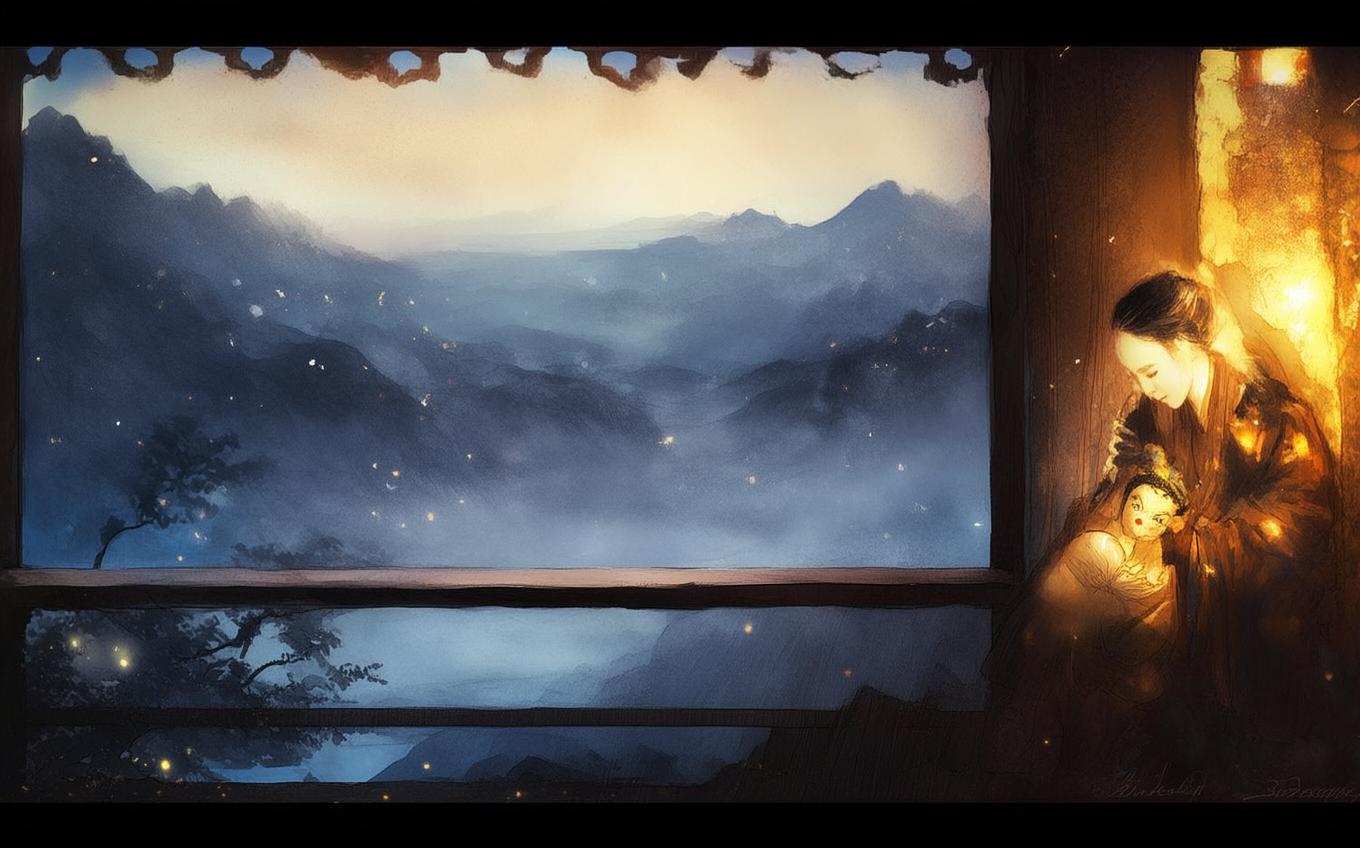
The puppet itself is a master symbol. Puppetry has a long history in China, often associated with ritual and exorcism. Here, the manipulated figure becomes a mirror for the self — a self that is equally hollow, equally dependent on hidden strings. The poem’s brevity (only twenty-eight characters) enacts its message: life is a brief play, and the final curtain falls before we fully comprehend the plot.
Cultural Context
Li He lived during the late Tang dynasty, a period of political decline and cultural introspection. Buddhism and Daoism had deeply permeated the intellectual climate, offering frameworks for understanding suffering and impermanence. Li He’s own life was shadowed by early death (he died at twenty-six) and the failure to pass the imperial examinations because of a taboo on his father’s name. These disappointments nurtured his preoccupation with ghosts, ephemeral beauty, and the thin membrane between worlds.
Puppet theater (傀儡戏, kuǐlěi xì) was a popular entertainment in the Tang, enjoyed by both commoners and the court. The wooden performers could enact operas, acrobatics, and comedic skits, delighting audiences with their mimicry of human emotion. By turning this everyday diversion into a metaphysical meditation, Li He follows a classical Chinese poetic practice: locating profound truths in ordinary scenes. The poem also resonates with the broader literary tradition of “dream poems,” such as those by his great predecessor Li Bai, but with a ghostly twist that is uniquely his own.
Confucian values of social engagement and self-cultivation are entirely absent here. Instead, the poem reflects a Daoist skepticism toward worldly achievement and a Buddhist sense of detachment. Yet Li He’s tone is not one of serene enlightenment; it carries a shiver of existential dread, a hallmark of his “ghostly” style.
Conclusion
Over twelve hundred years after it was written, Li He’s “傀儡吟” continues to transfix readers with its crystalline precision and disquieting insight. In an age of avatars, deepfakes, and simulated realities, the poem feels eerily contemporary. The puppet’s wooden face and the dream metaphor ask us to consider: who pulls our strings, and what happens when the show is over? Li He offers no comfort, only the stark beauty of truth glimpsed in a flash. The poem endures because it captures, in the span of a single breath, the fleeting miracle and ultimate emptiness of being alive — a song that is also a silence.

Comments (0)
No comments yet. Be the first to comment!