Introduction
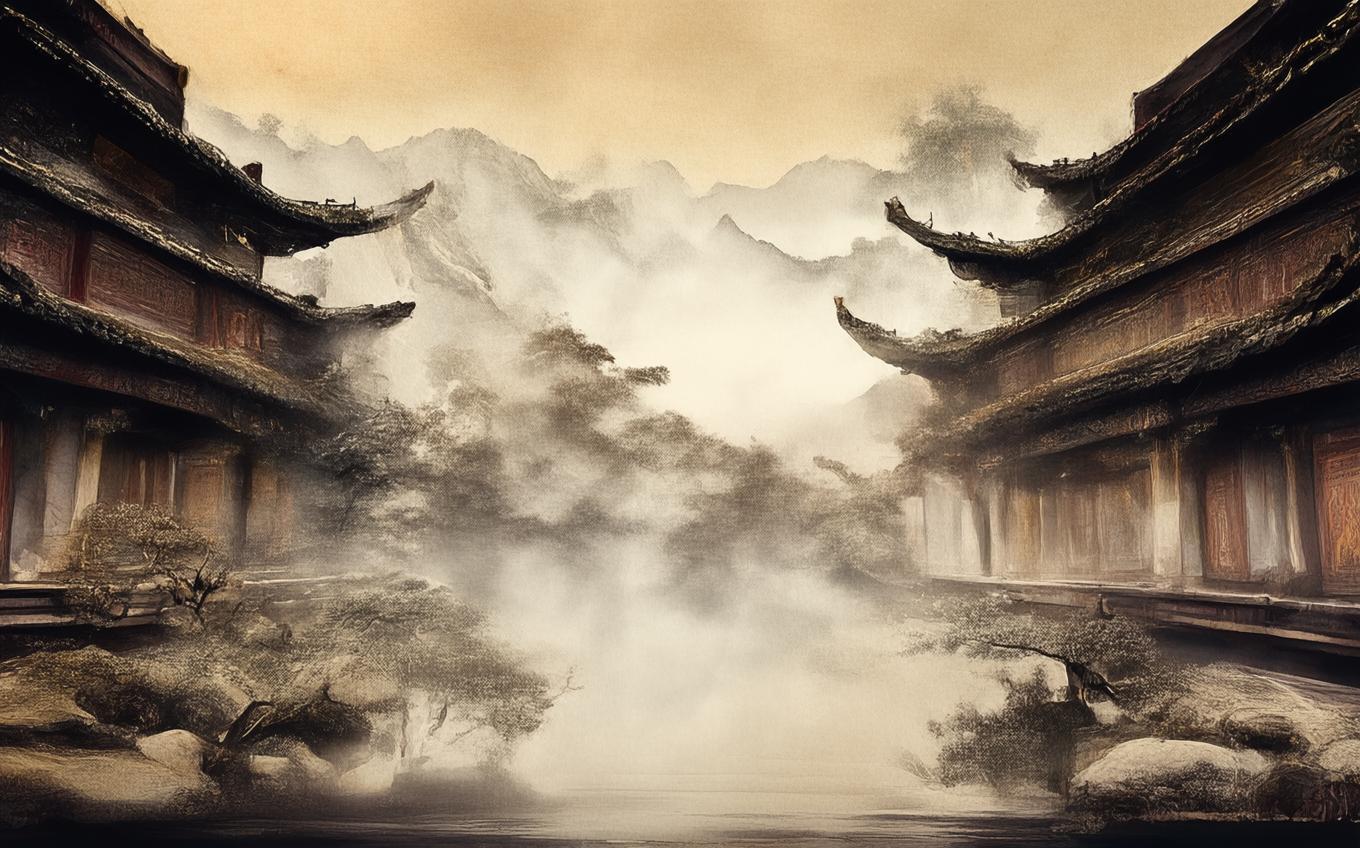
The Tang dynasty (618–907 CE) stands as a golden age of Chinese poetry, not only for the verses of its legendary literary figures but also for the refined court poetry that celebrated imperial power, cosmic harmony, and auspicious signs. Among these occasional poems is "延英殿玉灵芝诗三章章八句一" (Yányīng Diàn Yù Língzhī Shī Sān Zhāng Zhāng Bā Jù Yī) — the first of a set of three eight-line stanzas composed on the discovery of a jade lingzhi fungus in the Yanying Hall of the Tang palace. The poet is none other than Emperor Xuanzong of Tang (唐玄宗, Lǐ Lōngjī), whose long reign (712–756) witnessed the cultural summit of the dynasty. This poem is a superb example of imperial auspicious verse: it transforms a natural curiosity into an emblem of Heaven’s favor, blending ritual solemnity with gleaming imagery. For English-speaking readers, the poem offers a window into how Chinese rulers used poetry to construct political legitimacy and articulate their cosmic role.
The Poem: Full Text and Translation
玉殿肃肃,
Yù diàn sù sù,
The jade hall is solemn and still,
灵芝煌煌。
Língzhī huáng huáng,
the lingzhi gleams dazzling bright.
植根金戺,
Zhí gēn jīn shì,
Its roots are planted by the golden threshold,
呈祥玉堂。
Chéng xiáng yù táng,
manifesting good fortune in this hall of jade.
紫微间气,
Zǐwēi jiān qì,
Amid the Purple Enclosure, an aura rises;
白日昭彰。
Bái rì zhāo zhāng,
the brilliant sun shines forth with clarity.
永言配命,
Yǒng yán pèi mìng,
Forever be it said: aligned with Heaven’s mandate,
长保无疆。
Cháng bǎo wú jiāng,
eternally preserve a realm without boundary.
Line-by-Line Analysis
The poem is composed in tetrasyllabic lines (four characters each), a meter reminiscent of the ancient Book of Songs (Shījīng). This archaic rhythm gives the work a stately, incantatory quality suited to its ritual context.
Couplet 1: “玉殿肃肃,灵芝煌煌”
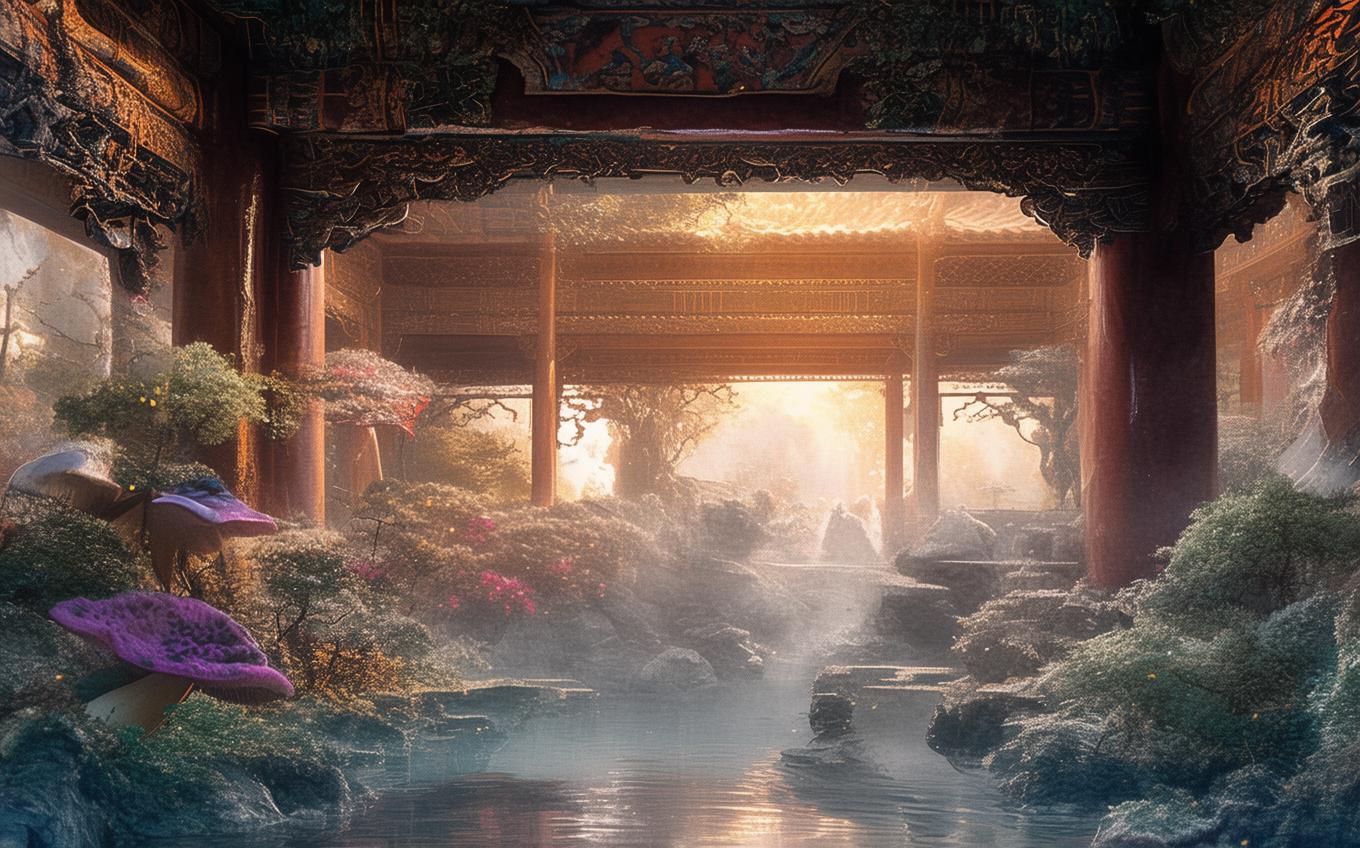
The opening couplet immediately sets a double stage. “Jade hall” (玉殿) names the physical Yanying Hall, but jade in Chinese poetics is never merely literal—it embodies purity, nobility, and the emperor’s virtue. Combined with the reduplicative sù sù (肃肃), the hall is not just quiet but imbued with reverent awe. Facing this human-made solemnity, the lingzhi (灵芝) — the glossy, mythical fungus of immortality — blazes with huáng huáng (煌煌), a reduplication for radiance and splendor. The parallel structure underscores that Heaven’s gift (the fungus) and the emperor’s seat (the hall) are in perfect mutual reflection.
Couplet 2: “植根金戺,呈祥玉堂”
The camera zooms in on the root of the lingzhi. “Golden threshold” (金戺, jīn shì) refers to the doorsteps of the imperial hall, often ornamented with gold. By saying the fungus is rooted here, the poem makes a political claim: this auspicious omen is no wild weed—it springs directly from the emperor’s doorstep, literally rooted in the imperial domain. “Manifesting good fortune” (呈祥) is the active verb of the fungus’s existence; its presence is a visible declaration of cosmic approval.
Couplet 3: “紫微间气,白日昭彰”
This couplet ascends from the earthly hall to the celestial vault. “Purple Enclosure” (紫微, Zǐwēi) is both a starry region surrounding the North Pole and the traditional Chinese astronomical analogy for the imperial court—the emperor is the pole star, his ministers the surrounding constellations. “An aura rises” (间气, jiān qì) evokes a luminous vapor that bridges heaven and earth, a sign that the cosmic breath (qì) is harmonious. “Brilliant sun” (白日) is the eternal emblem of the Son of Heaven’s radiance, and “昭彰” (zhāo zhāng) insists that this truth is manifest for all to see. The shift from indoor marvel to outdoor firmament ennobles the lingzhi as a cosmic event, not a mere oddity.
Couplet 4: “永言配命,长保无疆”
The closing couplet is a pledge chiseled in verse. “Forever be it said” (永言) borrows a resonant phrase from the Book of Songs, invoking ancestral voices to seal the moment. “Aligned with Heaven’s mandate” (配命) is the bedrock of Chinese political theology: a ruler reigns legitimately only so long as his virtue resonates with the moral order of Tian (Heaven). The phrase “长保无疆” (eternally preserve boundless) is a conventional blessing but here it gains urgency—the lingzhi is proof that the mandate is fresh, and the empire shall endure without limit. The reduplication of the final phrase (wú jiāng, “without boundary”) opens the verse into an imagined infinite future.
Themes and Symbolism
Auspicious Omen and Political Legitimacy
Throughout Chinese history, rare plants, strange animals, and celestial phenomena were interpreted as ruì (瑞), or auspicious signs. A lingzhi fungus growing near the throne was a potent symbol of the emperor’s virtue receiving Heaven’s blessing. This poem is thus a piece of political theater: it announces to the court and posterity that the emperor’s rule is in perfect sync with the cosmos.
Jade and Gold: Material Metaphors of Purity
Jade (玉) and gold (金) saturate the imagery. Jade, cool and incorruptible, stands for moral perfection; gold for splendor and endurance. By placing the lingzhi among these materials, the poem suggests that the emperor’s environment is so pure that even the earth spontaneously produces an immortal elixir.
The Purple Enclosure and Macrocosm
The leap to the “Purple Enclosure” (Ziwei) extends the hall into the heavens. This is not just astronomy but microcosm-macrocosm correspondence: the Yanying Hall mirrors the celestial palace, and the emperor on his throne is the terrestrial counterpart of the pole star. The poem thus performs a subtle act of apotheosis, making the ruler’s space coextensive with the universe.
Tetrasyllabic Rhythm and Ritual Tone
The four-character meter—rare in Tang poetry after the flourishing of five- and seven-syllable regulated verse—is deliberately archaic. It echoes the Book of Songs, the Confucian classic that served as the wellspring of Chinese moral and poetic tradition. By adopting this form, Emperor Xuanzong imposes a liturgical cadence on the celebration, turning the poem into an act of state ritual.
Cultural Context
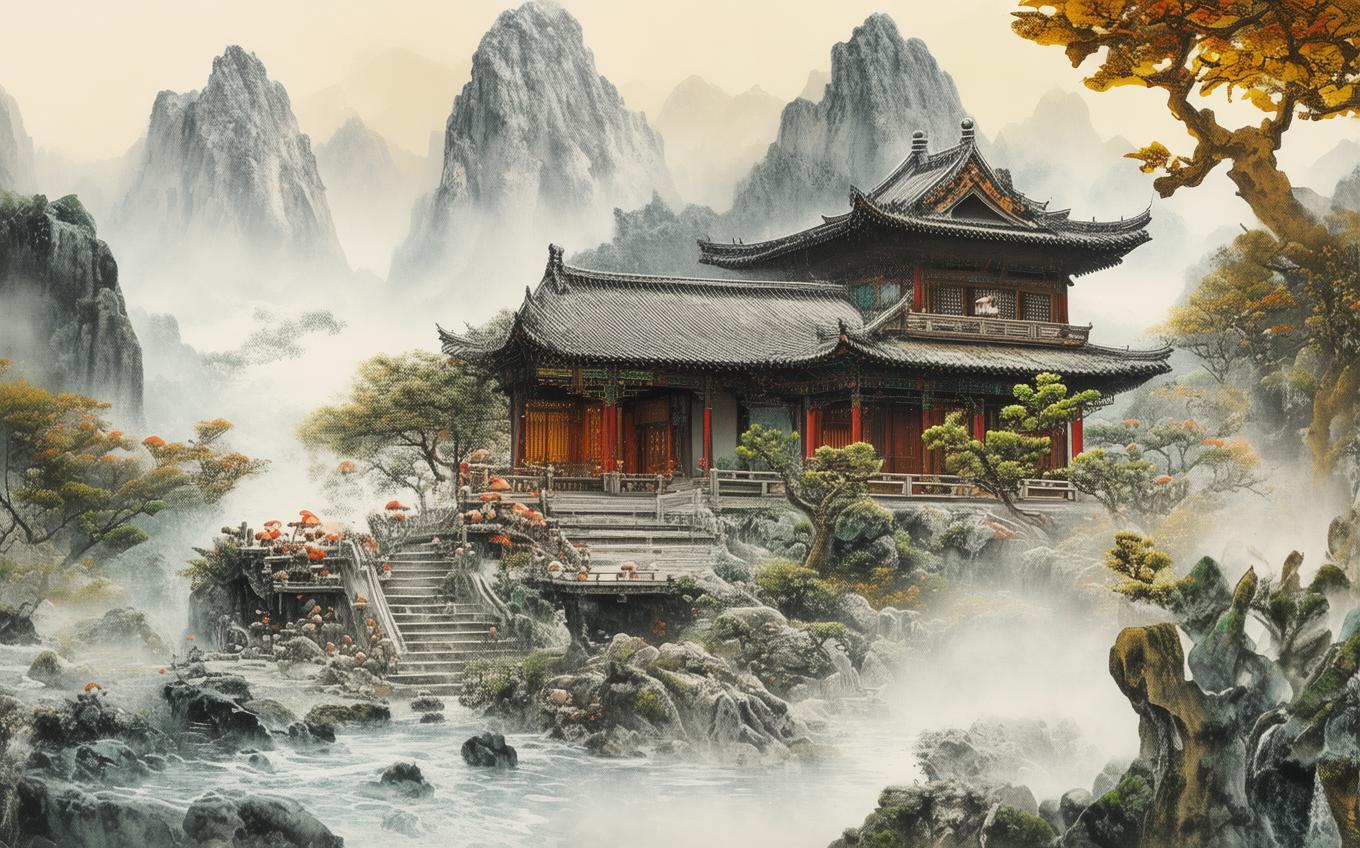
The Yanying Hall (延英殿) was a significant Tang palace building constructed during Emperor Xuanzong’s reign. It served as an auxiliary hall for the emperor to hold private discussions with high ministers, issuing edicts and deliberating policy. The discovery of a lingzhi in such a politically charged space would have been immediately framed as a response to good governance.
Emperor Xuanzong’s reign, especially the early Kaiyuan era (713–741), is remembered as one of China’s most brilliant periods—the capital Chang’an was a cosmopolitan hub, the arts flourished, and the empire was at peace. Auspicious poetry like this was not considered empty flattery; it was a means of projecting stability and reinforcing the belief that the ruler’s conduct shaped the natural world. The lingzhi, as a fungus of immortality, also carried Daoist overtones—Xuanzong was known for his patronage of Daoism and his search for elixirs of life, so the event blended political, religious, and philosophical significance.
Conclusion
“延英殿玉灵芝诗三章章八句一” is far more than a simple description of a fungus. It is a compact ritual object built from words—a declaration of imperial legitimacy, a miniature cosmos where gold, jade, starlight, and sun converge around an unassuming sprout. Its archaic meter and resonant reduplications give it a solemn music that still echoes with the grandeur and confidence of high Tang culture. For modern readers, the poem reveals how poetry in premodern China functioned as a bridge between the mundane and the celestial, and how even a humble fungus could become, through verse, the pivot of a world order. In an age where political image-making is as urgent as ever, this eighth-century poem reminds us that the language of power has always been, at its most enduring, the language of wonder.
Comments (0)
No comments yet. Be the first to comment!