Understanding "部队" - Chinese Word Explanation
1. Basic Information
- Word: 部队
- Pinyin: bùduì
- Literal Meaning: “section/unit” + “team/group”
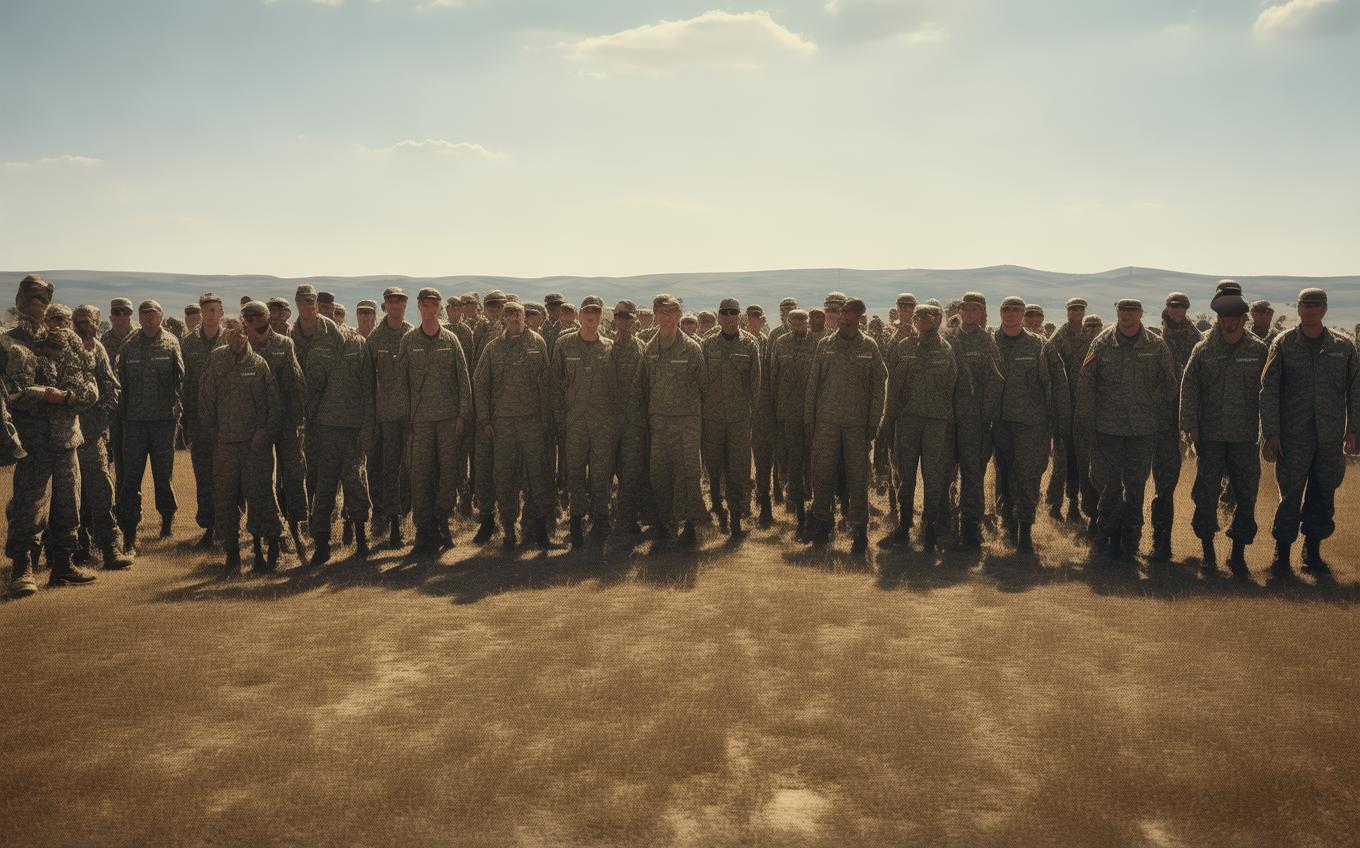
- Primary Meaning: troops; military unit; armed forces
2. In-depth Explanation
-
Context and Usage:
The word “部队” is a common noun used to refer to military forces, troops, or any organized unit within the military. It can describe anything from a small squad to a large army corps, and it often appears in news reports, daily conversation, and official documents. Unlike “军队” (jūnduì, “army” or “armed forces” in a broader sense), “部队” tends to emphasize the concrete, operational units rather than the military institution as a whole. For example, “军队” is the entire armed forces of a country, while “部队” might refer to the specific troops stationed somewhere or carrying out a mission.
It is also used abstractly, as in “部队生活” (military life) or “在部队” (in the military), to indicate the environment or experience of serving in the armed forces. When talking about a family member serving in the military, Chinese speakers often say “他在部队工作” (He works in the troops) rather than using a more formal term. -
Character Breakdown:
- 部 (bù): means “part,” “section,” “department,” or “unit.” It implies an organized segment of a larger whole.
- 队 (duì): means “team,” “squad,” or “group.” It carries a sense of a coordinated, often disciplined collective.
Together, the two characters reinforce the idea of a well-organized, hierarchical group—perfectly capturing the nature of a military unit.
3. Example Sentences
-
Chinese: 这支部队训练有素,战斗力很强。
Pinyin: Zhè zhī bùduì xùnliàn yǒusù, zhàndòulì hěn qiáng.
English: This unit is well-trained and has strong combat capability. -
Chinese: 他的父亲在部队待了二十年。
Pinyin: Tā de fùqīn zài bùduì dāi le èrshí nián.
English: His father served in the military for twenty years. -
Chinese: 部队奉命紧急集合,赶赴灾区救援。
Pinyin: Bùduì fèngmìng jǐnjí jíhé, gǎnfù zāiqū jiùyuán.
English: The troops were ordered to assemble urgently and rush to the disaster area for rescue operations.
Cultural Notes
In Chinese culture, the military enjoys high social respect, and phrases involving “部队” often evoke discipline, sacrifice, and patriotism. The term can be used affectionately or formally. During natural disasters, it is common to see headlines like “部队赶赴现场” (troops rush to the scene), highlighting the role of the military as a protector of the people. Additionally, “部队” is sometimes used colloquially to refer to a person’s workplace if they are a soldier, as in “他在部队” (He’s in the troops), which carries a connotation of pride and duty.
Conclusion
“部队” is your go‑to word for talking about military units, troops, or life inside the armed forces. Think of it as a concrete, operational counterpart to the more institutional “军队”. Remember: 部 = unit/section, 队 = team — together they form a word that perfectly describes organized military groups.
Sources and Further Reading
Dictionary links are provided for independent reference. Example sentences and learning notes on this page are educational explanations rather than dictionary quotations.


Comments (0)
No comments yet. Be the first to comment!