1. Basic Information
- Word: 草原
- Pinyin: cǎoyuán
- Literal Meaning: “grass plain” or “grass field”
- Primary Meaning: grassland; prairie; steppe
2. In-depth Explanation
-
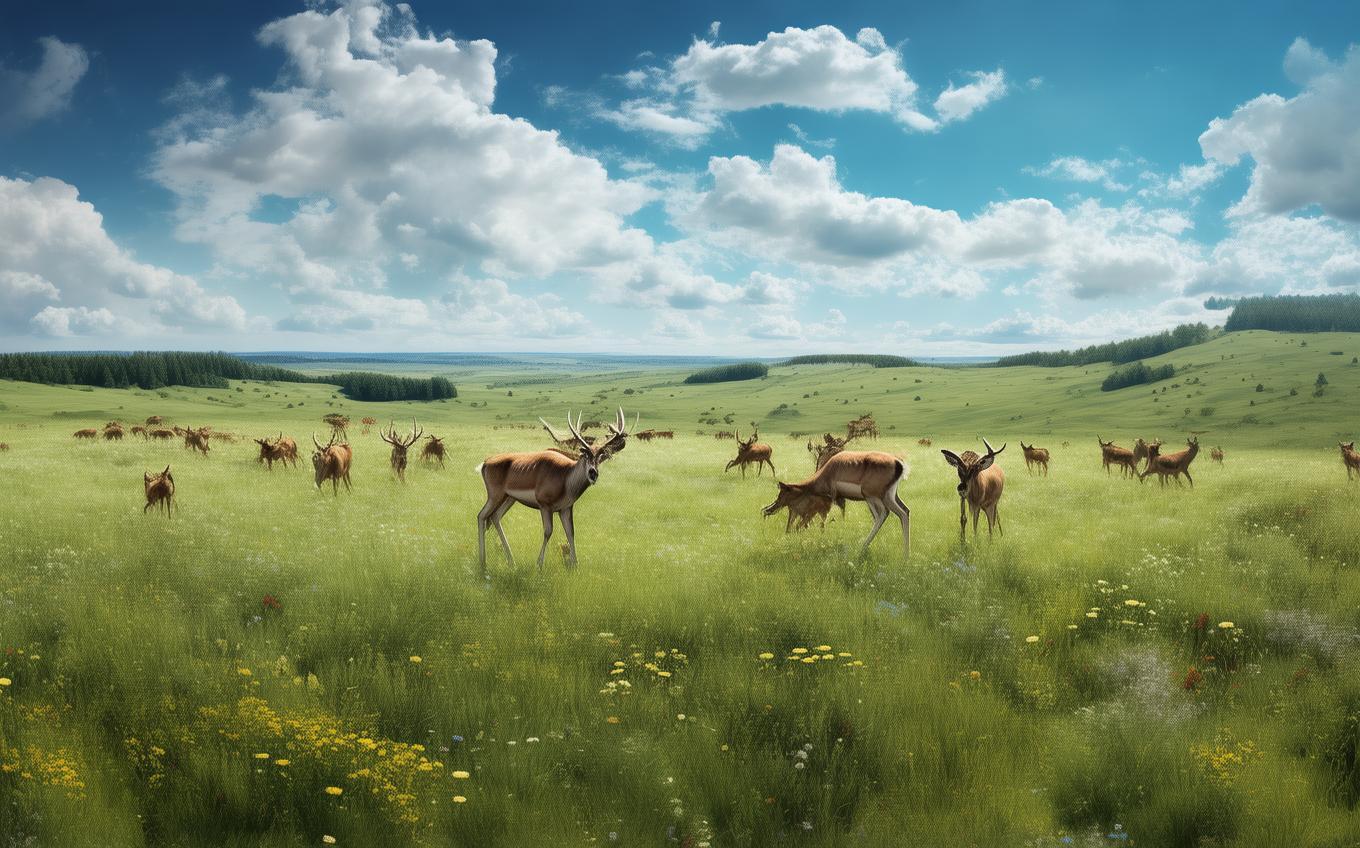
Context and Usage: 草原 is used to describe a large open area covered mainly with grass, often with few or no trees. In English, it can be translated as “grassland,” “prairie,” or “steppe,” depending on the geography and context. In Chinese, 草原 often brings to mind wide, open landscapes, blue skies, herds of animals, and nomadic life, especially in places like Inner Mongolia.
-
Character Breakdown:
- 草 means “grass.”
- 原 means “plain,” “field,” or “open land.”
Together, 草原 literally means “grass plain,” referring to a broad natural area covered with grass.
3. Example Sentences
- Chinese: 我想去内蒙古看草原。
- Pinyin: Wǒ xiǎng qù Nèiměnggǔ kàn cǎoyuán.
-
English: I want to go to Inner Mongolia to see the grasslands.
-
Chinese: 草原上有很多牛和羊。
- Pinyin: Cǎoyuán shàng yǒu hěn duō niú hé yáng.
-
English: There are many cows and sheep on the grassland.
-
Chinese: 夏天的草原非常美丽。
- Pinyin: Xiàtiān de cǎoyuán fēicháng měilì.
- English: The grassland is very beautiful in summer.
Cultural Notes (if applicable)
In Chinese culture, 草原 is strongly associated with northern China, especially Inner Mongolia. The image of the 草原 often includes horses, sheep, yurts, open skies, and Mongolian-style music. It can symbolize freedom, vastness, natural beauty, and a simpler life close to nature. Many Chinese songs and poems describe the 草原 as a romantic and peaceful place.
Conclusion
草原 means “grassland,” “prairie,” or “steppe.” It is made from 草, meaning “grass,” and 原, meaning “plain” or “open land.” For learners, it is helpful to remember 草原 as a wide, open “grass plain,” often connected with Inner Mongolia and beautiful natural scenery.
Sources and Further Reading
Dictionary links are provided for independent reference. Example sentences and learning notes on this page are educational explanations rather than dictionary quotations.
Comments (0)
No comments yet. Be the first to comment!