Introduction
Among poems associated with "横吹曲辞 出关", one of the best-known is by 徐兰 (Xú Lán), a poet often anthologized in later collections of frontier verse. The title "出关" literally means "Going Out through the Pass," and it belongs to the larger tradition of frontier poetry in Chinese literature—poems about borderlands, military service, separation, and the emotional cost of empire.
This poem is significant because it captures, in very compressed language, a feeling central to much classical Chinese poetry: the tension between public duty and private sorrow. As with many border poems, the landscape is vast and harsh, but the deepest drama lies in the human heart.
The Poem: Full Text and Translation
出关
Chū guān
Going Out through the Pass
凭山俯海古边州,
Píng shān fǔ hǎi gǔ biān zhōu,
Leaning against mountains and overlooking the sea lies this ancient frontier prefecture.
旆影风翻见戍楼。
Pèi yǐng fēng fān jiàn shù lóu.
Banner-shadows whip in the wind, and watchtowers of the garrison come into view.
马后桃花马前雪,
Mǎ hòu táo huā mǎ qián xuě,
Behind the horse are peach blossoms; before the horse is snow.
出关争得不回头。
Chū guān zhēng dé bù huí tóu.
How could one ride out through the pass and not turn back?
Line-by-Line Analysis
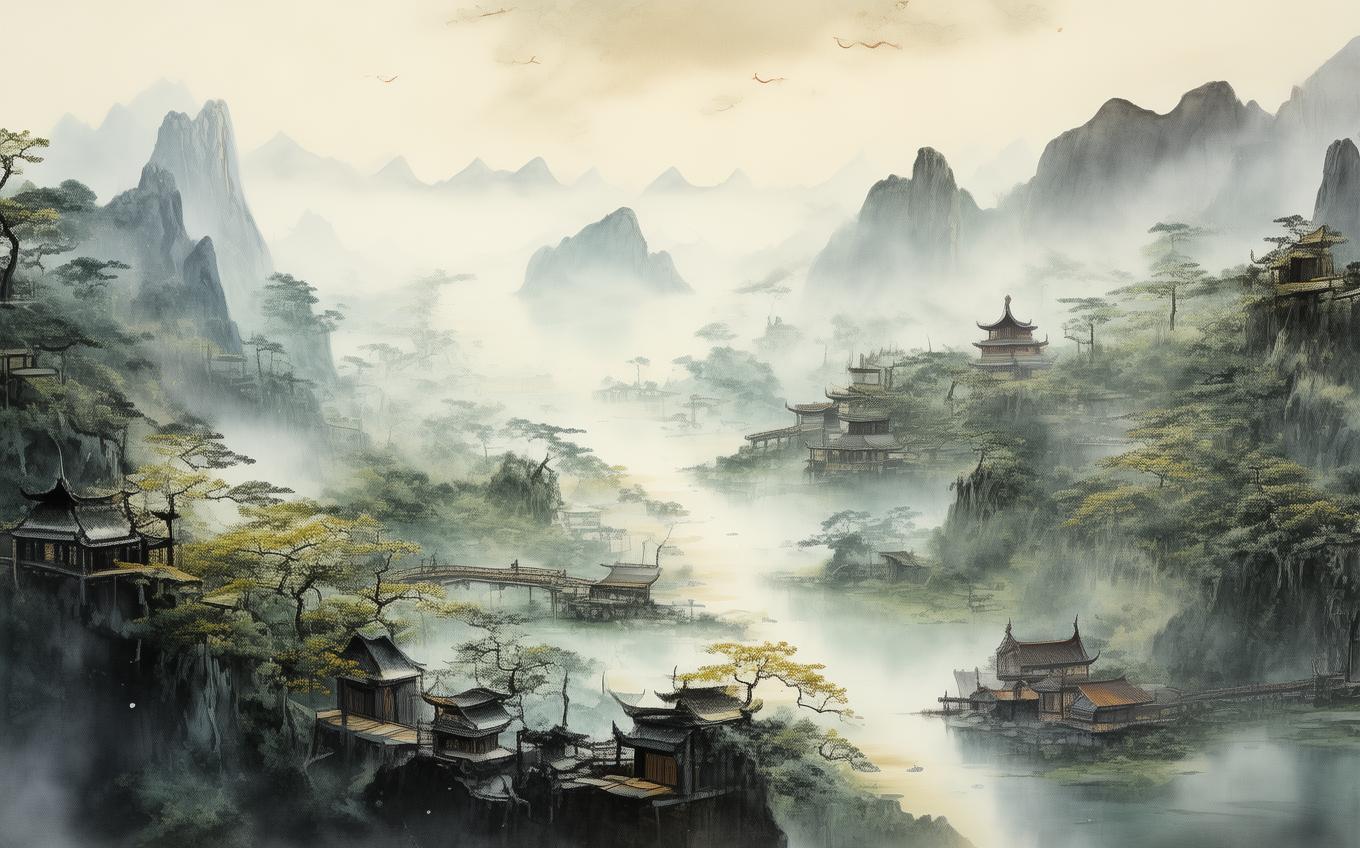
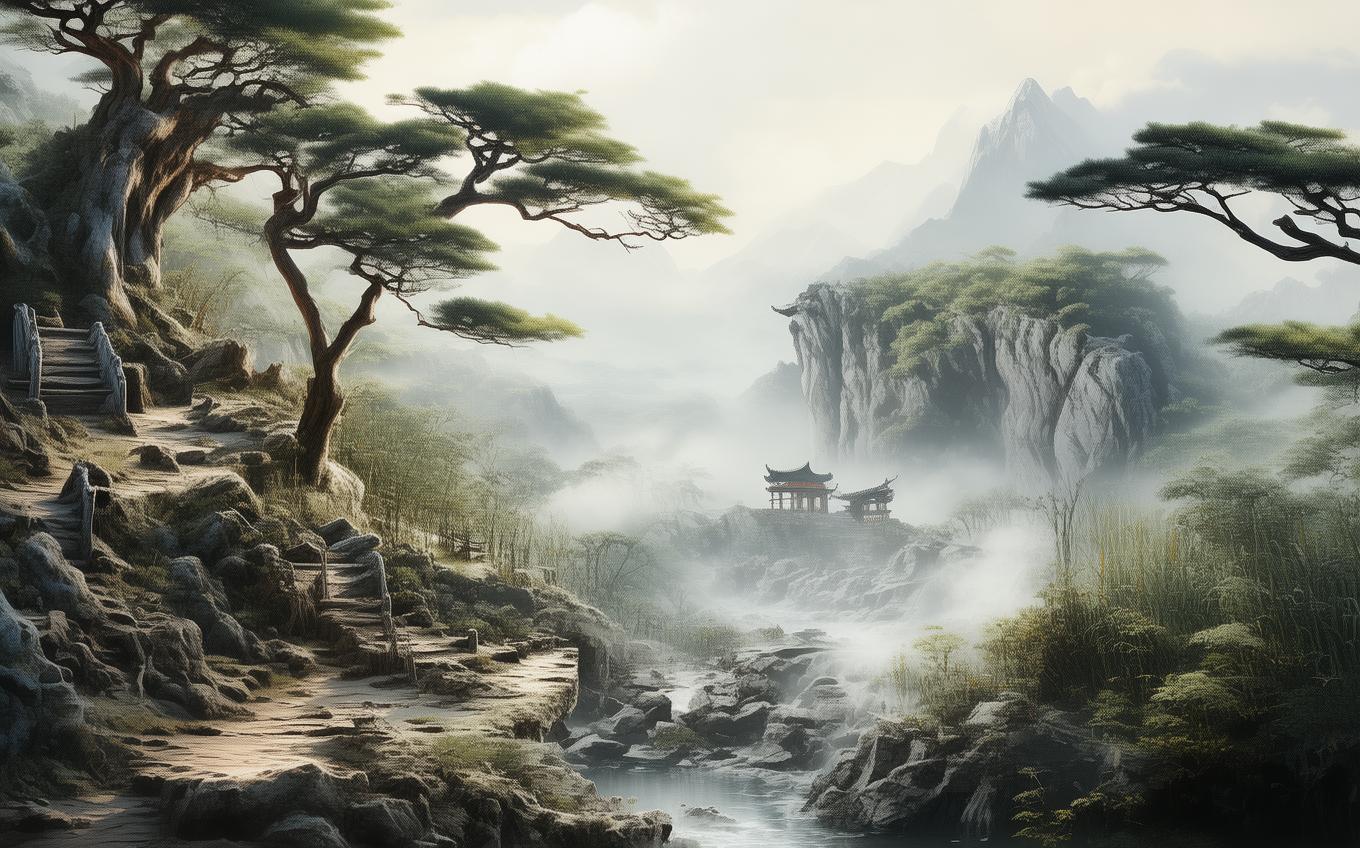
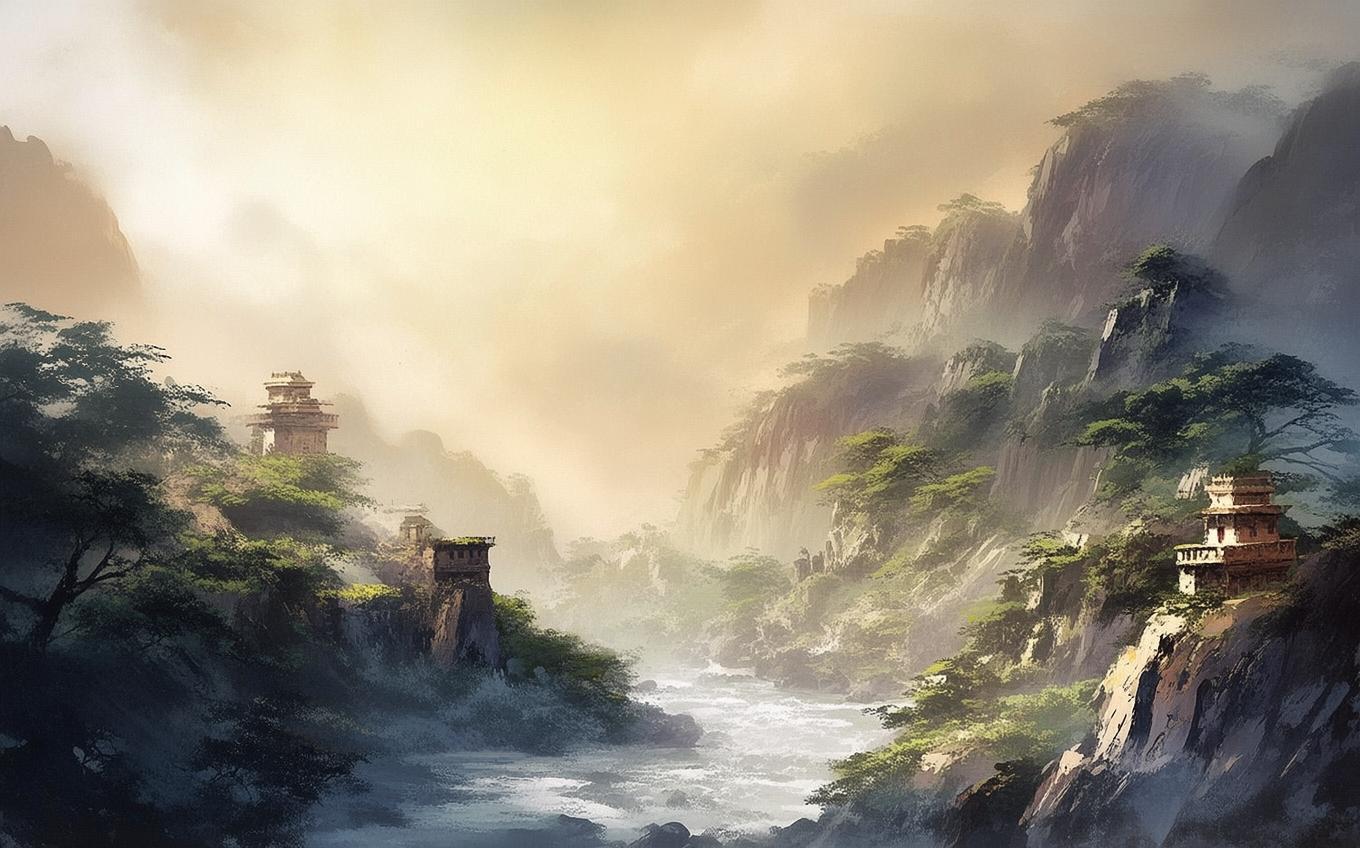
The opening line, "凭山俯海古边州", immediately situates the poem in a dramatic frontier setting. The place is not just remote; it is geographically commanding, backed by mountains and facing the sea. In classical Chinese poetry, such spatial grandeur often makes human figures seem small and vulnerable. The phrase "古边州" ("ancient frontier prefecture") also suggests a place marked by long history—many generations have guarded, crossed, and suffered in this borderland.
The second line, "旆影风翻见戍楼", adds motion and military atmosphere. The word "旆" refers to military banners or streamers, and their movement in the wind makes the scene vivid and unsettled. The "戍楼", or garrison towers, are symbols of defense, vigilance, and isolation. Together, the banners and towers create the feeling of a living border: exposed, windy, alert, and tense.
The third line is the emotional center of the poem: "马后桃花马前雪". It is famous because of its startling contrast. Behind the rider there are peach blossoms, a classic sign of spring, warmth, home, beauty, and gentleness. Ahead there is snow, suggesting coldness, hardship, danger, and emotional desolation. The line is not only visual; it is symbolic. The horseman is literally crossing from one world into another—from the cultivated interior into the severe frontier, from softness into endurance.
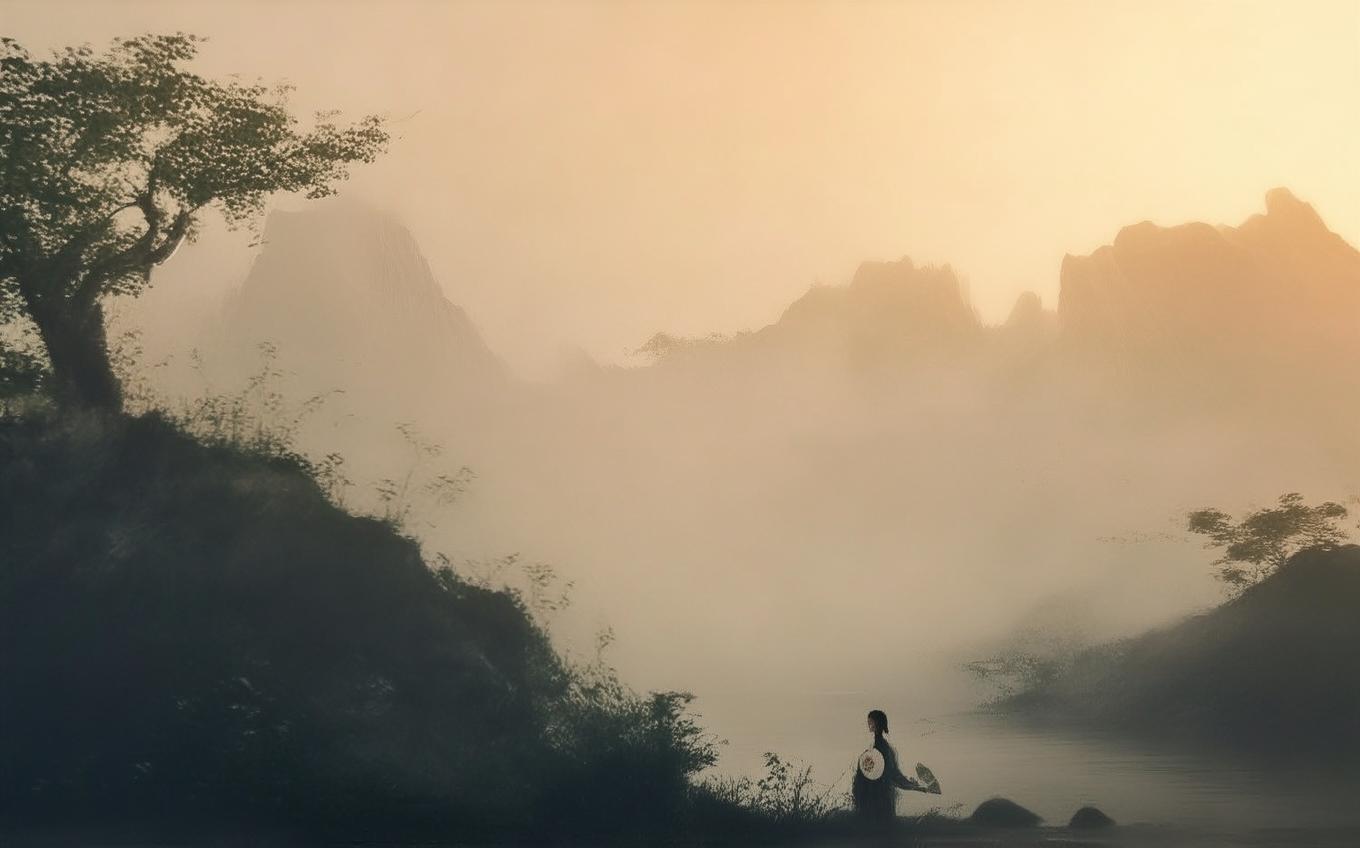
The final line, "出关争得不回头", turns the vivid image into an emotional conclusion. The phrase "争得" here means something like "how could one possibly." The rider cannot help but look back. This backward glance is deeply meaningful in Chinese poetry: it suggests attachment, reluctance, homesickness, and the pain of parting. The poem ends not with heroic triumph, but with a very human gesture.
Themes and Symbolism
One major theme is separation. The poem dramatizes the moment when someone leaves the familiar world behind and enters uncertainty. This is not abstract separation; it is embodied in a rider crossing a frontier pass.
Another key theme is the contrast between beauty and hardship. The opposition between 桃花 (táo huā, peach blossoms) and 雪 (xuě, snow) is the poem's most memorable symbolic structure. Peach blossoms evoke springtime, domestic life, and the cultural heartland. Snow stands for the frontier's severity and the emotional chill of exile or military duty.
The poem also explores duty versus feeling. Frontier poetry often praises service to the state, but many of the finest poems in the tradition also acknowledge fear, loneliness, and longing. Here, the turning of the head suggests that emotional truth survives even when duty compels forward movement.
Cultural Context
This poem belongs to the tradition of 边塞诗 (biān sài shī), or frontier poetry, which flourished especially in the Tang period. Such poetry often describes passes, deserts, banners, warhorses, watchtowers, snow, and vast skies. These were not merely scenic details; they formed a poetic language for discussing military expansion, border defense, and the emotional burden placed on soldiers and officials.
The title category "横吹曲辞" originally relates to songs performed with wind instruments, especially in military contexts. Over time, many poems written under such titles became literary recreations of martial songs. This background helps explain why "出关" is both outwardly public and inwardly intimate: it carries the atmosphere of military departure, yet its real power lies in personal emotion.
The poem also reflects an important value in Chinese literature: the moral seriousness of feeling. In the classical tradition, to feel homesickness or sorrow at departure does not make a person weak. On the contrary, such feeling shows one's humanity, loyalty, and rootedness in relationships and place.
Conclusion
"出关" is a short poem, but it opens a wide emotional landscape. In just four lines, it gives us geography, military atmosphere, seasonal contrast, and a moment of private feeling that feels timeless. Its beauty lies in its economy: mountains, sea, banners, towers, blossoms, snow, and one backward glance.
What makes the poem enduring is that it speaks to a universal experience. Many people, in many cultures, know what it means to leave warmth for uncertainty, to move forward while emotionally looking back. In that sense, "出关" remains deeply relevant today: it reminds us that courage is not the absence of attachment, but the ability to carry attachment with us as we go forward.
Comments (0)
No comments yet. Be the first to comment!