Introduction
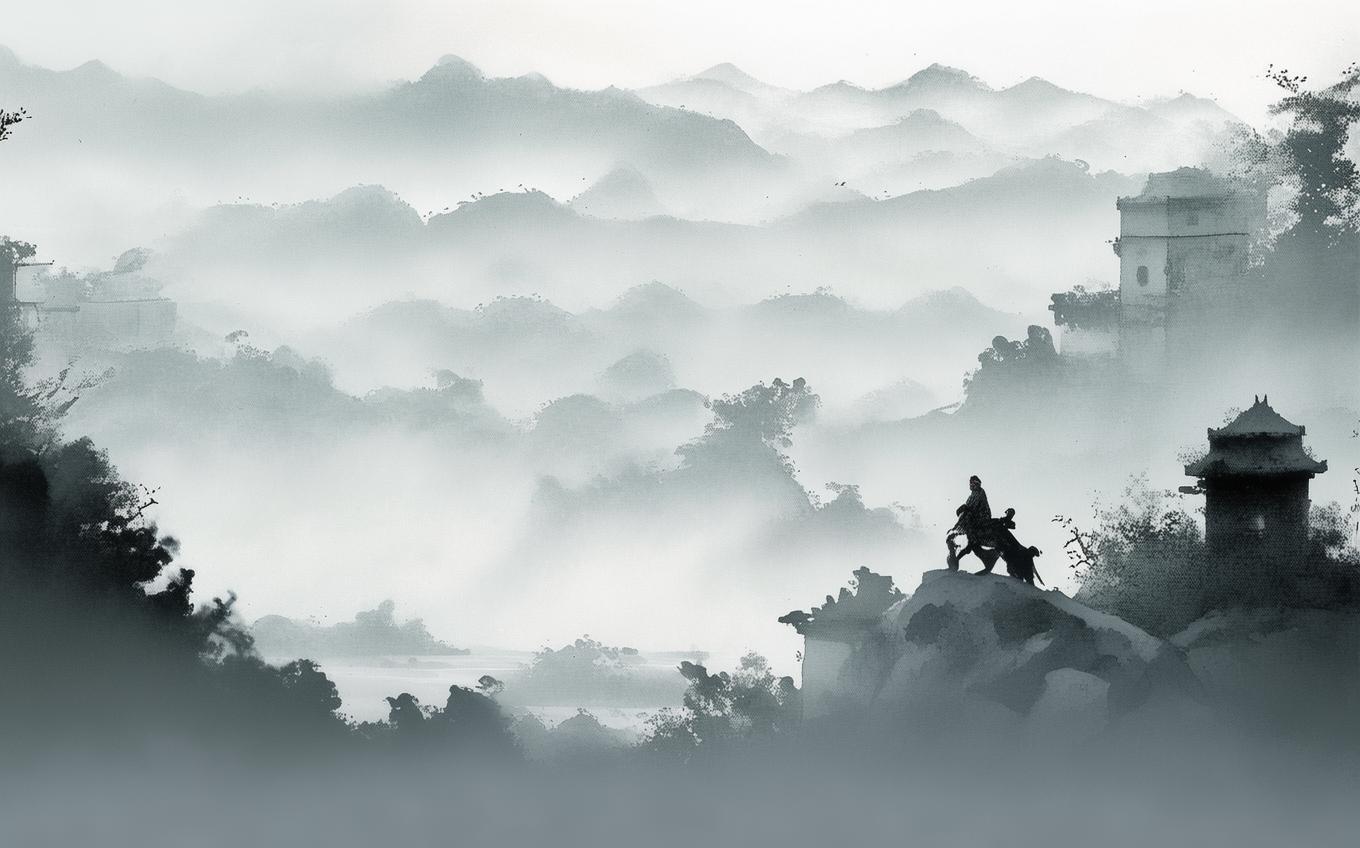
Wang Changling (王昌龄, Wáng Chānglíng, ca. 698-756) was one of the great poets of the Tang dynasty, especially admired for his frontier poems. These poems often describe soldiers, border fortresses, moonlit deserts, and the emotional cost of defending the empire’s frontiers.
The poem commonly known as “出塞” (Chū Sài, “Going Beyond the Frontier Pass”) belongs to the broader tradition of frontier poetry and is closely related to the old Yuefu musical category “横吹曲辞” (Héngchuī Qǔcí), songs once associated with military wind music. In Chinese literary memory, Wang Changling’s “出塞” is one of the most famous and powerful poems about war, history, and longing for peace.
Its greatness lies in its brevity. In only four lines, the poem connects the Qin and Han dynasties with the Tang present, transforming a frontier scene into a meditation on centuries of warfare.
The Poem: Full Text and Translation
秦时明月汉时关
Qín shí míng yuè Hàn shí guān
The bright moon of Qin times, the frontier pass of Han times.
万里长征人未还
Wàn lǐ cháng zhēng rén wèi huán
Across ten thousand miles of long campaigns, the soldiers have not returned.
但使龙城飞将在
Dàn shǐ Lóngchéng fēi jiàng zài
If only the Flying General of Longcheng were still here,
不教胡马度阴山
Bù jiào hú mǎ dù Yīnshān
He would not let the northern horses cross the Yin Mountains.
Line-by-Line Analysis
The opening line, “秦时明月汉时关,” is one of the most celebrated lines in Tang poetry. Literally, it gives us “the bright moon of Qin times” and “the frontier pass of Han times.” Of course, the moon and the pass are not physically from different dynasties. The poet is compressing history into a single image.
The Qin dynasty and Han dynasty were ancient even to Wang Changling. By invoking them, he suggests that frontier warfare is not a temporary problem but an old wound in Chinese history. The same moon shines over the same passes; generations change, but war continues.
The second line, “万里长征人未还,” turns from the vastness of history to human suffering. “Ten thousand miles” is not just a measurement; it represents distance, hardship, and separation from home. The phrase “人未还” is painfully simple: “the people have not returned.” These are soldiers, husbands, sons, and fathers. The poem does not describe battle directly. Instead, it lets absence speak.
The third line, “但使龙城飞将在,” introduces a legendary military figure. “飞将” refers to Li Guang (李广, Lǐ Guǎng), a famous Han dynasty general known for his bravery and skill against northern nomadic forces. He was nicknamed the “Flying General” because of his speed and daring.
“龙城” may refer to a northern frontier region associated with battles against the Xiongnu. By invoking Li Guang, the poet expresses a wish for a truly capable commander, someone who could defend the border and spare soldiers from endless campaigns.
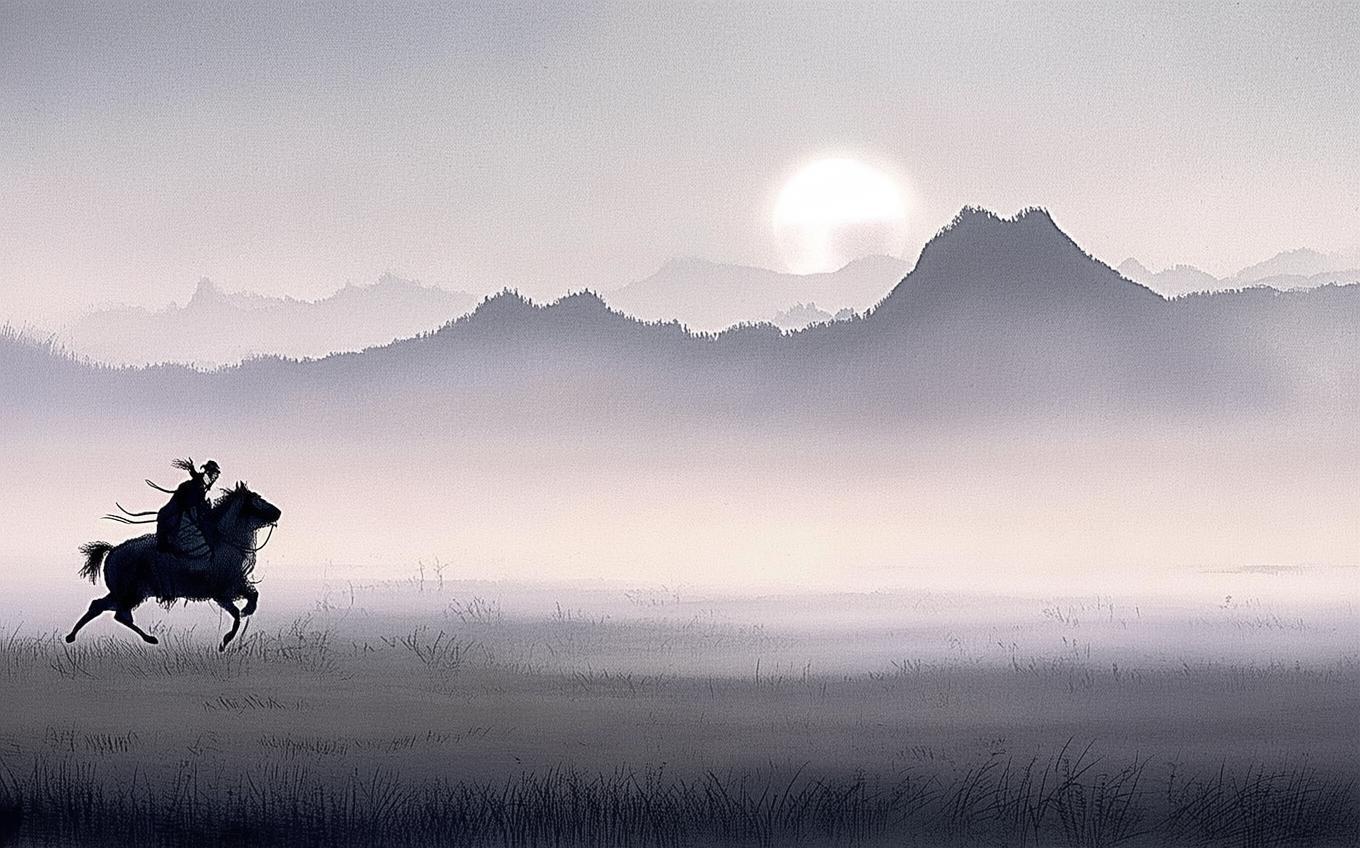
The final line, “不教胡马度阴山,” completes the wish. “胡马” refers to the horses of northern peoples, often used in classical Chinese poetry to symbolize invading cavalry from beyond the frontier. “阴山” is a mountain range in northern China, a symbolic boundary between the Chinese heartland and the steppe world.
The meaning is direct: if a great general like Li Guang were present, enemy cavalry would not cross the Yin Mountains. Yet beneath this heroic statement is a quieter sorrow. The poem is not simply praising military strength; it is lamenting the lack of wise leadership and the endless suffering caused by war.
Themes and Symbolism
One major theme is the continuity of history. By pairing the Qin moon with the Han pass, Wang Changling shows how the frontier has remained a place of conflict for centuries. The landscape seems permanent, while human lives are fragile and brief.
Another key theme is homesickness and separation. The soldiers have gone far away and have not returned. The poem never mentions wives, parents, or children, but their absence is implied. In classical Chinese poetry, what is left unsaid often carries great emotional weight.
The moon is a powerful symbol in Chinese literature. It often suggests distance, memory, and longing. A person looking at the moon on the frontier may imagine that loved ones at home are seeing the same moon. Here, however, the moon also becomes historical: it has watched dynasties rise and fall.
The frontier pass symbolizes both protection and division. It is a defensive structure, but also a place where people leave the familiar world behind. To “go beyond the pass” means entering danger, uncertainty, and exile from ordinary life.
Li Guang, the “Flying General,” symbolizes ideal leadership. He represents courage, competence, and the hope that war might be contained. But because he belongs to the past, his presence also emphasizes the failures of the present.
Cultural Context
Frontier poetry was especially important in the Tang dynasty. The Tang empire was expansive and cosmopolitan, maintaining contact and conflict with many peoples across Central Asia and the northern steppe. Military service on the frontier could bring glory, but it also meant hardship, loneliness, and death far from home.
The phrase “横吹曲辞” refers to a category of Yuefu-style songs connected with wind instruments used in military settings. These songs often had strong rhythms and martial subjects. Later poets borrowed and transformed these older song titles into literary poems, blending music, history, and personal feeling.
Wang Changling’s poem reflects a central tension in Chinese culture: admiration for heroic defense of the realm, combined with deep sorrow over war’s human cost. The poem does not reject the need to protect the border, but it questions the endless repetition of conflict.
It also reflects the Confucian ideal of responsible leadership. A good general is not merely someone who wins battles. He protects the people, prevents chaos, and reduces unnecessary suffering. The longing for Li Guang is therefore not only military nostalgia; it is a moral wish for capable and humane governance.
Conclusion
“出塞” endures because it makes a vast historical tragedy feel intimate. With only four lines, Wang Changling evokes ancient dynasties, moonlit frontier passes, exhausted soldiers, legendary generals, and the hope for peace.
Its beauty lies in restraint. The poem does not shout against war, nor does it simply celebrate martial glory. Instead, it allows the reader to feel the weight of time and the sadness of lives spent far from home.
For modern readers, the poem remains relevant because it asks an old and urgent question: how many generations must stand beneath the same moon, guarding the same borders, before human wisdom catches up with human suffering?
Comments (0)
No comments yet. Be the first to comment!