Introduction
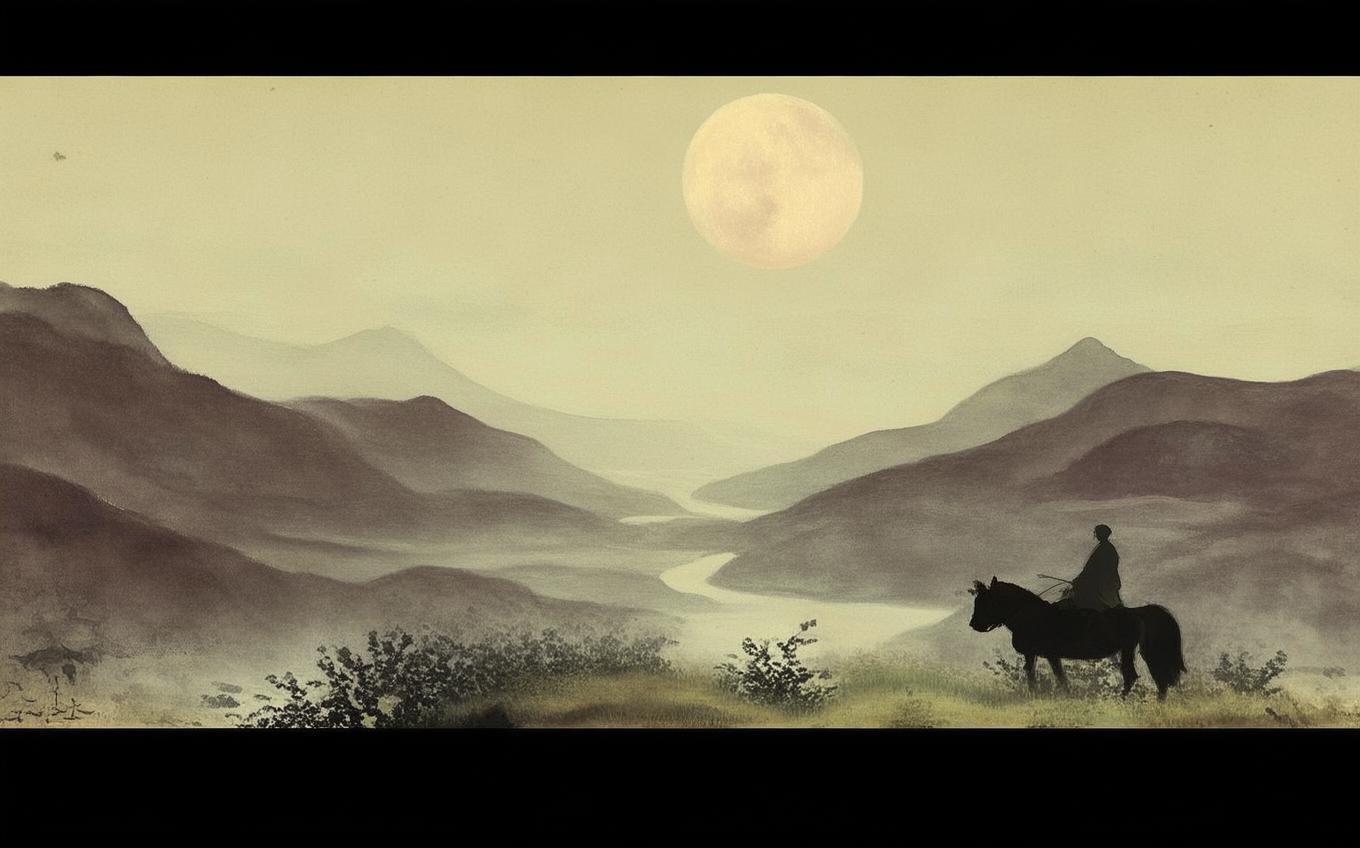
The poem “望行人” (Wàng Xíngrén, “Watching for the Traveler”) belongs to the Hengchui Qüci (横吹曲辞) section of the Yuefu Shiji, a vast anthology of Music Bureau poetry compiled by Guo Maoqian in the Song dynasty. The Hengchui (literally “horizontal blow”) tunes were originally military melodies played on transverse flutes, often evoking frontier life, separation, and longing. This particular poem is attributed to Zhang Ji (张籍, c. 766–830), a Tang dynasty poet renowned for his plain yet deeply human yuefu-style verse. In “望行人,” he captures the quiet anguish of a woman awaiting a loved one’s return—a universal theme that resonated deeply in a society where official postings, trade, and war kept husbands and sons far from home. The poem’s understated imagery and emotional precision have made it a treasured piece of classical Chinese literature.
The Poem: Full Text and Translation
秋风窗下起,旅雁向南飞。
Qiūfēng chuāng xià qǐ, lǚ yàn xiàng nán fēi.
Autumn wind rises beneath the window; migrating geese fly southward.
日日出门望,家家行客归。
Rì rì chū mén wàng, jiā jiā xíngkè guī.
Day after day I go out to watch; every household’s traveler returns home.
无因见边使,空待寄寒衣。
Wú yīn jiàn biān shǐ, kōng dài jì hán yī.
No chance to see a frontier envoy; futilely I wait to send warm clothes.
独闭青楼暮,烟深鸟雀稀。
Dú bì qīnglóu mù, yān shēn niǎo què xī.
Alone I close the azure chamber at dusk; mists deepen, birds and sparrows grow few.
Line-by-Line Analysis
Autumn wind rises beneath the window; migrating geese fly southward.
The poem opens with a sensory scene: a sudden chill at the window announces autumn, a season of decay and parting in Chinese poetry. The southward journey of wild geese is an age-old symbol of homecoming or, conversely, of departure, since the birds follow a predictable rhythm that humans cannot. The reader immediately senses the speaker’s vulnerability—she is indoors, yet the wind reaches her, as if the outside world intrudes upon her loneliness.
Day after day I go out to watch; every household’s traveler returns home.
The repetition of “日日” (rì rì, day after day) underscores obsessive routine. The act of watching at the gate or roadside is a classical topos for a waiting wife. The second half is devastating in its simplicity: all around her, other families reunite, but her own traveler remains absent. The contrast between “家家” (jiā jiā, every household) and her solitary vigil deepens the sense of exclusion from normal happiness.
No chance to see a frontier envoy; futilely I wait to send warm clothes.
Here the specific context emerges: the missing person is likely a soldier or official stationed at the border (“边”, biān). Without a messenger, she cannot even fulfill the wifely duty of sending winter garments, a concrete act of love and care. The word “空” (kōng, vainly, empty) layers her emotional emptiness onto the physical act of waiting. The cold clothes become a poignant symbol of affection that cannot travel.
Alone I close the azure chamber at dusk; mists deepen, birds and sparrows grow few.
The final couplet returns to stillness. “青楼” (qīnglóu) originally referred to a richly decorated chamber, often of a noble lady, though later it shifted meaning. Here it simply evokes a secluded, elegant room that now feels like a prison. Dusk is the time when birds return to nests and travelers come home, but the landscape becomes bleaker: deepening mist and thinning bird calls reflect her fading hope. The day ends as it began—with her alone, surrounded by silence.
Themes and Symbolism
Separation and Endurance. The poem’s core theme is the agony of waiting without certainty. The wife’s daily pilgrimage to the gate speaks to an unshakable fidelity, but also to the slow erosion of time.
Autumn and Migration. Autumn wind and southward geese embody the natural cycle of departure and return, contrasting with the human inability to control one’s fate. The cold season threatens the distant traveler, making warmth—both physical and emotional—urgent yet ungraspable.
The Frontier. The frontier serves as a remote, dangerous space that swallows men and delays letters. By mentioning “边使” (frontier envoy), Zhang Ji locates personal sorrow within the larger framework of imperial expansion and military service, a common concern in Tang literature.
Birds and Dusk. Birds returning home become an unspoken reproach to the absent traveler. Dusk, the liminal moment between light and dark, mirrors the woman’s suspended existence—neither fully living nor able to mourn.
Cultural Context
During the Tang dynasty, the yuefu tradition allowed poets to adopt folk personas and speak for the overlooked—farmers, soldiers, and waiting women. Zhang Ji was particularly admired for giving voice to ordinary people with restrained elegance. Frontier life and the toll it took on families was a pressing social reality; the Tang empire’s vast borders required constant military presence, and many soldiers never returned. A wife’s longing was not just a private emotion but a recognized social trope that reflected collective anxiety. By placing the poem in the Hengchui category, the compiler linked it to military music, hinting that the traveler’s absence is tied to duty, not abandonment. The image of a woman in a “青楼” (azure chamber) also suggests a woman of some refinement, making her patience and quiet dignity all the more poignant. In Confucian ethics, her steadfast wait embodies virtue, yet the poem never moralizes—it simply paints a picture of human vulnerability.
Conclusion
“望行人” distills a vast landscape of longing into five short couplets. Zhang Ji’s genius lies in what he leaves unsaid: we never learn whether the traveler returns, and the poem ends at the threshold of another lonely night. The mingling of personal heartache with the impersonal rhythms of season and society gives the poem its enduring power. For modern readers, it offers a window into the quiet heroism of those who wait—a reminder that history’s grand narratives are built upon countless such silent vigils. The mist, the birds, and the unopened gate continue to whisper across centuries, making this ancient poem feel startlingly immediate.

Comments (0)
No comments yet. Be the first to comment!