Introduction
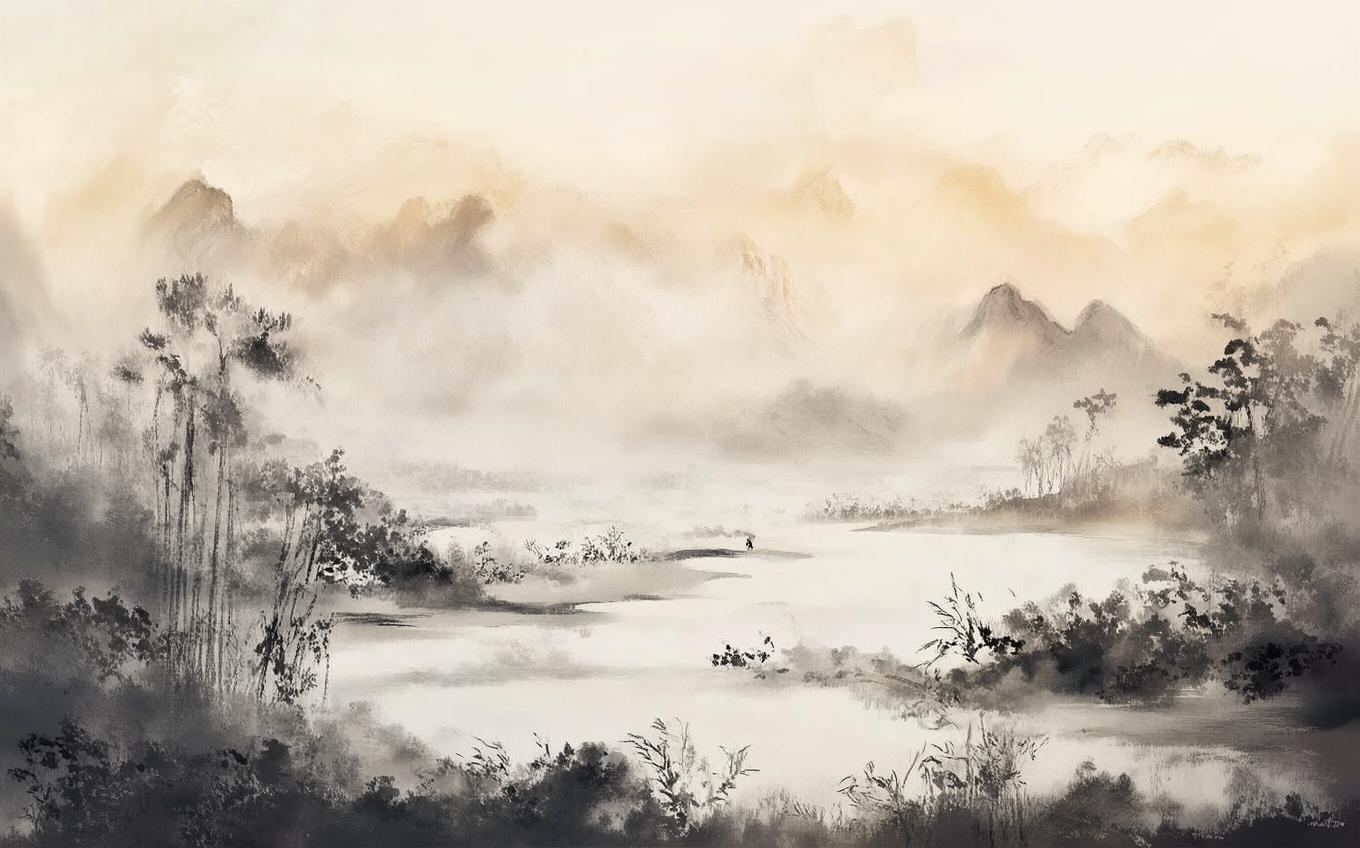
The Song Dynasty (960–1279) is often celebrated as the golden age of Chinese lyrical poetry, giving voice to emotions that resonate across centuries. Among the era’s most beloved poets is Liu Yong (柳永, ca. 987–1053), a maverick figure who broke from aristocratic convention by writing directly about urban life, romantic longing, and the inner world of women. His ci (词) poems, set to popular melodies, were the hit songs of their day—sung in teahouses and bordellos, cherished by ordinary people. The poem “甘草子” (Gāncǎo Zǐ, a tune name meaning “Licorice Root”) is a perfect example of Liu Yong’s genius. In just a few lines, he paints the exquisite loneliness of a woman confined to her boudoir, yearning for her absent lover as autumn dusk descends. Through vivid imagery and subtle emotional shifts, the poem captures a fleeting moment of heartache that remains startlingly fresh.
The Poem: Full Text and Translation
秋暮。乱洒衰荷,颗颗真珠雨。
Qiū mù. Luàn sǎ shuāi hé, kē kē zhēnzhū yǔ.
Autumn dusk. Chaotically sprinkling on withered lotuses, drop after drop like genuine pearls, the rain.
雨过月华生,冷彻鸳鸯浦。
Yǔ guò yuè huá shēng, lěng chè yuānyāng pǔ.
The rain passes, moonlight is born, coldness penetrates the Mandarin Duck Islet.
池上凭阑愁无侣。奈此个、单栖情绪。
Chí shàng píng lán chóu wú lǚ. Nài cǐ gè, dān qī qíngxù.
By the pond, leaning on the railing, grieving for having no companion. How to bear this feeling of roosting alone?
却傍金笼共鹦鹉。念粉郎言语。
Què bàng jīn lóng gòng yīngwǔ. Niàn fěnláng yányǔ.
So I nestle beside the golden cage with the parrot, recalling my powdered lover’s words.
Line-by-Line Analysis
The poem opens with two stark words: “秋暮” (Qiū mù) —“autumn dusk.” Instantly, we are placed in a liminal, melancholy space. Autumn itself signals decline, the fading of warmth and life, and dusk deepens that sense of ending. There is no action yet, only a suspended atmosphere.
The next line fills this dusk with sound and vision: “乱洒衰荷,颗颗真珠雨” — “Chaotically sprinkling on withered lotuses, drop after drop like genuine pearls, the rain.” The word luàn (乱, chaotic) suggests an erratic, almost careless rainfall, mirroring the speaker’s unsettled heart. The shuāi hé (withered lotuses) are a classic symbol of beauty that has passed its prime, evoking a woman who feels her youth or joy fading. Yet the raindrops are not merely wet; they are “genuine pearls” (zhēnzhū), precious and luminous. This transforms the scene into something exquisite even in its sorrow. The rain becomes a string of jewels adorning decay—a paradoxical image that captures the speaker’s own hidden value beneath her loneliness.
Then, a shift: “雨过月华生,冷彻鸳鸯浦” — “The rain passes, moonlight is born, coldness penetrates the Mandarin Duck Islet.” Nature moves on, and the abrupt clarity of moonlight brings no comfort. The “Mandarin Duck Islet” (Yuānyāng Pǔ) is a loaded cultural reference. Mandarin ducks are emblems of conjugal bliss because they are believed to mate for life and always appear in pairs. An islet named after them becomes an ironic setting for a solitary woman; the moonlight’s chill “penetrates” it physically, but more deeply it pierces her heart by reminding her she is alone where lovers should be together.
Now we enter the speaker’s direct confession: “池上凭阑愁无侣” — “By the pond, leaning on the railing, grieving for having no companion.” The action is simple and frozen in time, a classic pose of longing in Chinese poetry. Leaning on a railing (píng lán) implies waiting, watching, hoping for someone’s return. The word lǚ (侣, companion/partner) emphasizes the emotional, not just physical, absence.
The next line intensifies the feeling: “奈此个、单栖情绪” — “How to bear this feeling of roosting alone?” The phrase dān qī (单栖) means “to perch or roost singly,” as a bird without its mate. It echoes the mandarin ducks but inverts the image: she is the lone bird on an islet of couplehood. “How to bear” (nài) conveys helplessness—this emotion is too heavy to hold, yet she must.
The final couplet delivers a devastating twist: “却傍金笼共鹦鹉。念粉郎言语” — “So I nestle beside the golden cage with the parrot, recalling my powdered lover’s words.” The “golden cage” (jīn lóng) is both a luxury object and a prison. The parrot, a bird known for mimicking human speech, becomes her only companion. She leans against the cage, drawing close to the only creature that can “speak” to her—and she recalls her lover’s words. This is heartbreaking: the parrot may repeat phrases her fěnláng (powdered lover, a young man who wears cosmetic powder, implying refined handsomeness) once said, keeping his voice alive in her hollow room. The cage is a metaphor for her own existence—beautiful, confined, and filled with echoes of a love that is no longer present. The poem ends not with resolution but with a haunting image of a woman listening to a bird, trapped in memory.
Themes and Symbolism
Loneliness and Longing
The poem’s central theme is the ache of separation, experienced in the quiet desperation of a woman’s solitary evening. Unlike grand declarations of love, Liu Yong captures the small, almost mundane moment of waiting, which makes the sorrow feel universal.
Nature as Emotional Mirror
Autumn, dusk, rain, withered lotuses, and chilling moonlight are not mere backdrop; they are the shapes of inner grief. Nature’s inevitable decay matches her fading hope, and the transition from rain to moonlight marks a shift from active sadness to stark, quiet emptiness.
The Mandarin Duck and the Caged Parrot
Symbolism of birds enriches the poem. The yuānyāng (mandarin ducks) represent ideal romantic union, painfully absent. The yīngwǔ (parrot) in its gilded cage becomes a double symbol: her own confined life within the inner quarters, and the power of memory to keep a voice alive while also imprisoning her in the past. The cage is luxurious but inescapable, much like her feminine world.
Pearls and the Exquisite Decay
The rain drops as “genuine pearls” on withered lotuses hint at hidden preciousness in loss. Even as things wither, there is beauty and value—a reflection of the speaker’s own dignity, perhaps, even in abandonment.
Cultural Context
In the Song Dynasty, ci poetry flourished as an art form tied to music. Women of the inner chambers often became the subjects of such poems, written by male poets who project deep empathy into their voices. It was a convention that allowed exploration of vulnerability and desire that men in power could not express directly. Liu Yong’s popularity in the entertainment quarters gave him unique insight into the lives of courtesans and lonely wives; his language is intimate, almost colloquial, which brought poetry closer to real human experience.
Confucian society expected women to remain faithful, patient, and silent in waiting. This poem gives voice to the unspoken cost of that virtue. The woman doesn’t rebel; she leans, remembers, and survives on echoes. The golden cage also quietly critiques the gilded confinement of the boudoir—beautiful but isolating. At the same time, the lingering of the lover’s words suggests the enduring power of emotional bonds despite physical distance, a value cherished in Chinese tradition.
Conclusion
“甘草子·秋暮” is a small masterpiece of atmosphere and emotion. Liu Yong uses just a handful of images—rain, moonlight, lotuses, a pond, a cage, a parrot—to conjure an entire world of feeling. The poem’s beauty lies in its restraint; it doesn’t scream loss but breathes it, letting the dusk settle into our bones. For modern readers, whether familiar with classical Chinese poetry or not, the image of a solitary figure clinging to the memory of a loved one’s voice is achingly relatable. In an age of constant connection, we may still find ourselves leaning by our own metaphorical railings, waiting for words that once made us whole. Liu Yong reminds us that such longing, however ancient, remains a delicate pearl in the vastness of human experience.
Comments (0)
No comments yet. Be the first to comment!