Introduction
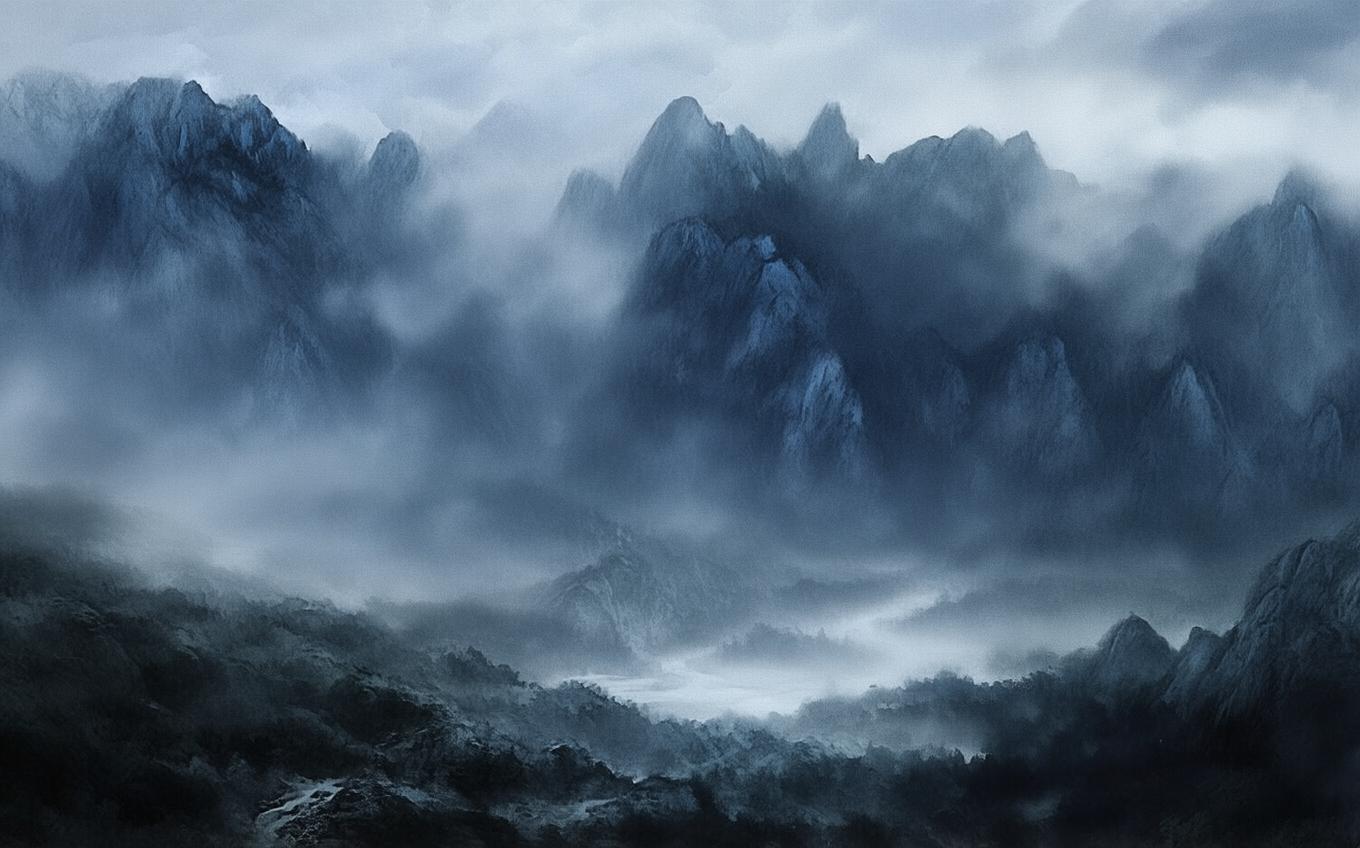
Li Bai (701–762), one of the most celebrated poets of the Tang Dynasty, is often called the “Immortal Poet.” His verse captures the vastness of nature, the wildness of the human spirit, and the melancholy of separation. The poem “关山月” (Guān Shān Yuè / Moon over the Mountain Pass) comes from the Hengchui Quci (横吹曲辞), a category of Music Bureau (Yuefu) poetry originally set to transverse flute melodies. In Li Bai’s hands, the traditional frontier theme is transformed into a meditation on distance, war, and the shared sorrow of those who are parted. The poem has been admired for over a millennium as one of the most evocative frontier poems in Chinese literature, blending cosmic imagery with the intimate ache of longing.
The Poem: Full Text and Translation
明月出天山,
míng yuè chū tiān shān,
The bright moon rises above the Celestial Mountains,
苍茫云海间。
cāng máng yún hǎi jiān.
amid a vast, boundless sea of clouds.
长风几万里,
cháng fēng jǐ wàn lǐ,
The long wind blows for tens of thousands of miles,
吹度玉门关。
chuī dù Yù mén guān.
sweeping across the Jade Gate Pass.
汉下白登道,
Hàn xià Bái dēng dào,
The Han troops marched down the White Ascent Road,
胡窥青海湾。
hú kuī Qīng hǎi wān.
The barbarians spied on the coves of Qinghai.
由来征战地,
yóu lái zhēng zhàn dì,
From ancient times, these lands of campaign and battle
不见有人还。
bù jiàn yǒu rén huán.
have seen no one return.
戍客望边色,
shù kè wàng biān sè,
The garrison soldier gazes at the border landscapes,
思归多苦颜。
sī guī duō kǔ yán.
homesick, his face etched with pain.
高楼当此夜,
gāo lóu dāng cǐ yè,
In a high tower on this same night,
叹息未应闲。
tàn xī wèi yīng xián.
sighs surely never cease.
Line-by-Line Analysis
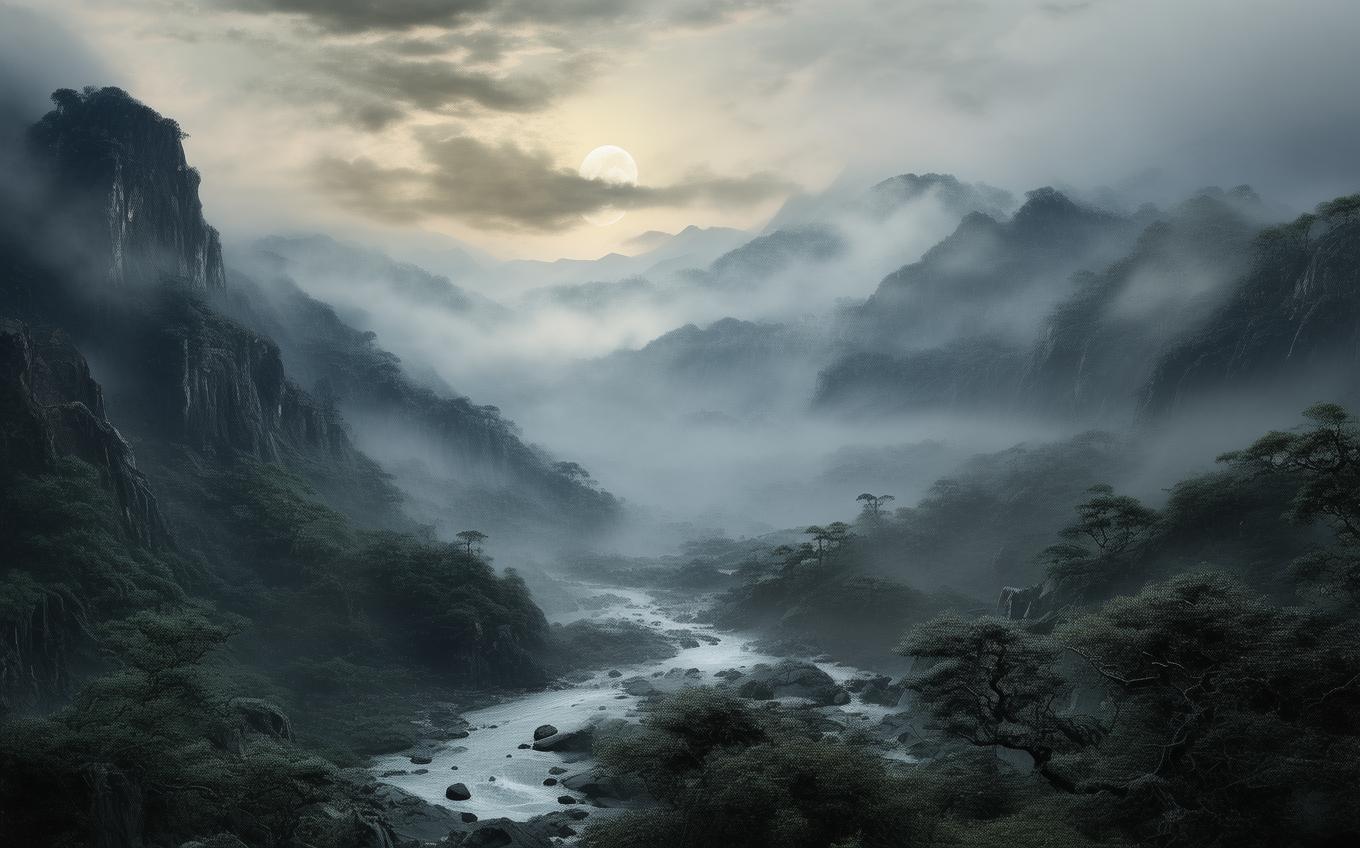
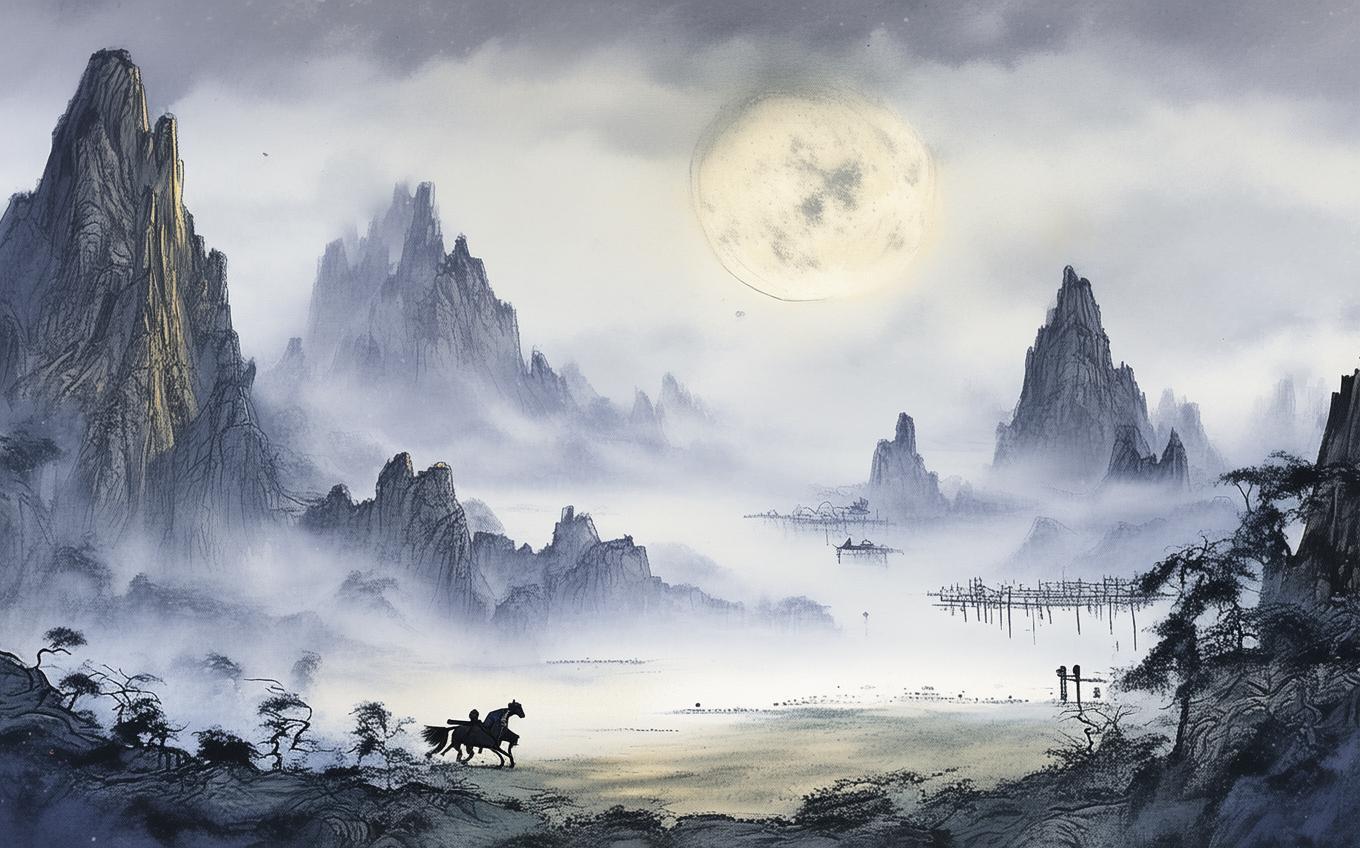
The poem opens with an image of immense scale: the bright moon emerging over the Celestial Mountains (Tianshan) and drifting through a “boundless sea of clouds.” This is not a gentle moon but a cosmic light that oversees the barren frontier. The pairing of the eternal moon with the ephemeral clouds already suggests the transience of human life against the permanence of nature.
The second couplet extends the motion: a fierce wind that travels “tens of thousands of miles” and sweeps past the Jade Gate Pass, the westernmost gateway of the Chinese empire. Here, Li Bai blurs the boundary between space and emotion — the wind that reaches the soldier’s outpost is the same wind that might carry his thoughts home. The Jade Gate was both a physical border and a symbol of exile; beyond it lay the unknown. The “long wind” becomes a silent messenger between two worlds.
Lines 5 and 6 introduce historical depth. “White Ascent Road” refers to a Han Dynasty campaign against the Xiongnu — the poet evokes a famous defeat to show that suffering in this region is ancient and endless. “Barbarians spied on the coves of Qinghai” paints a picture of perpetual watchfulness and threat. The frontier is not a single event but a condition that repeats across centuries. These two lines move the poem from the sublime moon and wind into the specific geography of bloodshed.
Lines 7 and 8 deliver the poem’s starkest judgment: “From ancient times, these lands of campaign and battle / have seen no one return.” The language is deceptively simple; the absence of return is absolute. By not specifying which side — Han or “barbarian” — the poet universalises the tragedy. War devours all equally.
The focus then tightens to the individual: “The garrison soldier gazes at the border landscapes, / homesick, his face etched with pain.” The word “色” (sè, color/scenery) is poignant — he looks out at the same moonlit landscape we saw at the start, but now we understand what it means to watch it night after night. The phrase “suffering face” (苦颜, kǔ yán) gives a human face to the abstract frontier.
The final couplet shifts perspective again, from the soldier to a woman back home: “In a high tower on this same night, / sighs surely never cease.” Without ever describing her directly, Li Bai completes the circle of longing. The wife gazes at the same moon and sighs endlessly, just as the soldier stares at the border. The poem, which began with a panoramic moon, ends with an intimate breath — the two are linked by the very moon that opened the scene, now a witness to their shared sorrow.
Themes and Symbolism
Separation and Longing
The poem is built on the interplay of distance and connection. The moon, visible to both the soldier and his wife, is the ultimate symbol of shared experience across physical separation. The wind, too, acts as an invisible thread that ties the frontier to the home. This silent communication through nature is a recurring motif in classical Chinese poetry, often called “mutual gazing under the same moon.”
The Futility of War
Li Bai refuses to glorify battle. The historical allusions — the Han defeat at White Ascent, the endless watchfulness at Qinghai — collapse time, showing that war on the frontier is a cycle of suffering with no victors. The blunt statement “no one returns” strips the conflict of heroism. Even the soldier’s longing is not painted as patriotic sacrifice but as raw human pain.
Nature as Both Sublime and Indifferent
The moon, the cloud-sea, the long wind — they are beautiful but remote. They do not judge the war; they simply exist, framing human tragedy in a cosmic scale. This perspective, rooted in Daoist and Buddhist sensibilities, places human anguish against a backdrop of vast, indifferent nature, making it both more poignant and more bearable.
Cultural Context
During the Tang Dynasty, the frontier was a place of constant military activity, as the empire expanded westward and defended the Silk Road. Countless soldiers were stationed at remote passes like the Jade Gate, facing harsh conditions and the likelihood of never returning. Yuefu poetry of the Hengchui Quci (transverse flute songs) often dealt with frontier life, and the title “Moon over the Mountain Pass” was a set poetic topic that invited reflections on loneliness and the soldier’s plight.
Li Bai’s poem, however, stands out because he infuses a universal tenderness into the genre. While many frontier poems from the period emphasise martial valor or the desolation of the landscape, Li Bai turns the poem into a duet of longing — the soldier’s silent pain answered by the woman’s sighs. This dual perspective reflects a deep Confucian and humanist empathy: the recognition that war fractures not just bodies but the emotional bonds that define a meaningful life. The poem also embodies the Chinese aesthetic of “含蓄” (hánxù, understatement), where the deepest feelings are suggested through natural images rather than narrated directly.
Conclusion
“Moon over the Mountain Pass” endures because it speaks in a language that is at once cosmic and intimately human. In twelve short lines, Li Bai moves from the birth of the moon over the Celestial Mountains to the sigh of a wife in a high tower, showing us that the greatest distances are not measured in miles but in the ache of the heart. Today, when borders still divide families and the moon still rises silently over places of conflict, the poem’s quiet grief and its call for human connection remain as powerful as ever. It is a reminder that no matter how far the wind blows, some longings are timeless.
Comments (0)
No comments yet. Be the first to comment!