Introduction
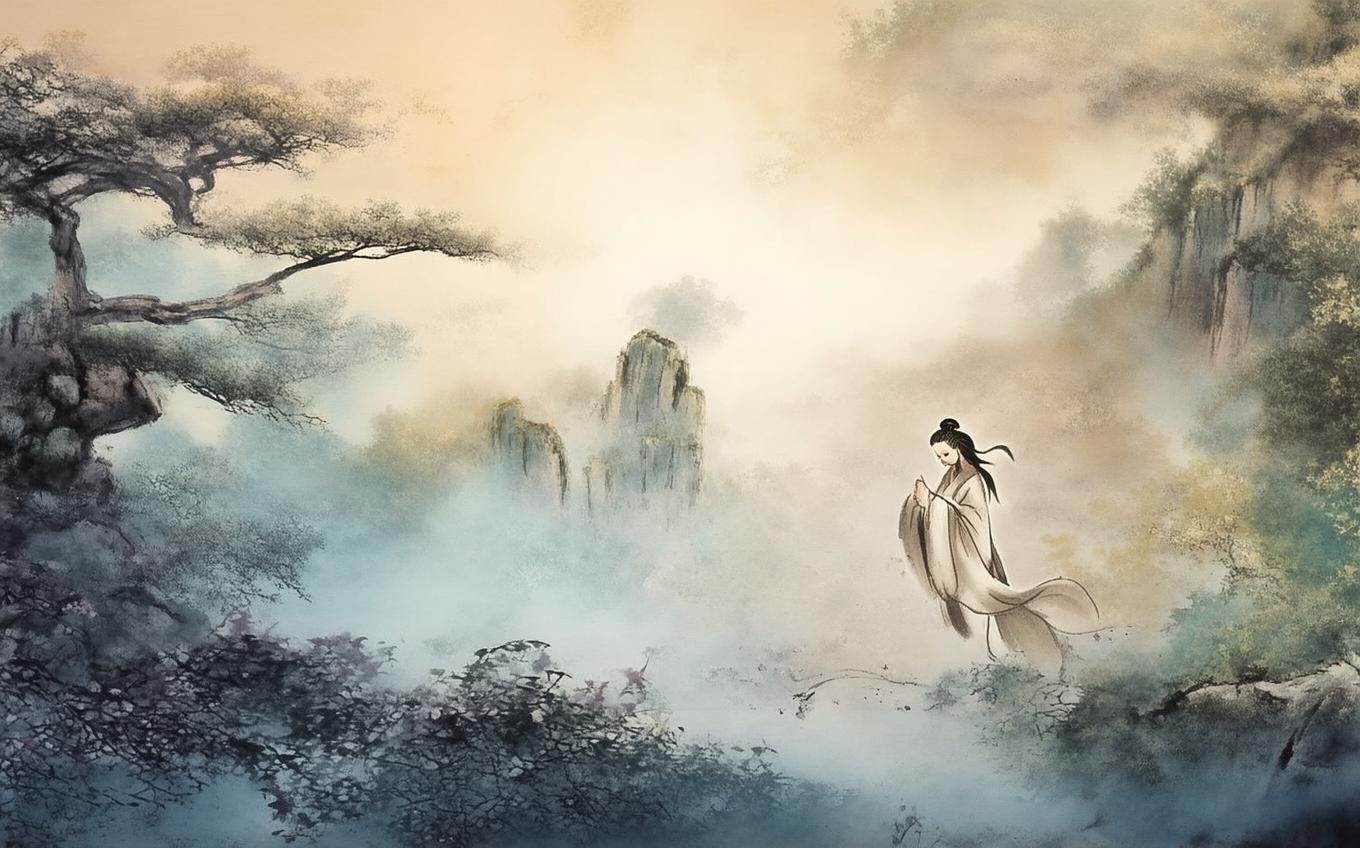
"女冠子" is a ci lyric title, not always the title of a single fixed poem. In classical Chinese poetry, a ci (词) follows a musical pattern and many poets wrote works under the same tune name. One of the most famous and beautiful examples is by Wen Tingyun (温庭筠), a major poet of the late Tang dynasty. His verse is known for its rich imagery, delicate emotion, and dreamlike atmosphere.
The late Tang period was a time of political decline and cultural refinement. Poets often turned away from public affairs and wrote about inner feeling, memory, longing, and beauty. Wen Tingyun’s "女冠子" is significant because it captures the emotional subtlety of the ci genre at an early and influential stage, helping define the lyrical voice of later Chinese poetry.
The Poem: Full Text and Translation
女冠子 · 温庭筠
昨夜夜半
Zuó yè yè bàn
Last night, deep in the middle of the night,
枕前双泪滴
Zhěn qián shuāng lèi dī
Two streams of tears fell before my pillow.
离人梦
Lí rén mèng
The dream of one who is separated from a loved one,
为谁抛掷
Wèi shéi pāo zhì
For whom is it cast away?
金炉烟袅袅
Jīn lú yān niǎo niǎo
From the golden incense burner, smoke curls softly upward,
玉盌春酥
Yù wǎn chūn sū
In the jade cup, spring wine or sweet cream glows richly,
朱帘半卷
Zhū lián bàn juǎn
The red curtain is half drawn,
轻寒微雨
Qīng hán wēi yǔ
A slight chill and fine rain.
寂寂画堂深院
Jì jì huà táng shēn yuàn
Silent is the painted hall and its deep courtyard,
微步动春衫
Wēi bù dòng chūn shān
Gentle steps stir the spring robe,
斜倚熏笼坐
Xié yǐ xūn lóng zuò
Leaning sideways, she sits by the warming incense brazier,
翠眉愁黛浅
Cuì méi chóu dài qiǎn
Her green brows, touched with sorrow, are faintly painted.
Line-by-Line Analysis
昨夜夜半 / Zuó yè yè bàn
The poem opens with a time marker: “last night, deep in the middle of the night.” In classical poetry, night is often the hour of memory, solitude, and longing. The phrase immediately creates an intimate, private mood.
枕前双泪滴 / Zhěn qián shuāng lèi dī
“Two streams of tears fell before my pillow” is a direct and powerful image. The tears are not explained; they simply appear. This restraint is typical of classical Chinese lyric poetry. Rather than declaring sorrow, the poem lets the image speak for itself.
离人梦 / Lí rén mèng
This can be understood as “the dream of one separated from someone” or “a dream of the absent beloved.” The phrase suggests that even sleep cannot bring comfort. The dream belongs to the 离人—the person left behind, the separated one, the one who suffers absence.
为谁抛掷 / Wèi shéi pāo zhì
Literally, this asks: “For whom is it thrown away?” The line is emotionally ambiguous and haunting. It may mean the dream, the tears, or the feelings themselves are wasted, scattered, or abandoned for no one to receive. The question has no answer, which deepens the sense of loneliness.
金炉烟袅袅 / Jīn lú yān niǎo niǎo
The scene then widens into an elegant interior: a golden incense burner sending up winding smoke. This is a typical image of upper-class or refined domestic life. The smoke rises gently, matching the poem’s slow emotional movement. The visual softness also mirrors the haze of memory and desire.
玉盌春酥 / Yù wǎn chūn sū
This line is somewhat difficult and has been interpreted in more than one way, which is common in classical poetry. 玉盌 means “jade bowl,” a luxurious vessel; 春酥 may suggest a fine spring delicacy, a creamy drink, or a rich springtime delicacy. Whatever the exact referent, the line evokes refined comfort, sensual softness, and a polished interior world.
朱帘半卷 / Zhū lián bàn juǎn
The red curtain is only half rolled up. This half-open state is important: it suggests something incomplete, paused, or emotionally suspended. The outside world is neither fully shut out nor fully admitted. It reflects a mind and heart in a state of hesitation.
轻寒微雨 / Qīng hán wēi yǔ
A slight cold and fine rain complete the atmosphere. The weather is not dramatic; it is delicate, almost imperceptible. But in poetry, such subtle weather often becomes an emotional mirror. The faint chill matches the speaker’s sadness.
寂寂画堂深院 / Jì jì huà táng shēn yuàn
The painted hall and deep courtyard are “silent, silent.” This repetition intensifies the stillness. In Chinese poetry, architecture often carries emotional meaning: enclosed spaces can suggest beauty, confinement, and loneliness all at once. The depth of the courtyard feels like the depth of feeling.
微步动春衫 / Wēi bù dòng chūn shān
“Gentle steps stir the spring robe.” This is a graceful and almost cinematic image. The woman moves softly, and even that movement lightly disturbs the fabric. The line conveys elegance, but also fragility. She seems unable to fully settle into rest.
斜倚熏笼坐 / Xié yǐ xūn lóng zuò
She sits leaning sideways by the warming incense brazier. The image suggests fatigue, melancholy, and a passive waiting. The 熏笼 was used both to warm the body and perfume clothes, so it belongs to a world of refined domestic femininity. Yet here it becomes a symbol of emotional coldness beneath physical warmth.
翠眉愁黛浅 / Cuì méi chóu dài qiǎn
The closing line is especially elegant: her greenish brows, painted with sorrow, are lightly touched with makeup. In classical Chinese beauty culture, eyebrows were carefully shaped and darkened. Here, the makeup is “faint” because grief has overtaken artifice. The woman’s beauty remains, but sorrow has softened and dimmed it.
Themes and Symbolism
1. Longing and Separation
The central emotion is separation. The poem gives us tears, dreams, and unanswered questions. The emotional world is private and inward, which is one of the defining traits of ci poetry.
2. Interior Beauty and Emotional Confinement
The poem is filled with luxurious interior objects—incense burner, jade cup, red curtain, painted hall, incense brazier. These details create a refined setting, but they also suggest enclosure. Beauty becomes a kind of cage.
3. Quiet Atmosphere as Emotional Mirror
The light rain, slight chill, curling incense smoke, and dim courtyard all reflect the speaker’s mood. In Chinese poetry, nature and setting often do not merely decorate feeling; they embody it.
4. Feminine Grace and Fragility
This poem is often read as expressing the voice of a woman, or at least a feminine emotional perspective. The movements are soft, the colors delicate, the sorrow restrained. The result is not theatrical grief, but quiet vulnerability.
Key Symbols
- Pillow: sleeplessness, private sorrow, intimate loss
- Dream: desire, memory, and the unreachable
- Incense smoke: passing time, emotional haze, transience
- Half-drawn curtain: emotional openness mixed with restraint
- Deep courtyard: isolation and inwardness
- Faint brows: beauty touched by sadness
Cultural Context
The Tang dynasty was one of the most culturally brilliant periods in Chinese history. By the late Tang, however, political instability and social decay were increasingly apparent. Many poets responded by turning inward, refining the lyric voice rather than writing openly political verse.
The ci form grew out of music and court culture. It was often linked to elegant entertainments, and many early ci poems are associated with women, private spaces, and emotional subtlety. "女冠子" as a tune title may evoke the world of Daoist women or elegantly dressed female figures, which fits the poem’s atmosphere of refined seclusion.
This poem also reflects a classical Chinese ideal: emotion should be expressed indirectly, through image and suggestion rather than direct declaration. Instead of saying “I am lonely,” the poem gives us tears, rain, smoke, and silence. This indirectness is one reason Chinese poetry can feel so subtle and emotionally powerful to modern readers.
Conclusion
Wen Tingyun’s "女冠子" is a small masterpiece of classical Chinese lyric poetry. With only a few lines, it creates a world of nighttime sorrow, delicate beauty, and restrained longing. Its power lies not in dramatic statement, but in atmosphere: the half-open curtain, the faint rain, the curling incense, the sorrowful brows.
For modern readers, the poem remains moving because it speaks to a timeless human experience: the quiet ache of absence and the loneliness hidden inside beautiful surroundings. Its emotional subtlety and visual elegance are exactly what make classical Chinese poetry so enduring.
In the end, "女冠子" reminds us that in Chinese literature, the deepest feelings are often whispered, not shouted.


Comments (0)
No comments yet. Be the first to comment!