Introduction
"金蕉叶" (Jīn Jiāo Yè) is not the title of a single universally known standalone poem in the way that, for example, Li Bai’s "静夜思" (Jìng Yè Sī) is. Rather, 金蕉叶 is a cípái (cípái), that is, a fixed song-pattern title used in the cí lyric tradition of classical Chinese poetry. In Song-dynasty literature, poets often wrote lyrics to established tune patterns, and the tune title did not necessarily describe the content directly. Because of this, when discussing "金蕉叶," it is most useful to read it as part of the Song lyric tradition, especially the world of refined, intimate, musically inflected poetry.
For this article, I will analyze a representative lyric to the tune pattern "金蕉叶" by 蒋捷 (Jiǎng Jié), a late Song poet known for his delicate, melancholy style and his deep sensitivity to loss, memory, and historical change. 蒋捷 lived through the collapse of the Southern Song, and his poetry often carries an undertone of sorrow even when describing beautiful scenes.
The significance of a lyric in the tune "金蕉叶" lies not only in its words but also in its place within the cí tradition: a genre especially suited to subtle emotion, private feeling, seasonal atmosphere, and the music of memory.
The Poem: Full Text and Translation
秋尽江南草未凋
Qiū jìn Jiāngnán cǎo wèi diāo
Autumn has nearly ended, yet in Jiangnan the grasses have not withered.
霜迟见软条
Shuāng chí jiàn ruǎn tiáo
The frost comes late; one still sees tender branches.
金尊莫倚西风瘦
Jīn zūn mò yǐ xī fēng shòu
Do not lean with your golden winecup into the thinning western wind.
只今满眼是离骚
Zhǐ jīn mǎn yǎn shì Lí Sāo
For now, everywhere before the eyes is the sorrow of parting.
夜深后
Yè shēn hòu
After the night grows deep,
寒初透
Hán chū tòu
the chill begins to penetrate.
梦里灯花几度挑
Mèng lǐ dēnghuā jǐ dù tiāo
In dreams, the lamp-wick’s flower seems to be picked up again and again.
Line-by-Line Analysis
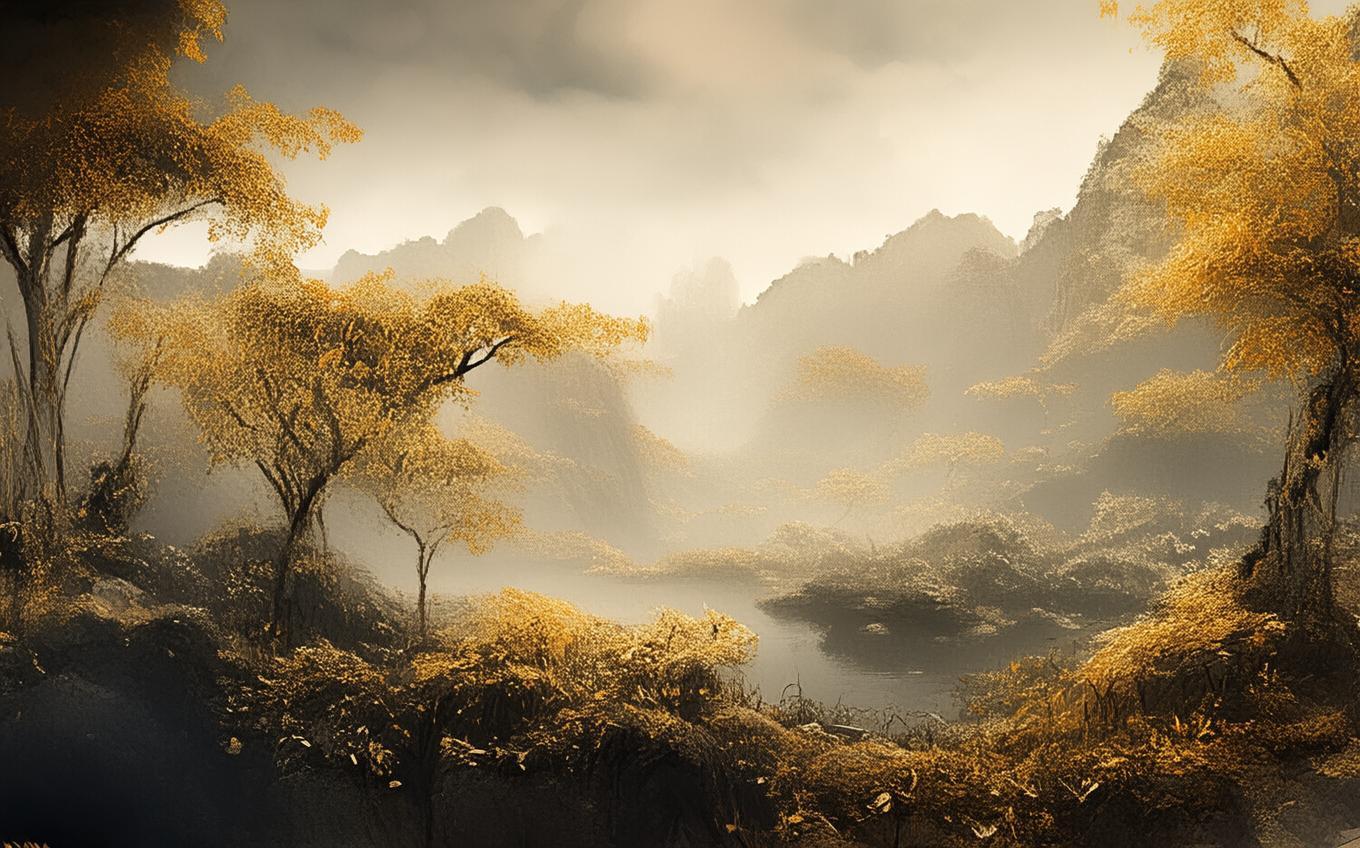
The first line, "秋尽江南草未凋", immediately establishes a seasonal setting: late autumn in Jiangnan, the rich and beautiful region south of the Yangtze River. In much of Chinese poetry, autumn is associated with decline, separation, aging, and sorrow. Yet here the grass has not yet withered. This delays the expected sign of decay. The effect is subtle: nature appears to resist the season, just as human feeling resists the passage of time.
The second line, "霜迟见软条", continues this atmosphere of postponed decline. Frost arrives late, and soft branches remain visible. The phrase 软条 suggests pliant, tender growth—something vulnerable, delicate, not yet hardened by winter. This image may be read literally, but in the cí tradition it often also hints at human beauty, emotional softness, or fragile attachment.
The third line, "金尊莫倚西风瘦", shifts from landscape to human action. 金尊 means a golden goblet or winecup, a traditional symbol of cultivated life, elegance, and also temporary pleasure. The west wind is a standard autumn image, often carrying connotations of bleakness and emotional desolation. The phrase 西风瘦 is especially striking: the wind itself seems to make things thin, worn, diminished. The poet warns against leaning into that wind with wine in hand. On one level, this is advice against drunken sentimentality; on another, it suggests that beauty and pleasure are precarious in a world already touched by loss.
The fourth line, "只今满眼是离骚", is the emotional center of the lyric. 离骚 literally evokes “sorrow of separation,” but it also alludes to 《离骚》 (Lí Sāo), the great poem by 屈原 (Qū Yuán), one of the foundational poets of Chinese literature. Qu Yuan’s poem is full of exile, loyalty, grief, and moral anguish. By invoking 离骚, 蒋捷 expands personal sadness into a grand literary and cultural register. What the speaker sees everywhere is not merely autumn scenery, but a whole world saturated with the feeling of estrangement and lament.
The fifth line, "夜深后", narrows the scene. We move indoors, into the intimacy of late night. In Chinese poetry, deep night is often the time when suppressed thoughts rise most strongly: memory returns, loneliness sharpens, and the external world falls silent enough for inward pain to become audible.
The sixth line, "寒初透", intensifies the sensation. The cold does not simply exist; it penetrates. This is typical of classical Chinese poetic compression: physical chill and emotional chill become almost inseparable. The body feels the season, and the heart feels solitude.
The final line, "梦里灯花几度挑", is beautifully delicate and ambiguous. 灯花 refers to the curling, blooming shape of the lamp-wick as it burns, often considered a small object of domestic observation in premodern life. 挑灯花—trimming or lifting the wick—was a familiar nighttime action. In the poem, this happens in dreams, and again and again. The image suggests restless sleep, recurring memory, and the inability to settle into oblivion. Even in dreams, the speaker remains half-awake to sorrow, as if consciousness keeps returning to the light, to memory, to longing.
Themes and Symbolism
One major theme of this lyric is the tension between beauty and decline. The grass has not yet withered, the branches remain soft, and yet autumn is ending and cold is entering. The world is still beautiful, but that beauty is already shadowed by loss. This creates the distinctive emotional texture of much Song lyric poetry: not dramatic despair, but refined melancholy.
Another key theme is separation. The reference to 离骚 broadens the poem from a private mood into a larger meditation on exile, emotional distance, and the sorrow of a sensitive person living in a troubled world. In Chinese poetic tradition, “parting” may refer to lovers, friends, homeland, or even a lost political order.
The poem also explores memory and inwardness. The final image of the lamp-wick in dreams suggests that sorrow has sunk below conscious thought. The mind revisits the same feelings even in sleep. This is one reason cí poetry often feels psychologically modern: it is highly attentive to fleeting moods, atmosphere, and the half-lit states between waking and dreaming.
As for symbolism:
- Autumn symbolizes decline, transience, and emotional sadness.
- Jiangnan symbolizes beauty, refinement, and cultural nostalgia.
- West wind symbolizes seasonal change, chill, and desolation.
- Winecup symbolizes cultivated pleasure, but also the fragility of comfort.
- Lamp-wick flower symbolizes sleeplessness, memory, and the persistence of feeling in solitude.
Cultural Context
To understand a poem in the tune pattern "金蕉叶," it helps to understand the cí genre itself. Unlike earlier forms such as shi poetry, cí developed in relation to music. Each tune pattern had a prescribed rhythmic and structural shape, and poets composed lyrics to fit those forms. Over time, the original melodies were often lost, but the pattern names remained.
The Song dynasty was the golden age of cí. This was a period of extraordinary literary sophistication, urban culture, and emotional refinement in poetry. Poets used cí to write about love, longing, banquets, travel, loneliness, politics, and historical grief. Compared with more formal high-style verse, cí often feels more intimate and more musical.
蒋捷, writing in the late Song and early Yuan transition, belongs to a historical moment marked by dynastic collapse and cultural trauma. Even when his poems do not openly discuss politics, they often carry the sadness of a world passing away. This emotional background gives additional resonance to lines about late autumn, separation, and recurring dreams.
The poem also reflects important Chinese literary values:
- Emotional restraint: the poem does not state everything directly; it suggests feeling through scene and atmosphere.
- Nature as emotional language: landscape is never just landscape; it mirrors inner life.
- Allusion: a brief mention such as 离骚 connects the poem to centuries of literary memory.
- Fusion of outer and inner worlds: weather, season, body, dream, and emotion are woven together rather than separated.
These qualities are central to classical Chinese poetics and help explain why such short poems can carry so much emotional depth.
Conclusion
This lyric in the tune pattern "金蕉叶" shows the subtle beauty of Song-dynasty cí poetry: quiet scenery, seasonal atmosphere, literary allusion, and intimate emotion all compressed into a few lines. The poem begins with late-autumn softness, moves into the sorrow of separation, and ends in the haunting image of a lamp-wick flickering through dreams.
Its enduring appeal lies in its delicacy. Nothing is exaggerated, yet everything is felt: the delayed frost, the west wind, the late-night cold, the mind that cannot rest. For modern readers, especially those encountering Chinese poetry in translation, the poem offers a powerful example of how classical Chinese verse turns small sensory details into profound emotional experience.
Its message remains relevant today: beauty is most moving when we know it will not last, and the deepest feelings often speak most clearly in silence, in night, and in the fragile light that continues to burn.

Comments (0)
No comments yet. Be the first to comment!