Introduction
"归朝欢" (Guī Cháo Huān) is the name of a cí tune pattern rather than the title of a single universally known poem. In Song dynasty literature, poets wrote lyrics to established musical patterns, and "归朝欢" is one such pattern. Among the poets associated with this form, Li Qingzhao (李清照, Lǐ Qīngzhào, 1084-c.1155) stands out as one of the greatest voices in classical Chinese poetry. She is widely admired for her subtle emotional precision, refined imagery, and ability to turn private feeling into lasting art.
Li Qingzhao lived during the Northern Song and Southern Song transition, a time of political collapse, war, and displacement. Her poetry often combines personal sorrow with elegant artistry. A famous lyric in the tune pattern "归朝欢" is associated with this emotional and historical world: it expresses longing, memory, and the ache of separation. The poem is significant because it shows how Song lyric poetry transforms intimate feeling into a highly musical and culturally rich form.
The Poem: Full Text and Translation
我梦唐宫春昼迟
Wǒ mèng Táng gōng chūn zhòu chí
In my dream, the spring day in Tang palaces lingers slowly.
正舞到,曳裾时
Zhèng wǔ dào, yè jū shí
Just as the dance reaches its height, with trailing robes in motion.
翠云队仗绛霞衣
Cuì yún duì zhàng jiàng xiá yī
Emerald-cloud formations and crimson-cloud robes fill the scene.
漫腾腾,手双垂
Màn téng téng, shǒu shuāng chuí
Softly, slowly, both hands fall and sway.
忽然急鼓催将起
Hū rán jí gǔ cuī jiāng qǐ
Suddenly, urgent drums press the dancers to rise again.
似彩凤,乱惊飞
Sì cǎi fèng, luàn jīng fēi
Like bright phoenixes startled into scattered flight.
梦回不见万琼妃
Mèng huí bù jiàn wàn qióng fēi
When the dream returns to waking, the countless jade-like ladies are gone.
见荷花,被风吹
Jiàn hé huā, bèi fēng chuī
I see only lotus blossoms, blown by the wind.
Line-by-Line Analysis
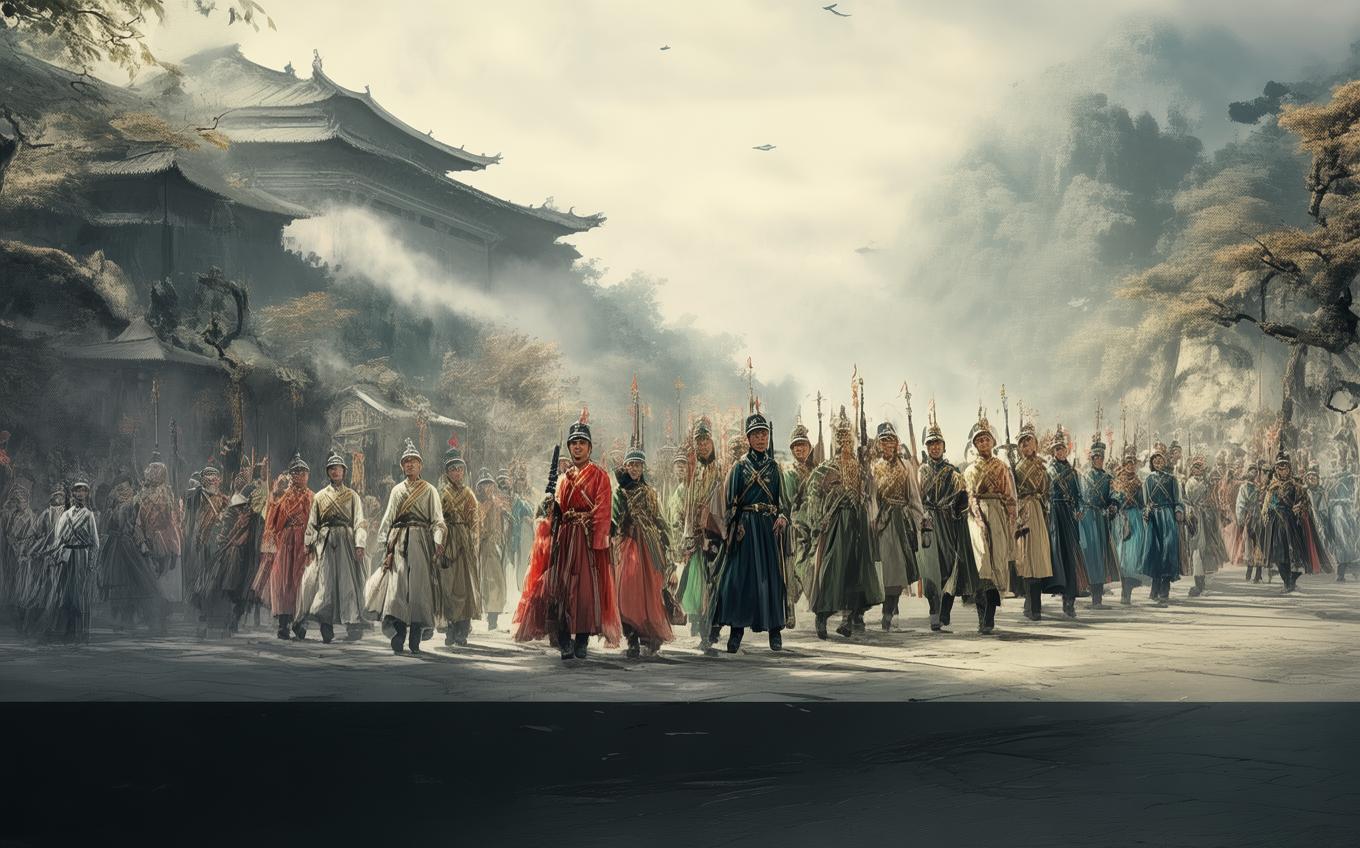
The opening line, "我梦唐宫春昼迟" (Wǒ mèng Táng gōng chūn zhòu chí), immediately places us in a dream of the Tang court. For later Chinese writers, the Tang dynasty often represented cultural brilliance, splendor, and refinement. The phrase "spring day lingers slowly" creates a suspended atmosphere, as though time itself has softened. This is not ordinary reality but an idealized world of beauty and memory.
The second line, "正舞到,曳裾时" (Zhèng wǔ dào, yè jū shí), narrows the focus to a moment of dance. "Trailing robes" suggest graceful court performance, but also elegance stretched out in time and space. Clothing in classical poetry is never merely decorative; the movement of silk often becomes a visible form of emotion. Here it conveys luxury, fluidity, and ceremonial beauty.
In "翠云队仗绛霞衣" (Cuì yún duì zhàng jiàng xiá yī), the scene grows more painterly. The dancers and their garments are compared to clouds and sunset glow. "Emerald clouds" and "crimson-cloud robes" do more than describe color. They elevate the courtly spectacle into something almost celestial. The palace becomes a world between earth and heaven, full of brilliance but also unreality.
The fourth line, "漫腾腾,手双垂" (Màn téng téng, shǒu shuāng chuí), slows everything down again. The repeated sound in "漫腾腾" gives the line a floating, swaying quality. The lowered hands suggest a poised dance gesture, but they may also hint at weariness or delicacy. The lyric moves through visual detail and rhythm together, which is typical of Song cí poetry.
Then the mood suddenly shifts: "忽然急鼓催将起" (Hū rán jí gǔ cuī jiāng qǐ). The urgent drumbeat breaks the dreamlike stillness. In Chinese poetics, drums often mark transition, command, or emotional intensification. The line introduces movement and pressure, reminding us that beauty in this poem is unstable.
That instability becomes vivid in "似彩凤,乱惊飞" (Sì cǎi fèng, luàn jīng fēi). The dancers are compared to phoenixes startled into flight. The phoenix in Chinese culture is associated with grace, high beauty, and auspiciousness. Yet here the phoenixes are not serene; they are startled and scattered. The image holds both magnificence and disruption at once.
The seventh line, "梦回不见万琼妃" (Mèng huí bù jiàn wàn qióng fēi), delivers the emotional turn. On waking, the splendid court ladies vanish. "Qióng" suggests jade-like beauty, purity, and rarity. The dream world dissolves, leaving absence behind. This is a classic device in Chinese poetry: fullness gives way to emptiness, and that emptiness becomes the true emotional center.
The final line, "见荷花,被风吹" (Jiàn hé huā, bèi fēng chuī), is especially beautiful in its restraint. Instead of palace dancers, the speaker sees lotus flowers in the wind. The lotus is a major symbol in Chinese literature, often associated with purity, elegance, and moral beauty. But here, blown by the wind, it also conveys fragility and loneliness. The transition from imperial dream to natural image makes the ending quiet, but devastating.
Themes and Symbolism
One major theme of the poem is the fragility of beauty. The lyric begins with dazzling court splendor, but that splendor exists only in a dream. What seems rich and permanent quickly disappears. This movement from brilliance to loss is central to much of Song poetry.
Another important theme is memory and disillusionment. The dream of the Tang palace is not just a decorative fantasy. It reflects a longing for a lost world, whether personal, cultural, or historical. For Song writers, the past could feel more complete than the present. The poem turns that feeling into an emotional drama of vision and disappearance.
The poem also explores the relationship between artifice and nature. Court dancers in embroidered robes are replaced by lotus flowers in the wind. The first world is human-made, ceremonial, and glamorous; the second is natural, exposed, and transient. Yet the natural image carries deeper truth. Chinese poetry often finds lasting meaning not in spectacle but in the quiet scenes that remain after spectacle has vanished.
Key symbols include the Tang palace, which suggests cultural grandeur and nostalgic idealization; the phoenix, which represents beauty and high elegance, but here also instability; and the lotus, which carries associations of purity, refinement, and vulnerable endurance.
Cultural Context
This poem belongs to the world of Song dynasty cí poetry, a form originally connected to music. Unlike older shī poetry, cí often has a more intimate, lyrical, and emotionally nuanced voice. Poets wrote to fixed tune patterns, and "归朝欢" is one of those patterns. That means the structure of the poem was shaped by musical convention, even when the original music was no longer performed.
The poem's imagined Tang setting is culturally important. In Chinese literary history, the Tang dynasty was often seen as a golden age of civilization. To dream of Tang palaces is therefore to dream of artistic perfection, political glory, and refined beauty. For later poets, especially in times of uncertainty, such images could express both admiration and loss.
The ending with the lotus reflects Chinese values tied to moral elegance and natural symbolism. In Confucian and literati tradition, flowers are not mere ornaments; they often reveal character and philosophical attitude. The lotus, admired for rising unstained from mud, became a symbol of purity and integrity. Here that symbol is softened by wind, suggesting that even purity and beauty are subject to time and change.
More broadly, the poem reflects a distinctly Chinese sensitivity to impermanence. Rather than stating sorrow directly, it lets images carry emotion. This indirectness is a hallmark of classical Chinese poetry. Feeling is embedded in scene, and the reader is invited to complete the emotional movement inwardly.
Conclusion
"归朝欢" is beautiful because it moves with such elegance from dream to awakening, from palace splendor to wind-blown lotus. Its images are vivid, but its deepest power lies in what disappears. The poem shows how classical Chinese poetry can express loss without heavy declaration, allowing a few carefully chosen images to carry an entire emotional world.
For modern readers, the lyric remains compelling because its central experience is timeless: we all know the feeling of waking from beauty into absence. In that sense, this Song poem speaks across centuries. It reminds us that memory can be radiant, but also painful, and that some of the most lasting truths appear in the quiet moment after illusion fades.
Comments (0)
No comments yet. Be the first to comment!