Introduction
"巫山一段云" (Wūshān Yī Duàn Yún) is not originally the title of a single poem in the modern sense, but a cí牌 (cípái), or tune pattern, used in cí poetry. In the Chinese lyric tradition, especially flourishing from the Tang into the Song dynasty, poets wrote words to pre-existing musical patterns. "巫山一段云," literally "A Stretch of Cloud over Mount Wu," is one of these beautifully evocative tune titles.
Because the user asks for a poem related to "巫山一段云," a natural and famous choice is Li Xun (Lǐ Xún), a poet of the Late Tang / Five Dynasties period, whose lyric on this tune is among the best-known examples. Li Xun was associated with the refined, sensuous lyric world later collected in the Huajian Ji ("Collection from Among the Flowers"), an anthology central to early cí poetry.
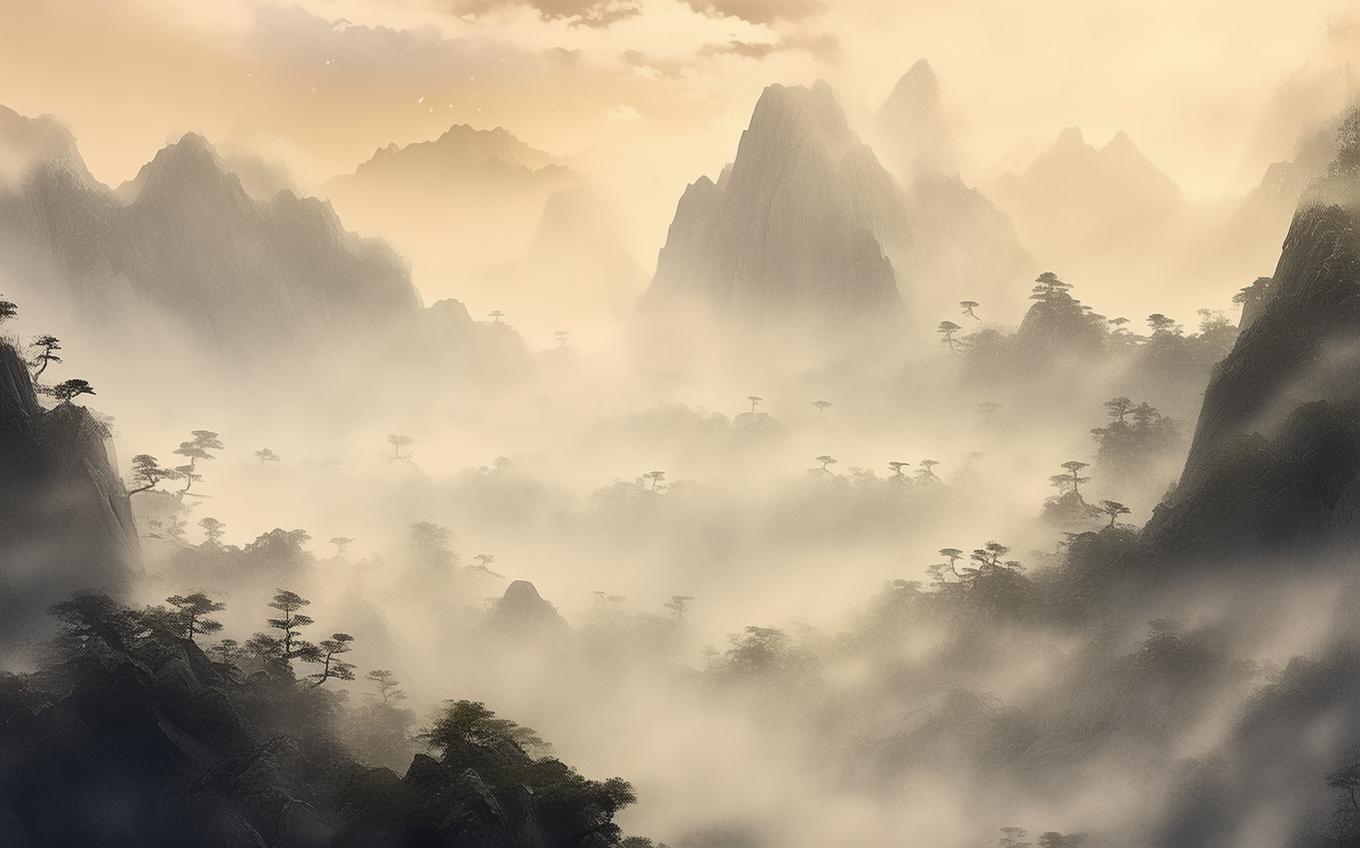
This poem is significant because it shows how compact Chinese lyric verse can create an entire emotional world through landscape. The title itself alludes to Mount Wu (Wūshān), famous in Chinese literature for its clouds, rain, and association with longing, romance, and elusive beauty.
The Poem: Full Text and Translation
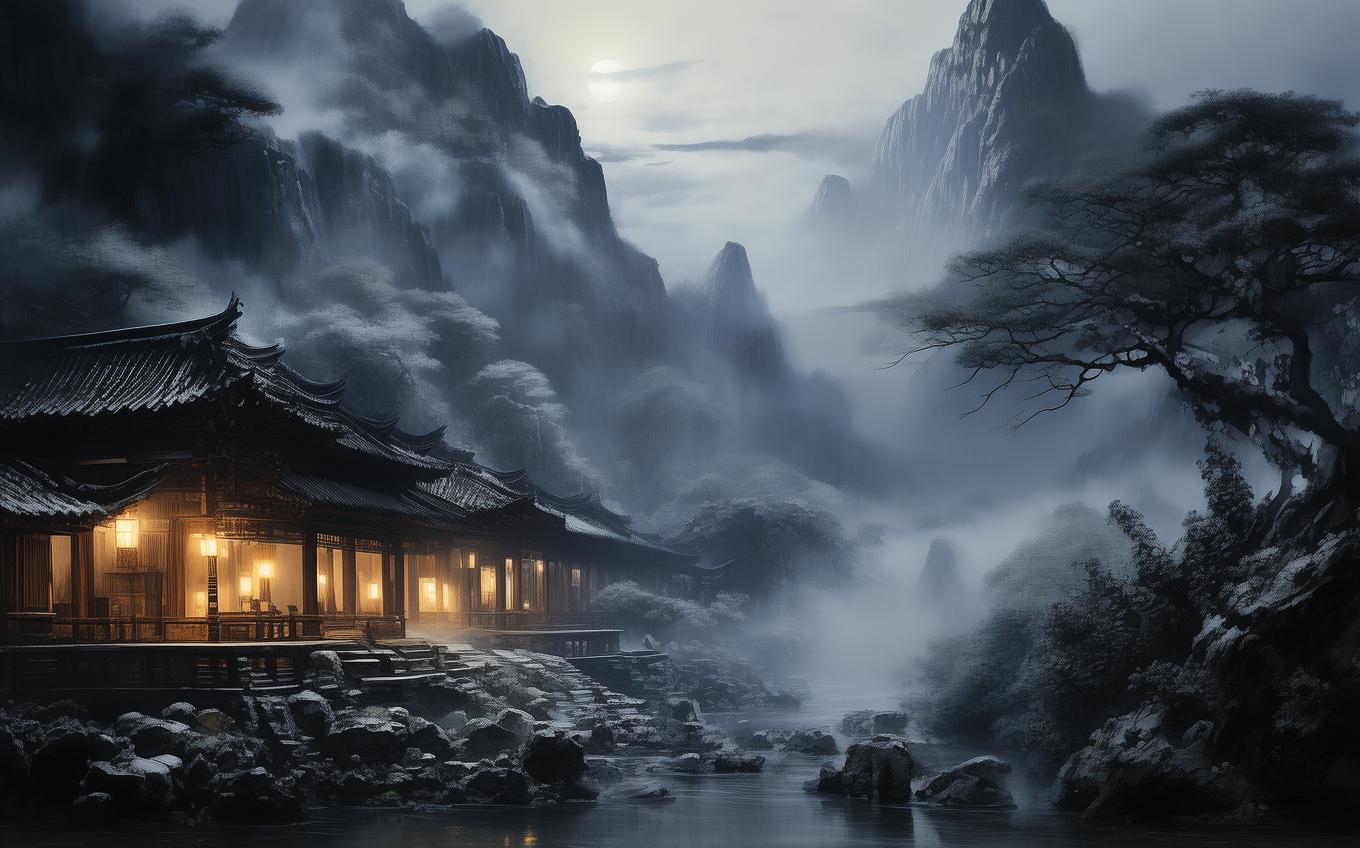
古庙依青嶂
Gǔ miào yī qīng zhàng
The ancient temple leans against the green mountain ridges.
行宫枕碧流
Xíng gōng zhěn bì liú
The traveling palace rests beside the jade-green stream.
水声山色锁妆楼
Shuǐ shēng shān sè suǒ zhuāng lóu
The sound of water and the colors of the hills enclose the lady's painted tower.
往事思悠悠
Wǎng shì sī yōu yōu
Thoughts of the past drift on without end.
云雨朝还暮
Yún yǔ zhāo huán mù
Clouds and rain come in the morning and return again at dusk.
烟花春复秋
Yān huā chūn fù qiū
Misty blossoms pass from spring once more into autumn.
啼猿何必近孤舟
Tí yuán hé bì jìn gū zhōu
Why must the crying monkeys come so near the lonely boat?
行客自多愁
Xíng kè zì duō chóu
The traveler is already full of sorrow.
Line-by-Line Analysis
The lyric is short, but its emotional movement is rich. It begins with stillness and setting, then shifts into memory, cyclical time, and finally personal sorrow.
"古庙依青嶂"
The opening image is architectural and natural at once: an ancient temple set against green mountain walls. The verb 依 (yī, "to lean on," "to rest against") gives the scene softness and intimacy. The temple is not isolated from nature; it is nestled into it.
This first line establishes age, permanence, and solemnity. Temples in Chinese poetry often suggest the passage of dynasties, the fragility of human life, and the persistence of sacred space amid natural grandeur.
"行宫枕碧流"
A traveling palace is a temporary imperial residence, often associated with rulers on tour or legendary sites tied to courtly history. The verb 枕 (zhěn, "to pillow upon") mirrors the previous line's 依, further personifying the architecture. The palace seems to recline beside the green current.
The line introduces a subtle contrast: the ancient temple suggests spiritual endurance, while the traveling palace hints at worldly power, luxury, and transience. Both are part of the landscape, but one belongs to eternity and the other to history.
"水声山色锁妆楼"
This is one of the most beautiful and suggestive lines in the poem. Literally, "the sound of water and the mountain colors lock the dressing tower." The 妆楼 (zhuāng lóu) is a women's chamber or ornate tower associated with feminine beauty, makeup, and often longing.
The word 锁 (suǒ, "to lock," "to enclose") is especially powerful. Nature is not just scenery; it acts as a force surrounding or imprisoning the human world. The woman's chamber may be physically enclosed by this landscape, but emotionally it is enclosed by memory and desire as well.
This line also echoes the literary tradition of Mount Wu, where feminine beauty, divine encounter, and dreamlike romance are common themes.
"往事思悠悠"
Now the poem turns inward. After the external scene comes reflection: "thoughts of the past stretch endlessly." The phrase 悠悠 (yōu yōu) conveys length, distance, vagueness, and lingering feeling. It is one of those wonderfully untranslatable Chinese poetic words that suggest both temporal extension and emotional drift.
The past here is not narrated directly. We are not told exactly what happened. That silence is important. Chinese lyric often gains power by leaving the emotional story partially unstated, allowing atmosphere to carry meaning.
"云雨朝还暮"
This line invokes one of the most famous allusions in Chinese literature. In the tradition surrounding Mount Wu, a goddess is said to appear to King Huai of Chu in dreamlike form, associated with morning clouds and evening rain. Thus 云雨 (yún yǔ, clouds and rain) can imply not only weather but also romantic union and fleeting intimacy.
Here, clouds and rain return morning and evening in endless repetition. Nature repeats itself, but human joy does not. The line therefore carries a note of sadness: what was once an intimate or miraculous meeting has become part of a cycle beyond human control.
"烟花春复秋"
The phrase 烟花 here suggests mist-veiled blossoms, not fireworks in the modern sense. The line moves from spring to autumn, compressing time. Beauty blooms, fades, and returns only to fade again.
This seasonal movement deepens the poem's melancholy. Spring in Chinese poetry often signifies youth, love, freshness, and awakening; autumn suggests decline, distance, exile, and sorrow. By setting them in sequence, the poet reminds us of time's irreversible passage.
"啼猿何必近孤舟"
The crying of monkeys is a famous sound in classical Chinese poetry, especially in the gorges of the Yangtze region near Mount Wu. Their cries are often described as piercing and mournful, heightening a sense of wilderness and loneliness.
The rhetorical question, "Why must they come so near the lonely boat?" is deeply human. Of course, the monkeys are not intentionally cruel. But the speaker feels as if the natural world itself conspires to intensify grief. The lonely boat is a classic image of the traveler, exile, or separated lover.
"行客自多愁"
The ending is simple and devastating: "the traveler is already full of sorrow." The word 自 (zì) here suggests "already" or "naturally." The traveler did not need any further cause for sadness; sorrow was already present within.
This closing line transforms the entire landscape into an emotional mirror. The temple, palace, water, mountains, clouds, blossoms, monkeys, and boat all become expressions of one state of mind: lingering human grief before the vastness of time and nature.
Themes and Symbolism
1. Longing and Memory
The poem is saturated with the feeling of looking backward. "往事思悠悠" is the emotional center: the past is not dead but continuously active in memory. This makes the poem a meditation on remembrance rather than a mere landscape sketch.
2. Nature as Emotional Landscape
Chinese poetry often treats nature not as background but as a medium of feeling. Here, mountains, streams, clouds, rain, flowers, and monkey cries all carry emotional meaning. The outer world reflects the inner world.
3. Transience
The movement from spring to autumn and the recurring clouds and rain emphasize impermanence. Courtly structures such as the traveling palace are fleeting when compared with mountains and water. Human encounters, too, vanish into memory.
4. Solitude
The lonely boat is perhaps the poem's clearest symbol. It suggests travel, separation, and existential isolation. In Chinese literature, journeys often become occasions for self-awareness and sorrow.
5. The Mount Wu Allusion
Mount Wu is more than a place. It is a literary symbol of romantic dream, sensual beauty, and ephemerality. The phrase 云雨 points to an entire cultural history of desire that is beautiful yet elusive, intimate yet impossible to hold.
Cultural Context
This poem belongs to the world of early cí poetry, which developed from songs and court entertainment into one of the most expressive genres in Chinese literature. Unlike the more public and formal shī poem, cí often allows for a more intimate, musical, and emotionally nuanced voice.
Li Xun wrote during a period of political fragmentation after the Tang dynasty. In such times, poetry often turned toward private feeling, refined atmosphere, and subtle allusion. The instability of the age may help explain the poem's sensitivity to passing beauty and historical residue.
The poem also reflects important Chinese literary values:
- Fusion of scene and feeling: In Chinese poetics, the best poetry often unites landscape and emotion so closely that they become inseparable.
- Power of allusion: A brief phrase like 云雨 can carry centuries of myth and interpretation.
- Emotional restraint: The poem is sorrowful, but never explicit or dramatic in a Western confessional sense. Its emotion remains controlled, indirect, and therefore powerful.
- Awareness of time: Ancient temples, former palaces, changing seasons, and remembered events all reflect a classical Chinese concern with the rise and fall of human life against a larger natural order.
There may also be a philosophical undertone here. The poem does not preach Buddhism or Daoism directly, but its mood resonates with both traditions: the Buddhist sense of impermanence and the Daoist sensitivity to natural rhythms beyond human will.
Conclusion
Li Xun's "巫山一段云" is a small poem with a vast emotional echo. In just a few lines, it brings together sacred ruins, courtly memory, mountain scenery, mythic allusion, seasonal change, and the sorrow of the solitary traveler. Its beauty lies in suggestion rather than explanation.
For modern readers, especially English speakers encountering Chinese poetry for the first time, this lyric offers an excellent example of how classical Chinese verse works: it is compressed, musical, allusive, and emotionally resonant. It does not tell us everything. Instead, it invites us into a space where landscape, history, and feeling merge.
Its message still feels contemporary: beauty passes, memory lingers, and sometimes the world seems to deepen the sadness we already carry. Yet in giving that sorrow such elegant form, the poem transforms grief into art.
Comments (0)
No comments yet. Be the first to comment!