Introduction
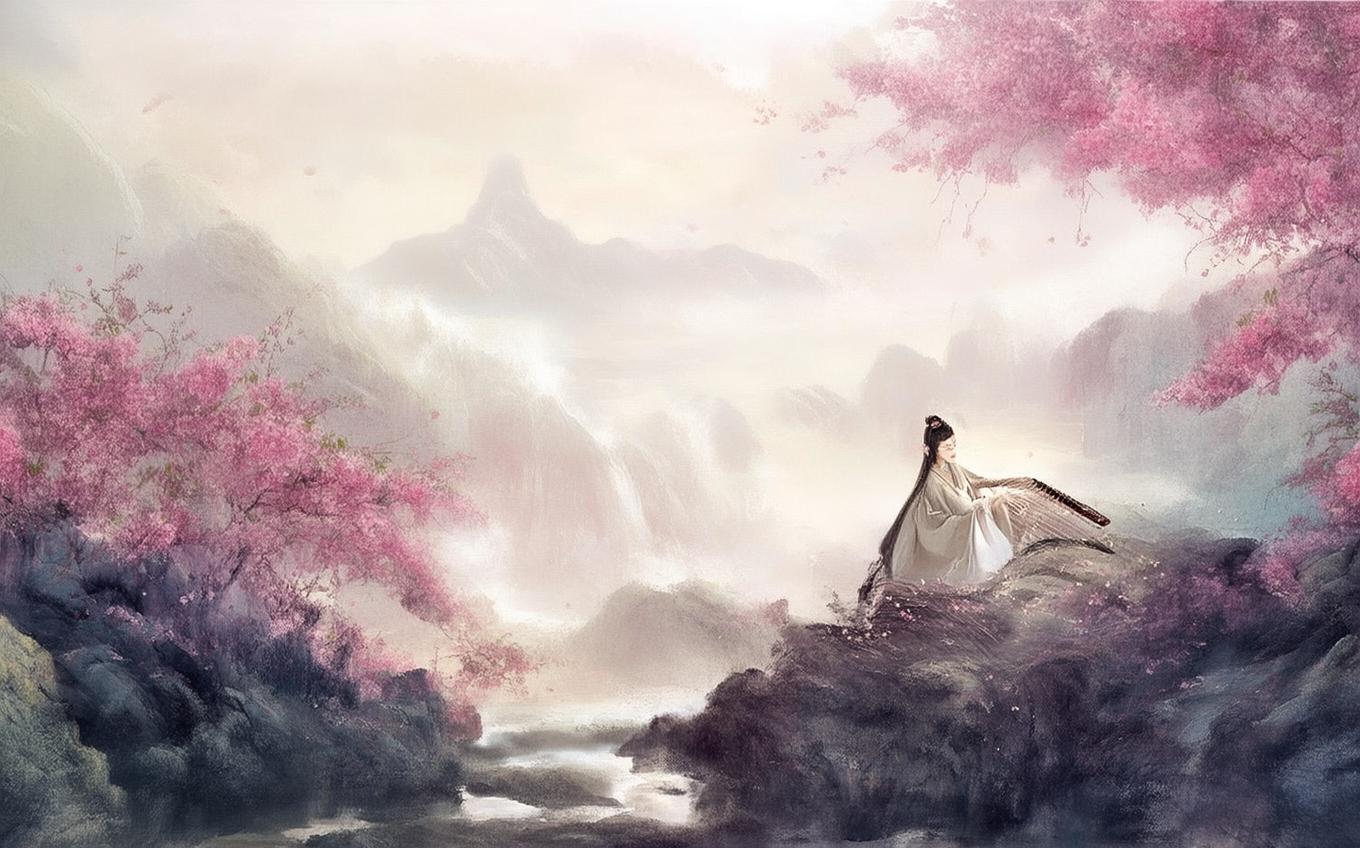
The poem "法曲献仙音" (Fǎ Qǔ Xiàn Xiān Yīn), whose title translates to "Music from the Law-Book Offered to Immortals," is a masterpiece by the eminent Song Dynasty poet Zhou Bangyan (周邦彦, 1056–1121). Zhou Bangyan was a leading figure in the wanyue (婉约, "graceful and restrained") school of ci poetry, renowned for his meticulous craftsmanship, melodic elegance, and profound emotional subtlety. This particular poem belongs to the ci genre, written to a specific tune pattern, and it embodies the refined aesthetic of the Northern Song Dynasty, a period marked by cultural sophistication and introspective lyricism. "法曲献仙音" stands as a quintessential example of Zhou Bangyan's ability to weave personal melancholy with vivid natural imagery, creating a timeless meditation on transience and longing.
The Poem: Full Text and Translation
蝉咽凉柯,燕飞尘幕,漏阁签声时度。
Chán yàn liáng kē, yàn fēi chén mù, lòu gé qiān shēng shí dù.
Cicadas choke on cool branches, swallows dart past dusty curtains; from the water-clock tower, the tally-stick’s sound marks time’s passage.
倦脱纶巾,困便湘竹,桐阴半侵朱户。
Juàn tuō guān jīn, kùn biàn xiāng zhú, tóng yīn bàn qīn zhū hù.
Weary, I shed my silk cap; languid, I lean on speckled bamboo; plane-tree shade half-creeps over the vermilion door.
向抱影凝情处,时闻打窗雨。
Xiàng bào yǐng níng qíng chù, shí wén dǎ chuāng yǔ.
Facing the spot where I clasp my shadow, frozen in emotion, I often hear rain lashing the window.
耿无语。叹文园、近来多病,情绪懒,尊酒易成间阻。
Gěng wú yǔ. Tàn Wén Yuán, jìn lái duō bìng, qíng xù lǎn, zūn jiǔ yì chéng jiàn zǔ.
Sleepless and silent. I sigh for Wen Yuan, lately so ill; my spirits are listless, wine-cups easily become estranged.
缥缈玉京人,想依然、京兆眉妩。
Piāo miǎo yù jīng rén, xiǎng yī rán, Jīng Zhào méi wǔ.
Distant and elusive, the one from the Jade Capital—I imagine her still with the charming brows of Jingzhao.
翠幕深中,对徽容、空在纨素。
Cuì mù shēn zhōng, duì huī róng, kōng zài wán sù.
Deep within emerald curtains, facing her lovely likeness, it’s vainly on white silk.
待花前月下,见了不教归去。
Dài huā qián yuè xià, jiàn liǎo bù jiào guī qù.
I wait before flowers, beneath the moon; once seen, I will not let her return.
Line-by-Line Analysis
The opening stanza plunges the reader into a world of sensory decay and muted activity. "Cicadas choke on cool branches" (蝉咽凉柯) uses the verb "咽" (yàn, to choke or sob) to personify the insects, their song faltering as autumn chills the air—a metaphor for waning vitality. "Swallows dart past dusty curtains" (燕飞尘幕) evokes a neglected interior, dust signaling absence or desolation, while the swallows’ swift flight contrasts with the speaker’s stasis. The "water-clock tower" (漏阁) and "tally-stick’s sound" (签声) introduce an auditory marker of time’s relentless march, a mechanical heartbeat in a scene of stillness. Zhou Bangyan then turns inward: "Weary, I shed my silk cap" (倦脱纶巾) and "languid, I lean on speckled bamboo" (困便湘竹) depict physical exhaustion and emotional collapse, the "speckled bamboo" (湘竹) subtly alluding to the legendary tears of the Xiang River goddesses, a coded reference to sorrow. "Plane-tree shade half-creeps over the vermilion door" (桐阴半侵朱户) is a masterful image of encroaching shadow, symbolizing the gradual invasion of melancholy into a once-bright sanctuary. The stanza closes with the speaker "clasping his shadow" (抱影), a poignant gesture of self-comfort, while "rain lashing the window" (打窗雨) externalizes inner turmoil.
The second stanza shifts to direct introspection. "Sleepless and silent" (耿无语) crystallizes insomnia’s lonely vigil. The allusion to "Wen Yuan" (文园) refers to Sima Xiangru, a Han Dynasty poet famed for his talent and chronic illness, here a mask for Zhou Bangyan’s own frailty and creative fatigue. "Wine-cups easily become estranged" (尊酒易成间阻) suggests that even the solace of drink is now distant—whether due to health or heartache. The poem then soars into romantic longing: "the one from the Jade Capital" (玉京人) is a celestial beauty, perhaps a courtesan or idealized lover, imagined with "the charming brows of Jingzhao" (京兆眉妩), an allusion to the Han official Zhang Chang, who famously painted his wife’s eyebrows, symbolizing intimate tenderness. Yet this vision is "distant and elusive" (缥缈), and her portrait "on white silk" (在纨素) is a hollow substitute—art failing to bridge absence. The final vow, "once seen, I will not let her return" (见了不教归去), erupts with desperate passion, a fantasy of reunion that defies reality, ending the poem on a note of unresolved yearning.
Themes and Symbolism
The poem’s central themes are transience, isolation, and unfulfilled longing. Autumn imagery—choking cicadas, cool branches, encroaching shade—serves as a memento mori, reminding the reader of life’s fleeting beauty. The water-clock’s sound reinforces time’s erosion of health and happiness. Isolation permeates the work: the speaker is alone with his shadow, separated from both the social world (estranged wine-cups) and the beloved (distant Jade Capital). Longing is the emotional engine, shifting from vague melancholy to a specific, almost painful desire for reunion.
Key symbols include the plane tree (桐, tóng), long associated in Chinese poetry with autumn and melancholy, its broad leaves casting shadows that mirror emotional gloom. The speckled bamboo (湘竹, xiāng zhú) carries mythic weight, its spots believed to be tears shed by Emperor Shun’s wives, thus encoding grief without stating it. The Jade Capital (玉京, yù jīng) is a Daoist celestial realm, elevating the beloved to an almost divine, unreachable status. The white silk portrait (纨素, wán sù) embodies the tension between art and reality—a painted image preserves beauty but cannot replace living presence, highlighting the poem’s meditation on absence.
Cultural Context
Zhou Bangyan wrote during the Northern Song Dynasty (960–1127), a golden age of Chinese culture where ci poetry flourished among the literati and courtesan circles. The title "法曲献仙音" refers to a tune pattern derived from Tang Dynasty ritual music, blending secular emotion with sacred overtones—a fitting vessel for a poem that treats love with religious intensity. The allusions to Sima Xiangru (Wen Yuan) and Zhang Chang (Jingzhao brows) reveal Zhou’s deep immersion in classical learning, a hallmark of the Song elite. These references would resonate with contemporary readers, who valued the interplay between personal expression and cultural memory. The poem also reflects Daoist and Buddhist undercurrents: the Jade Capital evokes transcendence, while the speaker’s illness and detachment hint at Buddhist notions of suffering and impermanence. In Chinese literary history, this work exemplifies the wanyue style’s preference for understated emotion, intricate imagery, and musicality, influencing later poets like Jiang Kui.
Conclusion
"法曲献仙音" endures as a jewel of Chinese lyric poetry, its beauty lying in the delicate balance between sensory detail and spiritual depth. Zhou Bangyan transforms personal desolation into a universal portrait of human vulnerability—the ache of passing time, the weight of solitude, and the stubborn hope of love. For modern readers, the poem offers a window into a world where emotion is refined into art, and where a rain-lashed window can mirror the soul’s quiet storms. Its message remains poignant: even in an age of distraction, we still clasp our shadows and wait beneath the moon, dreaming of what we cannot hold.

Comments (0)
No comments yet. Be the first to comment!