1. Basic Information
- Word: 繁华
- Pinyin: fánhuá
- Literal Meaning: flourishing + splendid / magnificent
- Primary Meaning: bustling; prosperous; thriving; flourishing (usually describing a place)
2. In-depth Explanation
- Context and Usage:
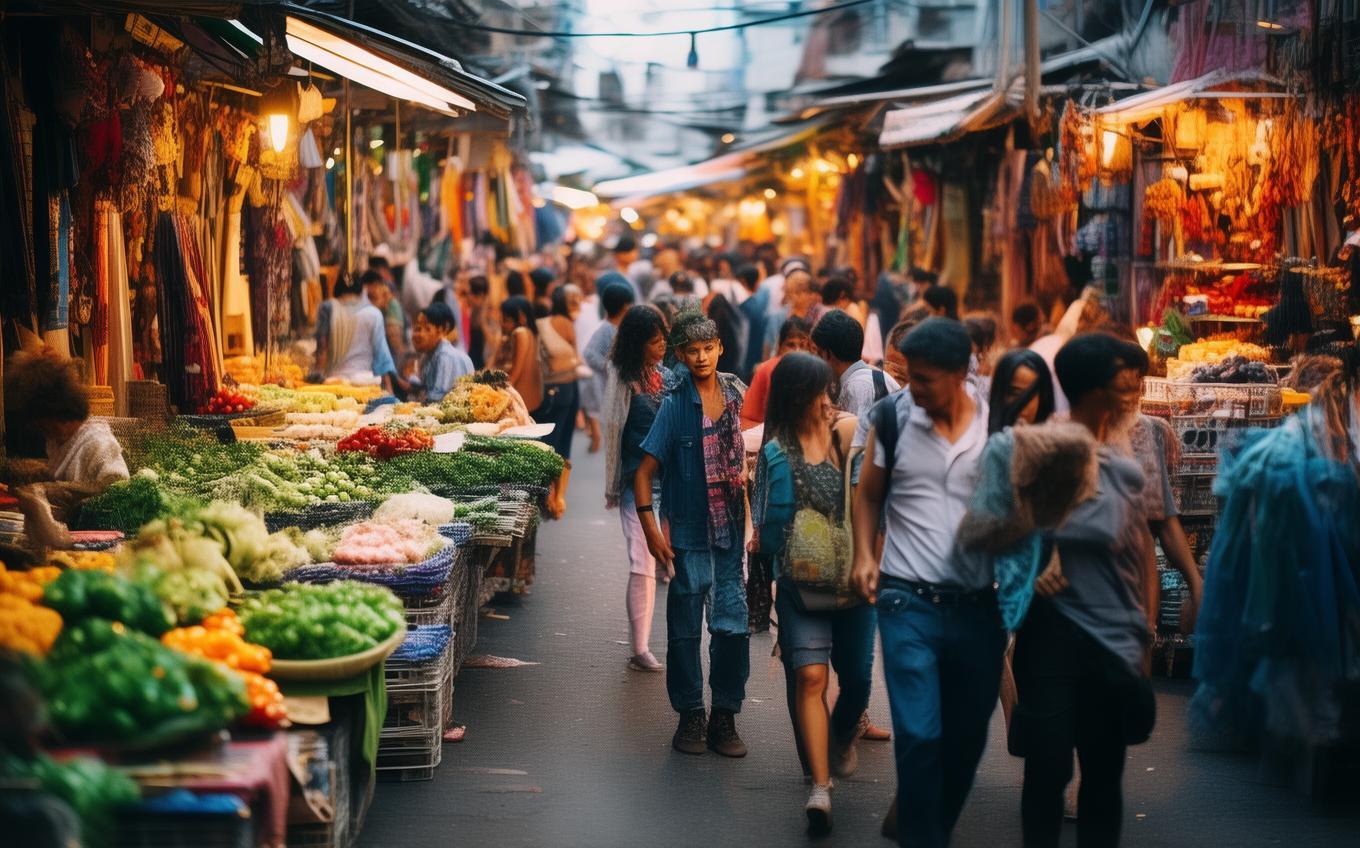
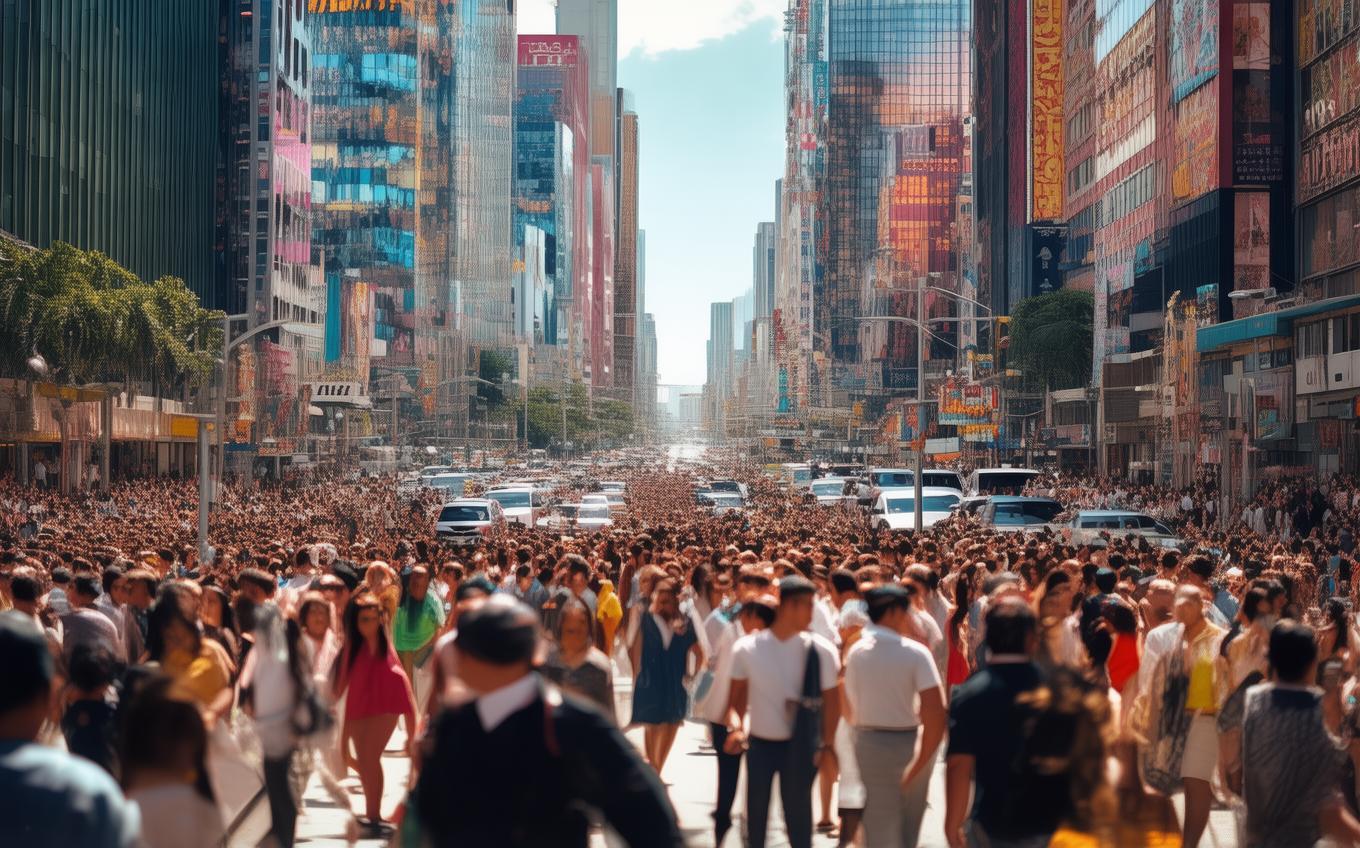
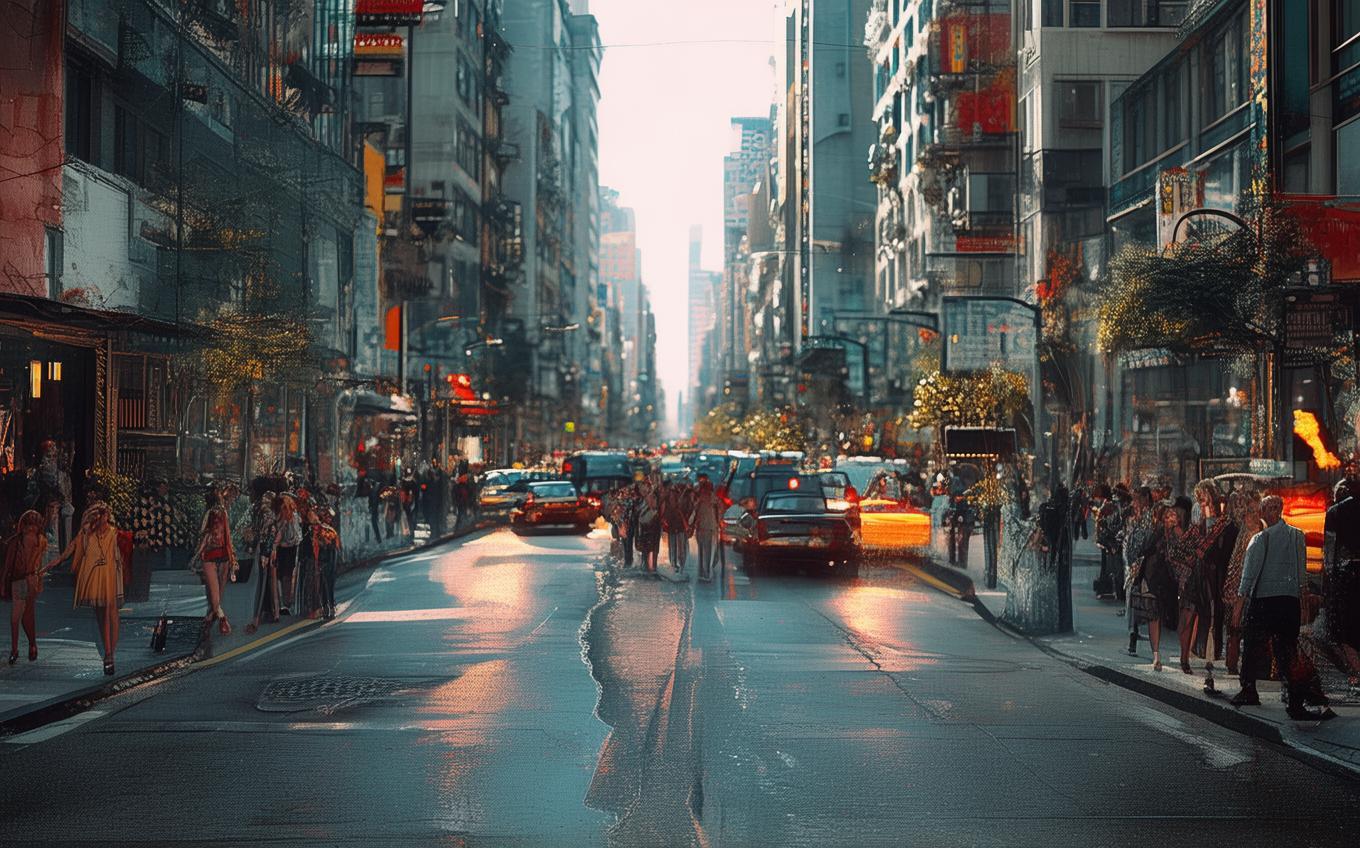
“繁华” is an adjective used to describe places that are lively, economically prosperous, crowded with activity, and visually impressive. It often applies to cities, streets, commercial districts, night scenes, and markets. It carries a positive and admiring tone.
Common collocations include:
- 繁华的城市 – a bustling/prosperous city
- 繁华地段 – a busy prime area (often used in real estate)
- 繁华的街道 – a busy/prosperous street
- 商业繁华 – commercially prosperous
Nuance: “繁华” is slightly more formal and literary than “热闹 (rènao)”, which simply means “lively” or “bustling with noise and fun.” While “热闹” can describe a party, a small gathering, or a market atmosphere, “繁华” tends to describe a larger, more visible economic prosperity and grandeur. “繁荣 (fánróng)” is also related, but it is often used to talk about economic prosperity in a more abstract or macro sense, such as a country’s economy.
- Character Breakdown:
- 繁 (fán) – numerous, abundant, complex, flourishing. In this word, it suggests an abundance of people, goods, and activity.
- 华 (huá) – magnificent, splendid, brilliant, glorious. It can also relate to China in words like 中华 (Zhōnghuá).
Together, “繁” + “华” gives the image of abundant splendor or flourishing magnificence, which naturally translates to “bustling and prosperous.”
3. Example Sentences
- Chinese: 上海是一座繁华的国际大都市。
- Pinyin: Shànghǎi shì yī zuò fánhuá de guójì dà dūshì.
-
English: Shanghai is a bustling international metropolis.
-
Chinese: 夜晚的南京路非常繁华。
- Pinyin: Yèwǎn de Nánjīng Lù fēicháng fánhuá.
-
English: Nanjing Road is very bustling at night.
-
Chinese: 这条街以前很冷清,现在变得很繁华。
- Pinyin: Zhè tiáo jiē yǐqián hěn lěngqīng, xiànzài biàn de hěn fánhuá.
- English: This street used to be very quiet and deserted, but now it has become very bustling and prosperous.
Cultural Notes (if applicable)
In Chinese history and literature, famous ancient capitals such as Chang’an (Xi’an) and Bianjing (Kaifeng) were often praised for being “繁华.” The word evokes images of crowded markets, bright lanterns, wealthy merchants, and grand architecture.
In modern Chinese, “繁华” is frequently used in tourism and real estate. For example, “繁华地段” means a prime, busy, and desirable area of a city where land is valuable and commercial activity is intense. The character “华” also appears in “中华” (China), so it carries a cultural association with splendor and greatness, though in “繁华” it simply means “magnificent” rather than directly referring to China.
Conclusion
Think of “繁华” as visible prosperity. If a place has crowds, shops, bright lights, and a strong sense of economic energy, it is “繁华.” Remember the two characters: 繁 means abundant and flourishing, while 华 means splendid and magnificent. Together they describe a place that is bustling, thriving, and full of life.
Sources and Further Reading
Dictionary links are provided for independent reference. Example sentences and learning notes on this page are educational explanations rather than dictionary quotations.
Comments (0)
No comments yet. Be the first to comment!