1. Basic Information
- Word: 海鲜
- Pinyin: hǎi xiān
- Literal Meaning: "sea" + "fresh"
- Primary Meaning: Seafood (fresh seafood from the ocean)
2. In-depth Explanation
Context and Usage
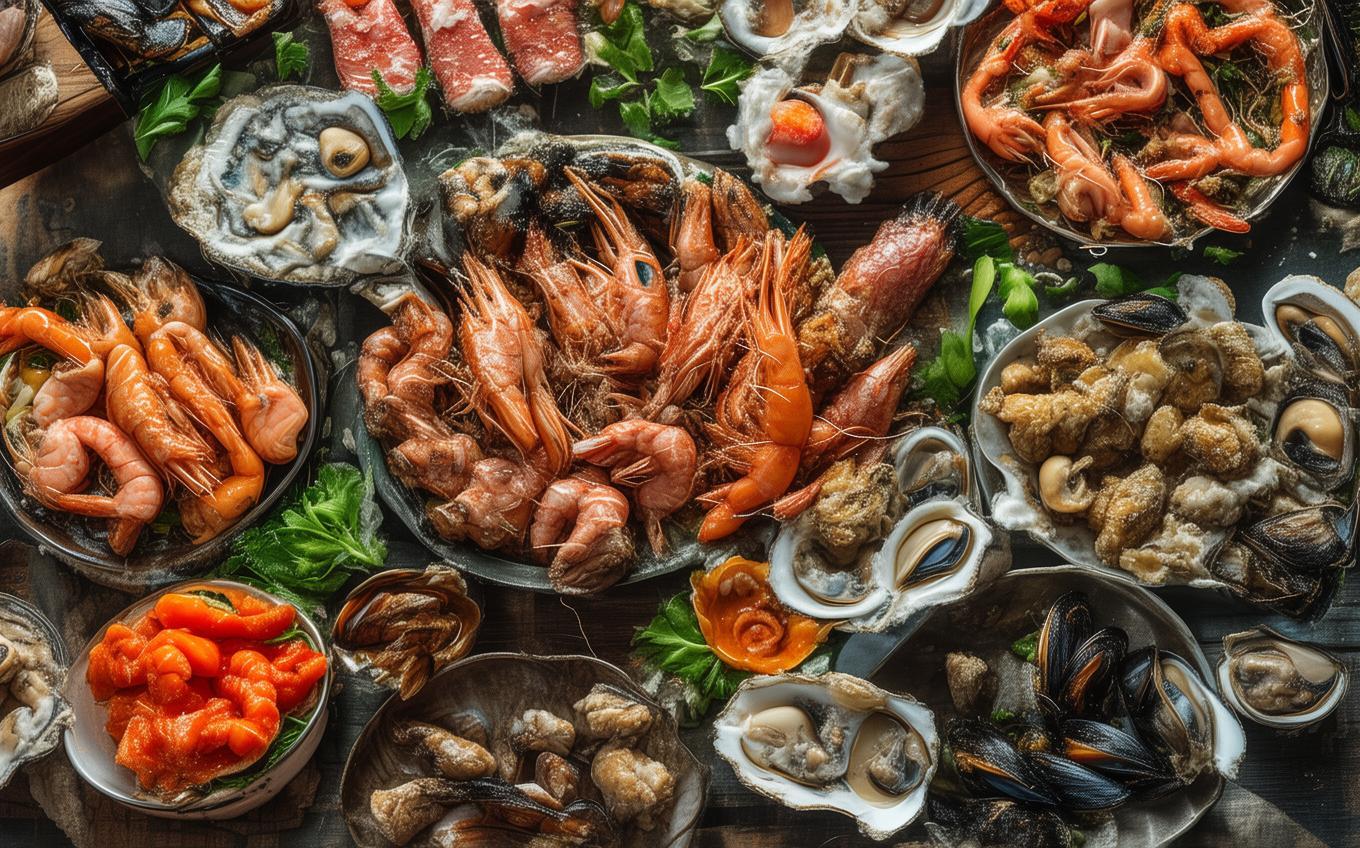
海鲜 (hǎi xiān) is the standard Chinese word for "seafood." It refers to edible marine animals — including fish, shellfish, crustaceans, and other sea creatures — that are consumed as food. The word is extremely common in everyday conversation, restaurant menus, markets, and food-related discussions.
Unlike English, where "seafood" covers everything from the ocean, Chinese sometimes distinguishes between 海鲜 (sea-fresh, implying saltwater products) and 河鲜 (hé xiān) — "river-fresh" — which refers to freshwater products like river fish and freshwater crabs. However, in most casual contexts, 海鲜 is used broadly to mean any edible aquatic animal, and most Chinese speakers will use it as the default word for "seafood" in general.
The word carries a connotation of freshness and quality. Because China has a long coastline and a rich culinary tradition surrounding seafood, 海鲜 often evokes images of live fish tanks in restaurants, bustling seafood markets, and elaborate banquet dishes. In Chinese food culture, freshness is paramount — it is common to see restaurants with tanks of live fish, crabs, shrimp, and shellfish from which diners can select their meal.
Common collocations:
- 吃海鲜 (chī hǎi xiān) — to eat seafood
- 海鲜市场 (hǎi xiān shì chǎng) — seafood market
- 海鲜餐厅 (hǎi xiān cān tīng) — seafood restaurant
- 海鲜大餐 (hǎi xiān dà cān) — seafood feast/banquet
- 新鲜的海鲜 (xīn xiān de hǎi xiān) — fresh seafood
Character Breakdown
海 (hǎi) — This character means "sea" or "ocean." It is composed of the water radical 氵 (three drops of water on the left side) and the phonetic component 每 (měi), which gives a hint to its pronunciation. The character appears in many ocean-related words: 海水 (hǎi shuǐ, seawater), 海洋 (hǎi yáng, ocean), 海边 (hǎi biān, seaside).
鲜 (xiān) — This character means "fresh," "delicious," or "flavorful." It is made up of two parts: 鱼 (yú), meaning "fish," on the left, and 羊 (yáng), meaning "sheep/lamb," on the right. The combination of fish and lamb — two foods highly prized for their flavor in Chinese cuisine — creates the concept of "freshness" and "deliciousness." This character is also used in words like 新鲜 (xīn xiān, fresh), 鲜美 (xiān měi, delicious and fresh-tasting), and 鲜花 (xiān huā, fresh flower).
Together, 海鲜 literally means "sea-fresh" — things from the sea that are fresh and delicious. This beautifully captures the Chinese culinary emphasis on freshness.
3. Example Sentences
- Chinese: 我最喜欢吃海鲜,尤其是虾和螃蟹。
- Pinyin: Wǒ zuì xǐ huan chī hǎi xiān, yóu qí shì xiā hé páng xiè.
- English: I love eating seafood the most, especially shrimp and crab.
- Chinese: 这家海鲜餐厅的鱼都是活的,非常新鲜。
- Pinyin: Zhè jiā hǎi xiān cān tīng de yú dōu shì huó de, fēi cháng xīn xiān.
- English: The fish at this seafood restaurant are all alive — extremely fresh.
- Chinese: 我们去海鲜市场买了一些扇贝和鱿鱼。
- Pinyin: Wǒ men qù hǎi xiān shì chǎng mǎi le yī xiē shàn bèi hé yóu yú.
- English: We went to the seafood market and bought some scallops and squid.
Cultural Notes
Seafood in Chinese Culture:
-
Symbolism of Abundance: In Chinese culture, serving seafood — especially fish — at banquets and celebrations symbolizes abundance and prosperity. The word for fish, 鱼 (yú), is a homophone for 余 (yú), meaning "surplus" or "abundance." This is why a whole fish is traditionally served at Chinese New Year dinners, with the phrase 年年有余 (nián nián yǒu yú) — "may you have surplus every year."
-
Coastal vs. Inland: Historically, fresh seafood was a luxury in inland regions of China due to transportation limitations. Coastal cities like Qingdao, Xiamen, Dalian, and Guangzhou are famous for their seafood cuisine. Today, with modern logistics and cold-chain transportation, fresh seafood is available throughout the country, though coastal areas still offer the widest variety and best quality.
-
Live Seafood Culture: In many Chinese seafood restaurants, particularly in southern China (Guangdong, Fujian, Hong Kong), diners expect to see live seafood in tanks. Selecting a live fish or crab and having it prepared immediately is considered the ultimate guarantee of freshness. This practice reflects the deep-rooted Chinese culinary value that 鲜 (xiān) — freshness — is the essence of good food.
-
Cantonese Seafood Cuisine: Cantonese cuisine (粤菜) is particularly renowned for its seafood preparations, emphasizing steaming and light seasoning to preserve the natural flavor of the seafood. Dishes like steamed fish with ginger and scallions (清蒸鱼) and salt-and-pepper shrimp (椒盐虾) are beloved classics.
Conclusion
海鲜 (hǎi xiān) is your go-to word for "seafood" in Chinese. Remember it as "sea-fresh" — a word that perfectly reflects the Chinese culinary philosophy that the best food comes from the sea and must be enjoyed at its freshest. Whether you're ordering at a restaurant, shopping at a market, or talking about your favorite foods, 海鲜 is an essential word for any Chinese learner interested in food and culture.
Sources and Further Reading
Dictionary links are provided for independent reference. Example sentences and learning notes on this page are educational explanations rather than dictionary quotations.



Comments (0)
No comments yet. Be the first to comment!