# Analysis of "夜雪" - Classical Chinese Poetry

## Introduction
The poem *夜雪 (Yè Xuě)*, or *Night Snow*, is a brief but evocative work by the renowned Tang Dynasty poet Bai Juyi (白居易, 772–846). Bai Juyi was a master of simple yet profound verse, known for his accessible style and deep empathy for common people. *夜雪* captures a quiet, introspective moment during a snowfall at night, reflecting Bai Juyi’s skill in conveying subtle emotions through nature. This poem is celebrated for its minimalist beauty and its embodiment of the Chinese aesthetic principle of *yijing* (意境), or "artistic conception," where emotion and scenery blend seamlessly.

## The Poem: Full Text and Translation

> 已讶衾枕冷
> *Yǐ yà qīn zhěn lěng*
> Startled by the chill of quilt and pillow

> 复见窗户明
> *Fù jiàn chuānghù míng*
> Then I see the bright gleam at my window

> 夜深知雪重
> *Yè shēn zhī xuě zhòng*
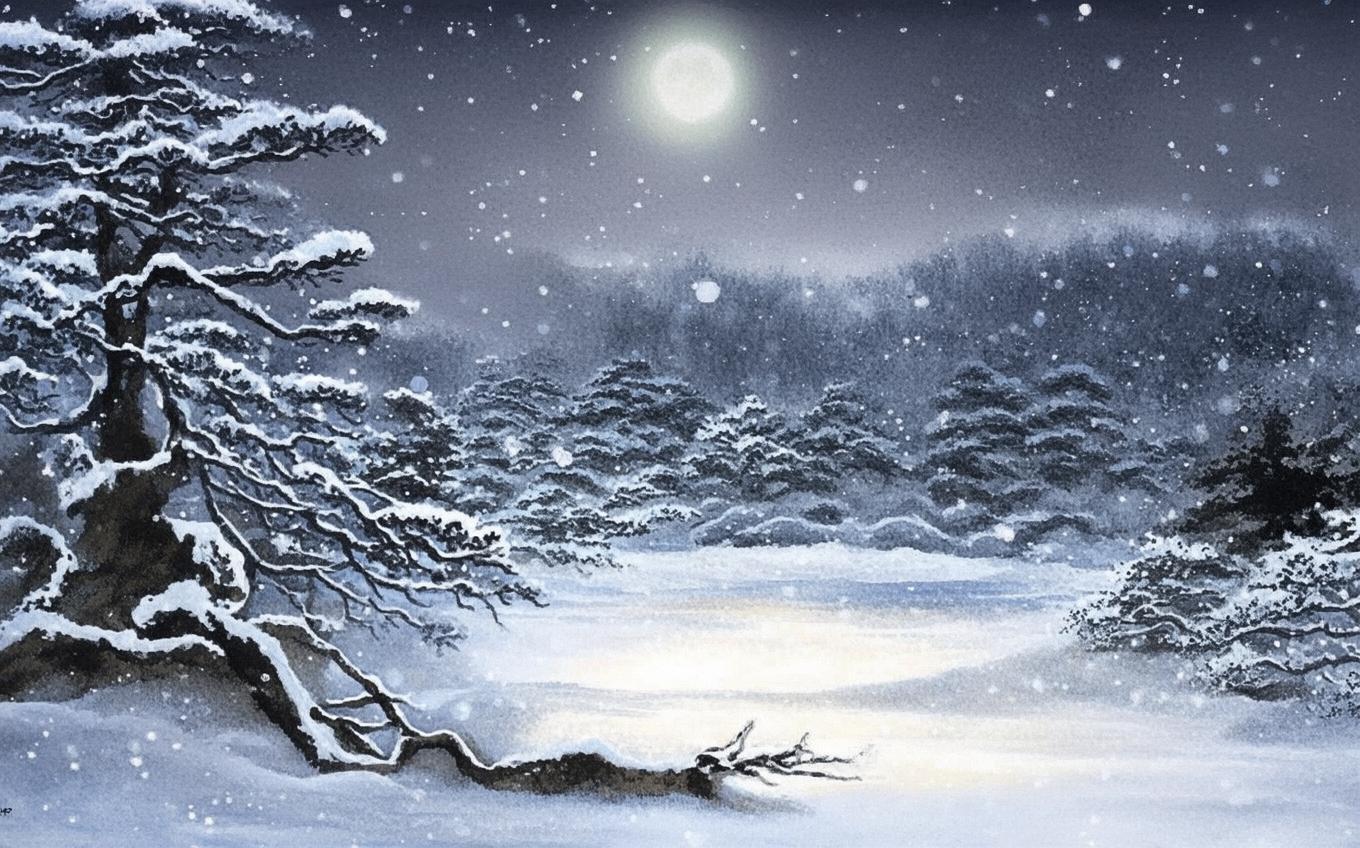
> Late at night, I know the snow must be heavy

> 时闻折竹声
> *Shí wén zhé zhú shēng*
> Now and then, the sound of bamboo snapping

## Line-by-Line Analysis

1. **"Startled by the chill of quilt and pillow"**
   The poem opens with a physical sensation—coldness—that disrupts the poet’s rest. The word "讶" (*yà*, "startled") suggests a sudden, almost involuntary reaction, drawing the reader into the moment.

2. **"Then I see the bright gleam at my window"**
   The coldness is followed by visual awareness. Snow reflects light, making the night unusually bright. This line subtly conveys the snowfall’s presence without directly naming it yet.

3. **"Late at night, I know the snow must be heavy"**
   The poet deduces the snow’s weight from the depth of the night’s silence and the earlier clues (cold, brightness). The word "知" (*zhī*, "know") implies quiet realization rather than direct observation.

4. **"Now and then, the sound of bamboo snapping"**
   The final line introduces sound—bamboo breaking under the snow’s weight. This auditory detail completes the sensory experience (touch, sight, sound) and emphasizes the snow’s quiet accumulation.

## Themes and Symbolism

- **Nature’s Subtle Power**: The poem highlights how nature’s quiet phenomena (snow) can transform the familiar (a bedroom, bamboo) into something profound.
- **Solitude and Reflection**: The nighttime setting and the poet’s solitary awareness evoke a meditative mood, common in Chinese *jìngyè shī* (静夜诗, "quiet night poems").
- **Fragility and Resilience**: The bamboo, a symbol of endurance in Chinese culture, bends but snaps under the snow’s weight—a metaphor for hidden pressures in life.

## Cultural Context

Bai Juyi wrote during the Tang Dynasty (618–907), a golden age of Chinese poetry. His works often focused on everyday experiences, blending Confucian concern for humanity with Daoist appreciation of nature. *夜雪* exemplifies the Tang aesthetic of *wúyán* (无厌, "no excess"), achieving depth with minimal words. The poem also reflects the Chinese philosophical idea of *yǐ wù guān xīn* (以物观心, "observing the heart through objects"), where external scenes mirror inner states.

## Conclusion

*夜雪* is a masterclass in understatement, using simple language to evoke a vivid, contemplative moment. Its enduring appeal lies in its universal resonance—anyone who has woken to an unexpected snowfall can relate to Bai Juyi’s quiet wonder. In today’s fast-paced world, the poem reminds us to pause and notice the beauty in fleeting, ordinary instants. As Bai Juyi whispers across the centuries: sometimes, the softest sounds (like snow on bamboo) carry the deepest meaning.
夜雪: poem analysis and reading notes
Read a clear analysis of "夜雪", including theme, imagery, and reading notes.
Reader Guide
What this article covers
Use this guide to preview the poem analysis before moving into the fuller reading and cultural notes.
Editorial note: This page was last updated on 一月 5, 2026.
Hanzi Explorer publishes English-language guides to Chinese vocabulary, reading, and culture.
Learn more about the site.
Review the editorial policy.
Comments (0)
No comments yet. Be the first to comment!