Introduction
Among the many winter hunt poems in Chinese literature, Emperor Taizong of Tang (reigned 626–649) provides a rare glimpse into the mind of a ruler through his poem "冬狩" (Dōng Shòu, Winter Hunt). Taizong, born Li Shimin, was one of China's greatest emperors, known for consolidating the Tang dynasty's power, fostering a golden age of culture, and personally reflecting on governance in his writings. The poem "冬狩" is not merely a vivid depiction of an imperial hunting expedition but a philosophical meditation on the duties of leadership. Written in a direct yet elegant style, it balances imposing natural imagery, grandiose courtly splendor, and a concluding note of self-caution. For English readers, this poem offers a window into how a monarch could use the pastime of hunting to examine the moral weight of power.
The Poem: Full Text and Translation
烈烈寒风起,
Liè liè hán fēng qǐ,
Fierce, fierce the cold wind rises,
惨惨飞云浮。
Cǎn cǎn fēi yún fú.
Dreary, dreary the flying clouds drift.
霜浓凝广隰,
Shuāng nóng níng guǎng xí,
Heavy frost freezes over the vast marshland,
冰厚结清流。
Bīng hòu jié qīng liú.
Thick ice seals the clear streams.
金鞍移上苑,
Jīn ān yí shàng yuàn,
Golden saddles move through the imperial park,
玉勒骋平畴。
Yù lè chěng píng chóu.
Jade-bridled steeds gallop across the open plains.
旌旗四望合,
Jīng qí sì wàng hé,
Banners and flags enclose the four directions in sight,
罝罗一面求。
Jū luó yī miàn qiú.
Hunting nets are spread on one side to seek the prey.
楚踣争兕殪,
Chǔ bó zhēng sì yì,
Like the Chu state, fallen, they vie to slay the rhinoceros;
秦亡角鹿愁。
Qín wáng jiǎo lù chóu.
Like the Qin’s ruin, the antlered deer are filled with dread.
兽忙投密树,
Shòu máng tóu mì shù,
The beasts frantically dart into dense trees,
鸿惊起砾洲。
Hóng jīng qǐ lì zhōu.
The startled swans take flight from gravelly islets.
骑敛原尘静,
Qí liǎn yuán chén jìng,
The riders draw rein; the plain’s dust settles into stillness,
戈回岭日收。
Gē huí lǐng rì shōu.
Halberds turn back; the sun withdraws beyond the ridge.
心非洛汭逸,
Xīn fēi Luò ruì yì,
My heart is not set on the ease of Luorui,
意在渭滨游。
Yì zài Wèi bīn yóu.
My intent is to wander by the Wei River’s shore.
禽荒非所恤,
Qín huāng fēi suǒ xù,
Indulgence in the hunt is not what I care for,
抚辔更招忧。
Fǔ pèi gèng zhāo yōu.
Stroking the reins, I summon yet deeper anxieties.
Line-by-Line Analysis
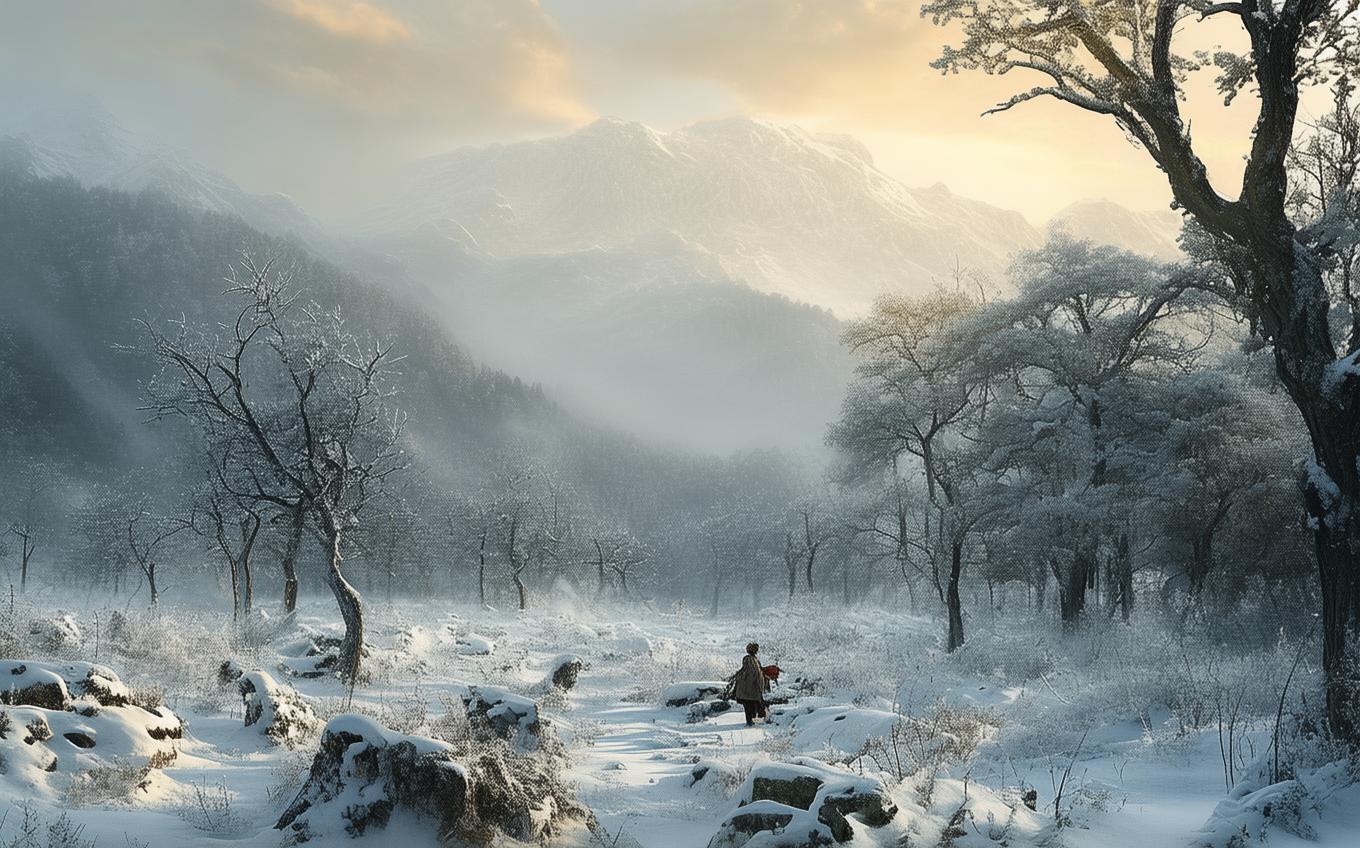
The poem opens with nature’s harsh voice: “Fierce, fierce the cold wind rises, / Dreary, dreary the flying clouds drift.” The reduplicated adjectives liè liè and cǎn cǎn convey the cutting wind and overcast sky, setting a monumental, somber stage. This winter is not picturesque but relentless, foreshadowing that the hunt is no light game.
“Heavy frost freezes over the vast marshland, / Thick ice seals the clear streams.” The landscape is immobilized. The frost is nóng (thick, congealed), the ice hòu (solid). The living water is trapped. This stark environment mirrors the discipline required of an emperor: nature is unforgiving, and so must be the mind ruling over it.
The scene shifts to imperial splendor: “Golden saddles move through the imperial park, / Jade-bridled steeds gallop across the open plains.” The hunter-king’s equipment is opulent — gold and jade — yet the verbs yí (move) and chěng (gallop) lend an unstoppable momentum. The juxtaposition of frozen earth and glittering gear suggests human will imposing itself on the wild.
“Banners and flags enclose the four directions in sight, / Hunting nets are spread on one side to seek the prey.” A massive encircling maneuver unfolds. The phrase sì wàng hé (all four views closed in) evokes an inexorable tightening ring. But note the phrase yī miàn qiú — the nets are set only on one side, leaving an escape route. This detail, rooted in ancient hunting ritual (a king leaves one side open to show mercy), already points to Taizong’s moral awareness: the chase is not mindless slaughter.
The next couplet is densely allusive: “Like the Chu state, fallen, they vie to slay the rhinoceros; / Like the Qin’s ruin, the antlered deer are filled with dread.” Chu and Qin were powerful ancient kingdoms that collapsed through corruption and tyranny. Here the hunted rhinoceros (sì) and deer recall both the spoils of the chase and the fate of empires. The hunters “vie” to kill, but the deer’s “dread” echoes the terror of a state in decline. Taizong, ever the historian, sees in the flailing animals the same panic of dynasties that lost the Mandate of Heaven.
Realism returns: “The beasts frantically dart into dense trees, / The startled swans take flight from gravelly islets.” The máng (frenzied) and jīng (alarmed) actions of animals give the verse a kinetic, almost cinematic urgency. The sound of wings and snapping branches brings the hunt into immediate sensory focus, yet the chaos is contained within the planned ritual.
As quickly as it began, the hunt subsides: “The riders draw rein; the plain’s dust settles into stillness, / Halberds turn back; the sun withdraws beyond the ridge.” The moment of calm after action is masterfully drawn. Dust jìng (stilled) and the sun shōu (put away) signal closure, but also a return to order. The emperor reasserts control, both over the hunt and over his own impulses.
The final four lines deliver the poem’s philosophical core. “My heart is not set on the ease of Luorui, / My intent is to wander by the Wei River’s shore.” Luorui was a place associated with King Taikang of the Xia dynasty, who lost his kingdom through excessive hunting. In contrast, the Wei River was where King Wen of Zhou, the paragon of sage rulership, sought worthy officials. Taizong declares that he does not hunt for diversion but to emulate King Wen’s search for capable ministers — the hunt is a metaphor for seeking talent to govern.
He then dismisses the temptation of excess: “Indulgence in the hunt is not what I care for, / Stroking the reins, I summon yet deeper anxieties.” The phrase qín huāng (“wastefulness with birds,” i.e., obsession with hunting) is a Confucian warning. Even as he holds the reins, the emperor feels yōu (worry, heavy concern). The poem ends on a note of tension: the ruler’s recreation cannot be separated from his burdens. The quiet gesture of stroking the reins becomes an emblem of vigilance.
Themes and Symbolism
The Sovereign’s Self-Discipline — The central theme is the Confucian ideal that a ruler must constantly examine his desires. The winter hunt, a traditional royal prerogative, becomes an occasion for introspection rather than indulgence. Taizong uses the hunt to signal that power is not about pleasure but about controlling oneself for the good of the state.
Nature as Mirror of Morality — The brutal winter landscape is both a backdrop and a symbol. Frost and ice suggest the hardening of the heart if a ruler becomes callous; the stillness after the hunt mirrors the necessary calm of good governance. The animals’ panic, connected to the fall of Chu and Qin, turns nature into a historical lesson.
The Hunt as Political Metaphor — Historically, Chinese hunts were not just sport but ritual performances of sovereignty. The yī miàn qiú (one-side net) echoes the virtue of leaving an escape for the worthy. The allusions to King Wen transform the chase into a search for talents to serve the dynasty, aligning the poem with the Tang meritocratic ideal.
Cultural Context
Emperor Taizong ascended the throne after a bloody palace coup, yet he ruled with exemplary concern for the people and famously embraced criticism. His court compiled the Zhenguan Zhengyao (Essentials of Government of the Zhenguan Period), a guide to benign rule. The poem reflects the emperor’s constant self-questioning: even in recreation, he cannot forget the perils of misrule. In Confucianism, a single misguided passion could unravel the Mandate of Heaven; hunting was a classic temptation. Taizong’s admission of “deeper anxieties” would have been read as proof of his virtue. The final lines reveal a monarch who sees himself not as absolute master but as a steward whose every act carries moral weight.
Conclusion
"冬狩" transforms what could have been a simple imperial boast into a quiet, powerful confession. Its beauty lies in the balance between the grandeur of a winter landscape, the disciplined motion of the hunt, and the still, troubled voice of the ruler at the end. Taizong’s genius was to realize that a true “Son of Heaven” is never off duty — even the thrill of the chase must give way to the heavier task of ruling with conscience. For modern readers, the poem resonates as a meditation on leadership, reminding us that those in power must perpetually question their own motives. The reins in the hand, the settled dust, the
Comments (0)
No comments yet. Be the first to comment!