Introduction
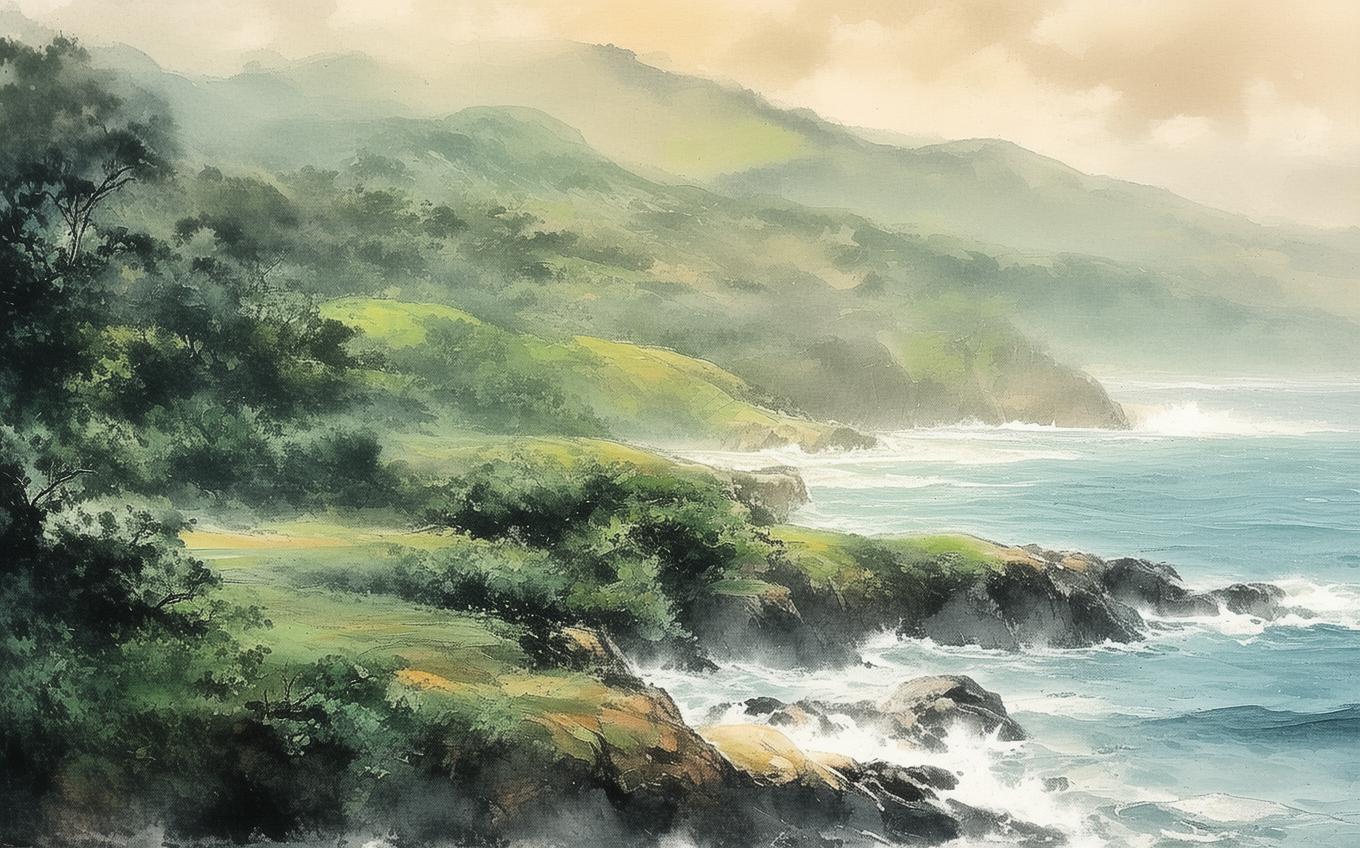
Emperor Taizong of Tang (Li Shimin, 598–649 CE) was not only one of China’s greatest rulers but also an accomplished poet. His reign ushered in the golden age of the Tang Dynasty, blending military might with cultural brilliance. The poem “春日望海” (Chūn Rì Wàng Hǎi – “Spring Day Viewing the Sea”) offers a rare glimpse into the emperor’s mind: a landscape painting in words that expands into a meditation on power, mortality, and the art of governance. Less known than some lyrical Tang masterpieces, it stands as a majestic example of early Tang court poetry, where personal observation meets cosmic reflection. For English readers curious about Chinese literature, this poem reveals how a ruler’s gaze upon nature becomes a mirror of imperial responsibility.
The Poem: Full Text and Translation
Below is the complete poem, presented in the original Chinese, pinyin with tone marks, and a faithful English translation. The poem is a five-character ancient verse (gushi) of ten couplets, unbound by the strict parallelism of later regulated verse but rich in imagery and allusion.
披襟眺沧海,
Pī jīn tiào cāng hǎi,
Pushing open my lapels, I gaze at the vast blue sea;凭轼玩春芳。
Píng shì wán chūn fāng.
Leaning on the carriage rail, I savor the fragrance of spring.积流横地纪,
Jī liú héng dì jì,
Accumulated currents stretch across the earth’s bounds;疏派引天潢。
Shū pài yǐn tiān huáng.
Scattered tributaries draw from the Celestial Stream.仙气凝三岭,
Xiān qì níng sān lǐng,
Immortal aura condenses on the Three Peaks;和风扇八荒。
Hé fēng shàn bā huāng.
A gentle breeze fans the Eight Wastes.拂潮云布色,
Fú cháo yún bù sè,
Clouds brushing the tide spread their hues;穿浪日舒光。
Chuān làng rì shū guāng.
Sunlight piercing the waves unfolds its radiance.照岸花分彩,
Zhào àn huā fēn cǎi,
Shining on the shore, flowers part their colors;迷云雁断行。
Mí yún yàn duàn háng.
Lost in clouds, wild geese break their formation.怀卑运深广,
Huái bēi yùn shēn guǎng,
Embracing humility, his fortune is deep and vast;持满守灵长。
Chí mǎn shǒu líng cháng.
Holding fullness, he guards the divine and enduring.有形非易测,
Yǒu xíng fēi yì cè,
What has form is not easy to fathom;无源讵可量?
Wú yuán jù kě liáng?
That without a source — how can it be measured?洪涛经变野,
Hóng tāo jīng biàn yě,
Great billows pass through ever-changing wilderness;翠岛屡成桑。
Cuì dǎo lǚ chéng sāng.
Verdant islands often turn into mulberry fields.之罘思汉帝,
Zhī fú sī Hàn dì,
At Zhifu, I think of the Han Emperor;碣石想秦皇。
Jié shí xiǎng Qín huáng.
At Jieshi, I recall the Qin Emperor.霓裳非本意,
Ní cháng fēi běn yì,
Rainbow robes are not my true desire;端拱且图王。
Duān gǒng qiě tú wáng.
With hands clasped solemnly, I plan for kingly rule.
Line-by-Line Analysis
Opening the Scene (Lines 1–2)
The poem opens with an intimate, physical gesture: the poet pushes aside his lapels as if to welcome the sea breeze, then leans on the carriage rail to absorb the spring air. “沧海” (cāng hǎi) — the vast, dark-blue sea — immediately establishes scale. Here, the emperor is not on a throne but in a chariot, a traveler pausing to admire the season. The juxtaposition of tiào (gaze into the distance) and wán (savor, enjoy leisurely) sets up a dual perspective: the distant, majestic ocean and the immediate sensory pleasure of spring.
Cosmic Geography (Lines 3–6)
Li Shimin expands the view with sweeping geographical and mythological references. “地纪” (earth’s bounds) and “天潢” (Celestial Stream, the Milky Way) link earthly waterways to the heavens — a common Han-Tang cosmology where the sea and sky mirror each other. The “Three Peaks” evoke the mythical immortal islands of Penglai, Fangzhang, and Yingzhou in the eastern sea, while “Eight Wastes” (bā huāng) means the entire world in all directions. By pairing the concentrated “immortal aura” with the all-encompassing gentle breeze, the poet suggests that the emperor’s ordered rule spreads harmony like a spring wind across the universe.
The Seascape in Motion (Lines 7–10)
These four lines paint a cinematic picture. Clouds, tide, sunlight, waves, flowers on the shore, and wild geese in the sky all interact. The verbs are dynamic: clouds “brush” the tide, sunlight “pierces” the waves. Color and light dissolve boundaries — flowers seem to separate into different hues under the sun, and geese vanish into mist, their orderly V-formation broken. This hints at nature’s fluidity and the limits of human perception: even a clear spring day can obscure clarity. For the emperor, it whispers that the world is vast and not always legible.
Moral Reflection (Lines 11–14)
Suddenly, the poem pivots from landscape to philosophy. “怀卑” (embracing humility) and “持满” (holding fullness) are Daoist-infused political maxims: the wise ruler stays low to contain greatness, and when his cup is full, he guards it carefully rather than letting it spill. These lines read almost as self-admonition. The couplet that follows, “有形非易测,无源讵可量?” (What has form is not easily fathomed; that without source — how can it be measured?), underscores a humility before the mysteries of existence. The sea itself, with its fathomless depths and untraceable sources, mirrors the Dao — the origin that cannot be named — and the emperor acknowledges that his understanding has limits.
History’s Tides (Lines 15–18)
The sea’s “great billows” roll through landscapes that keep changing: verdant islands “become mulberry fields” (an allusion to the proverb that the blue sea turns to mulberry groves, i.e., the world transforms over eons). This triggers historical memory. Zhifu (之罘) is a coastal mountain where Emperor Wu of Han performed sacrificial rites seeking immortality; Jieshi (碣石) is the rocky peak where Qin Shi Huang, the first emperor, once stood and where the warlord Cao Cao later composed his famous poem. Li Shimin thinks of these two mighty predecessors, both obsessed with cheating death. Their imperial ambitions foundered on the shore of time; the ocean outlasts all emperors.
The Ruler’s Answer (Lines 19–20)
The closing couplet delivers the poem’s core message. “霓裳” (rainbow robes) symbolize the attire of Daoist immortals — the very thing that Qin Shi Huang and Han Wudi futilely sought. Li Shimin declares: that is not my true desire. Instead, “端拱且图王” — with hands folded in a gesture of solemn, non-interfering governance, I devote myself to the art of ruling. The word “端拱” (duān gǒng) echoes the Confucian ideal of the sage king who governs through moral example rather than restless action. In rejecting the quest for personal immortality, the emperor affirms his commitment to a different kind of permanence: a well-ordered realm.
Themes and Symbolism
Impermanence and Cosmic Change: The sea is the central symbol of eternal flux. It erodes cliffs, swallows islands, turns into mulberry fields. Such imagery, rooted in Chinese mythology, reminds readers that all empires are temporary — only the Way endures.
The Limits of Imperial Power: By invoking Qin Shi Huang and Emperor Wu, Li Shimin positions himself in a lineage of powerful rulers who reached for heaven yet failed to hold it. The sea, vast and unknowable, humbles even the Son of Heaven.
Humility and Virtuous Rule: The moral vocabulary — huái bēi (embracing lowliness), chí mǎn
Comments (0)
No comments yet. Be the first to comment!