Introduction
Composed by the Tang dynasty poet Zhang Hu (张祜), Entering Tong Pass (“入潼关”) is a compact but powerfully evocative poem that captures the strategic grandeur and turbulent history of one of China’s most important mountain passes. Zhang Hu lived during the first half of the 9th century, a period when the Tang empire, though still culturally brilliant, was beginning to fray at the edges. His poetry often blended scenes of nature with reflections on history, and this work is a perfect example. In just eight lines, the poem telescopes from the rugged landscape of the Tong Pass to the ambitions of ancient emperors and the endless cycle of conflict, offering English-speaking readers a vivid window into how geography, history, and human drama intertwine in classical Chinese verse.
The Poem: Full Text and Translation
都城三百里,雄险此回环。
Dūchéng sānbǎi lǐ, xióngxiǎn cǐ huíhuán.
The capital is three hundred li away; heroic peril coils and encircles this place.
地势遥尊岳,河流侧让关。
Dìshì yáo zūn yuè, héliú cè ràng guān.
The terrain bows to the sacred mountains from afar, while the river bends aside to yield to the pass.
秦皇曾虎视,汉祖昔龙颜。
Qín Huáng céng hǔshì, Hàn Zǔ xī lóngyán.
The First Emperor of Qin once glared upon it like a tiger; the Han founder in olden days showed his dragon countenance.
何处枭雄辈,干戈自不闲。
Héchù xiāoxióng bèi, gāngē zì bù xián.
Wherever fierce warlords arise, shields and halberds never rest.
Line-by-Line Analysis
“都城三百里,雄险此回环。”
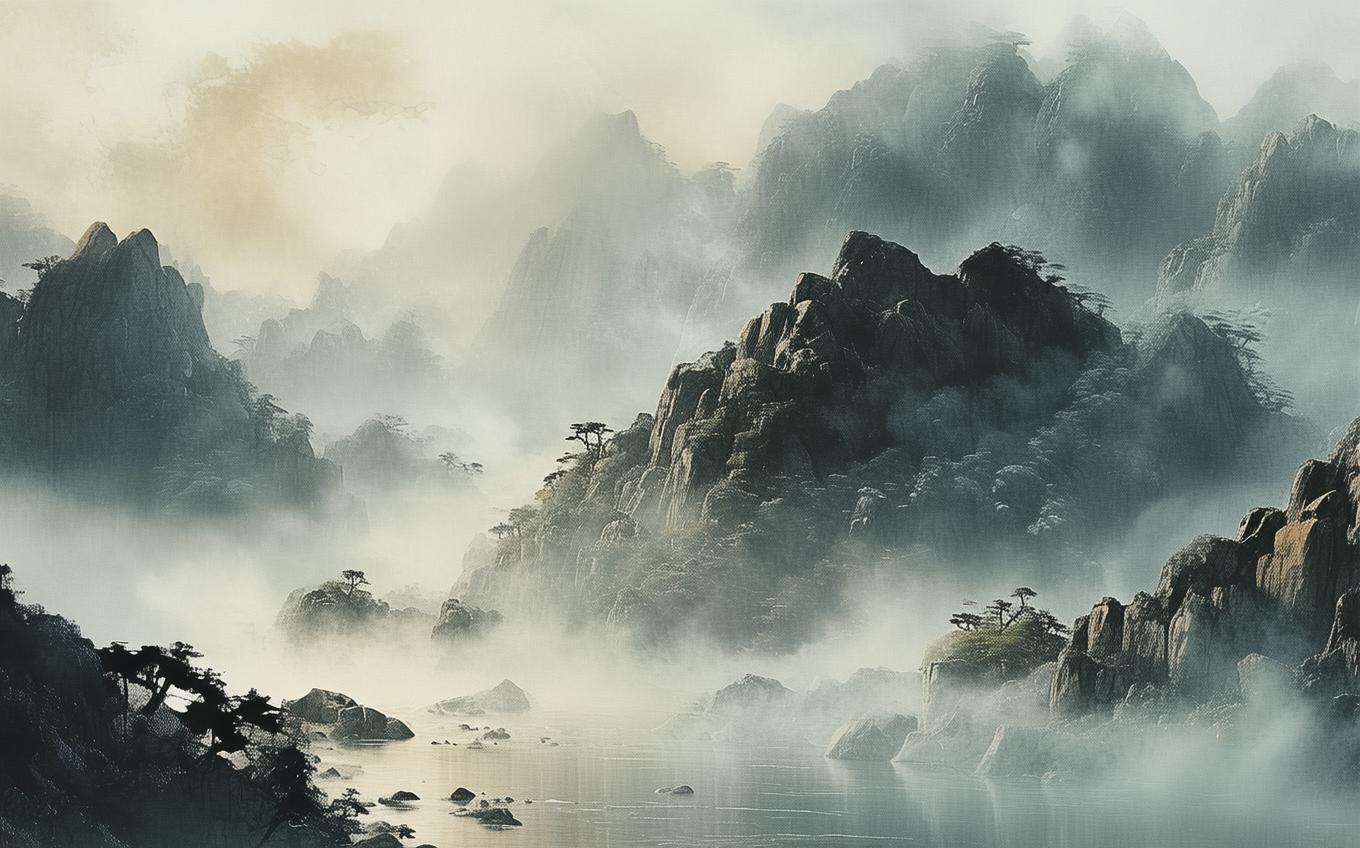
The poem opens by anchoring the Tong Pass in spatial relationship to the capital Chang’an (modern Xi’an) – “three hundred li,” about 150 kilometers. This seemingly simple measurement immediately alerts the reader to the pass’s role as the strategic throat protecting the imperial city. The phrase xióngxiǎn, “heroic peril” or “majestic danger,” is a compound that fuses natural ruggedness with a sense of awe. Huíhuán, “coiling and enclosing,” paints the mountains winding like a defensive ring. Zhang Hu uses geography as a stage: the pass is not merely a spot on the map but a living, breathing fortress of stone.
“地势遥尊岳,河流侧让关。”
This couplet elevates the landscape into a cosmic hierarchy. The terrain (dìshì) pays reverence from a distance (yáo zūn) to the sacred peaks (yuè), implying that the very ground acknowledges the superiority of the Five Great Mountains. Meanwhile, the mighty Yellow River – implied by héliú – is forced to “yield beside” the pass (cè ràng guān), bending its course in deference. This is not mere description; it is a carefully constructed metaphor of natural submission to a site of human‑made significance. In Chinese poetics, rivers and mountains often possess moral agency, and here they bow before the strategic importance of Tong Pass.
“秦皇曾虎视,汉祖昔龙颜。”
With geography established, the poet leaps into history. The “First Emperor of Qin” (Qín Huáng, Qin Shi Huang) is said to have “glared like a tiger” upon the pass, while “Han ancestor” (Hàn Zǔ, Liu Bang, founder of the Han dynasty) “showed his dragon face.” Tiger and dragon are supreme symbols of power and imperial authority. The tiger’s stare suggests fierce ambition and military might; the dragon’s countenance embodies sovereignty and heaven‑mandated rule. By linking both the unifier‑conqueror Qín and the more benevolent Hàn founder to the same pass, Zhang Hu compresses centuries of dynastic struggle into two swift images. The reader feels the weight of all those who passed through this gate – some to build empires, others to lose them.
“何处枭雄辈,干戈自不闲。”
The final couplet generalizes from specific rulers to a perennial truth. Xiāoxióng denotes fierce, ambitious chieftains – not orderly kings, but ruthless men of power. The rhetorical question “wherever” suggests that such warlords are an inescapable part of the landscape. Gāngē (shields and halberds) is a metonymy for warfare, and “never rest” (zì bù xián) underscores the relentless cycle of conflict. The tone is neither mournful nor celebratory; it is almost philosophical. Tong Pass, endowed with natural majesty, becomes a silent witness to humanity’s undying appetite for conquest.
Themes and Symbolism
The poem centers on the interplay between nature and human history. The terrain and the river are not passive backdrops; they actively “respect” and “yield,” shaping the destiny of empires. The pass itself becomes a symbol of threshold and transformation – a narrow gate that determined whether invaders would sweep into the heartland or be repelled. Historically, Tong Pass was the key to the Guanzhong plain, and control of it meant control of the capital.
Tigers and dragons function as symbols of imperial ambition and legitimacy. The tiger’s ferocity and the dragon’s majesty encapsulate the dual nature of power: conquest and sacred rule. The poem also touches on a pessimistic view of the impermanence of power – fierce warlords rise, fight, and vanish, yet the pass endures. This reflects a Daoist‑tinged sense that human strife is fleeting against the constancy of mountains and rivers.
Cultural Context
During the Tang dynasty, Tong Pass was a tangible link to the deep past. Qin Shi Huang had unified China from his base in this region; Liu Bang had entered the pass to establish the Han. The pass witnessed the An Lushan Rebellion (755–763) two generations before Zhang Hu’s time, when its fall led to the sacking of Chang’an. For Tang literati, writing about Tong Pass was a way of meditating on the nation’s security, the lessons of history, and the fragility of dynastic power. Zhang Hu’s poem channels this cultural memory. It also embodies the Chinese value of “using the past to reflect on the present” (yǐ gǔ jiàn jīn): the warlords of his own day are implicitly compared to the Qin and Han figures, and the unchanging pass becomes a moral checkpoint where ambition meets its reckoning.
Conclusion
Zhang Hu’s “入潼关” is a masterpiece of compression. In just forty characters, it sketches a topographical portrait, summons two of China’s greatest founding emperors, and delivers a timeless verdict on the nature of power. Its beauty lies in the seamless fusion of landscape and history – mountains that “bow” and rivers that “yield” are as alive as the tiger glances and dragon faces of ancient rulers. For the modern reader, the poem is a reminder that the stones beneath our feet carry the whispers of countless forgotten conflicts, and that the pursuit of dominance, no matter how fierce, eventually becomes part of the land it sought to conquer. The pass remains; the “shields and halberds” do not.
Comments (0)
No comments yet. Be the first to comment!